

S. alanosinicus was found to be highly effective in carbofuran degradation and led to
95% decomposition. It utilized carbofuran as a source of carbon in saline soils
(Chougale and Deshmukh 2007).
Furthermore, some metabolic mediators formed from OPs were highly toxic
compared to their parents (Li et al. 2010a). For example, parathion can be oxidized
to paraoxon, which is more toxic than parathion (Zhang et al. 2000). The biodegradable products of dimethoate are highly water soluble, can easily migrate to other
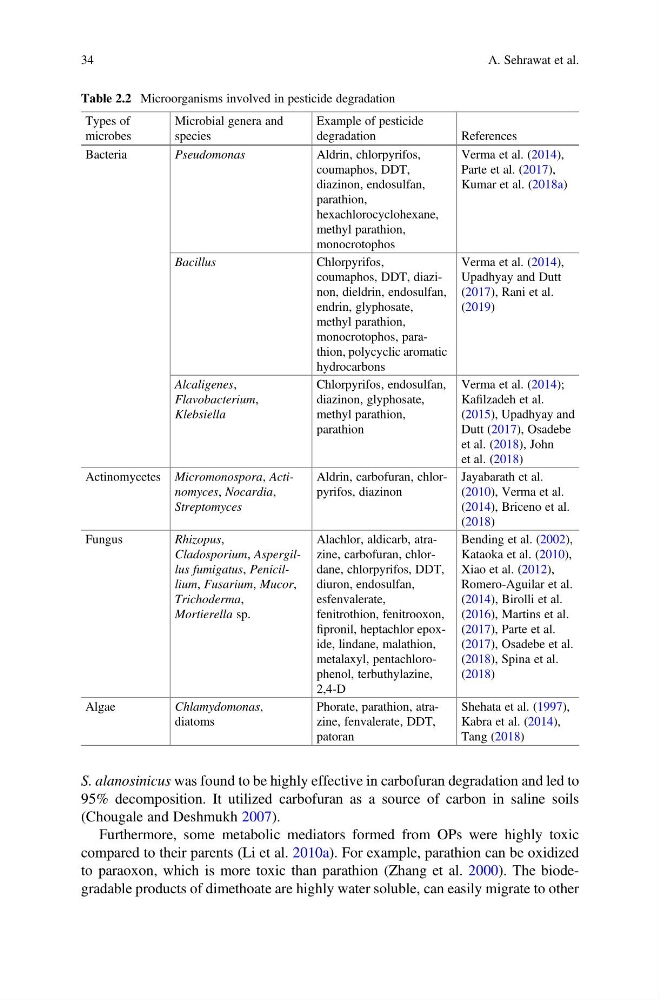
Table 2.2 Microorganisms involved in pesticide degradation
Types of
microbes
Microbial genera and
species
Example of pesticide
degradation
References
Bacteria
Pseudomonas
Aldrin, chlorpyrifos,
coumaphos, DDT,
diazinon, endosulfan,
parathion,
hexachlorocyclohexane,
methyl parathion,
monocrotophos
Verma et al. (2014),
Parte et al. (2017),
Kumar et al. (2018a)
Bacillus
Chlorpyrifos,
coumaphos, DDT, diazinon, dieldrin, endosulfan,
endrin, glyphosate,
methyl parathion,
monocrotophos, parathion, polycyclic aromatic
hydrocarbons
Verma et al. (2014),
Upadhyay and Dutt
(2017), Rani et al.
(2019)
Alcaligenes,
Flavobacterium,
Klebsiella
Chlorpyrifos, endosulfan,
diazinon, glyphosate,
methyl parathion,
parathion
Verma et al. (2014);
Kafilzadeh et al.
(2015), Upadhyay and
Dutt (2017), Osadebe
et al. (2018), John
et al. (2018)
Actinomycetes Micromonospora, Actinomyces, Nocardia,
Streptomyces
Aldrin, carbofuran, chlorpyrifos, diazinon
Jayabarath et al.
(2010), Verma et al.
(2014), Briceno et al.
(2018)
Fungus
Rhizopus,
Cladosporium, Aspergillus fumigatus, Penicillium, Fusarium, Mucor,
Trichoderma,
Mortierella sp.
Alachlor, aldicarb, atrazine, carbofuran, chlordane, chlorpyrifos, DDT,
diuron, endosulfan,
esfenvalerate,
fenitrothion, fenitrooxon,
fipronil, heptachlor epoxide, lindane, malathion,
metalaxyl, pentachlorophenol, terbuthylazine,
2,4-D
Bending et al. (2002),
Kataoka et al. (2010),
Xiao et al. (2012),
Romero-Aguilar et al.
(2014), Birolli et al.
(2016), Martins et al.
(2017), Parte et al.
(2017), Osadebe et al.
(2018), Spina et al.
(2018)
Algae
Chlamydomonas,
diatoms
Phorate, parathion, atrazine, fenvalerate, DDT,
patoran
Shehata et al. (1997),
Kabra et al. (2014),
Tang (2018)
34
A. Sehrawat et al.
95% decomposition. It utilized carbofuran as a source of carbon in saline soils
(Chougale and Deshmukh 2007).
Furthermore, some metabolic mediators formed from OPs were highly toxic
compared to their parents (Li et al. 2010a). For example, parathion can be oxidized
to paraoxon, which is more toxic than parathion (Zhang et al. 2000). The biodegradable products of dimethoate are highly water soluble, can easily migrate to other
Table 2.2 Microorganisms involved in pesticide degradation
Types of
microbes
Microbial genera and
species
Example of pesticide
degradation
References
Bacteria
Pseudomonas
Aldrin, chlorpyrifos,
coumaphos, DDT,
diazinon, endosulfan,
parathion,
hexachlorocyclohexane,
methyl parathion,
monocrotophos
Verma et al. (2014),
Parte et al. (2017),
Kumar et al. (2018a)
Bacillus
Chlorpyrifos,
coumaphos, DDT, diazinon, dieldrin, endosulfan,
endrin, glyphosate,
methyl parathion,
monocrotophos, parathion, polycyclic aromatic
hydrocarbons
Verma et al. (2014),
Upadhyay and Dutt
(2017), Rani et al.
(2019)
Alcaligenes,
Flavobacterium,
Klebsiella
Chlorpyrifos, endosulfan,
diazinon, glyphosate,
methyl parathion,
parathion
Verma et al. (2014);
Kafilzadeh et al.
(2015), Upadhyay and
Dutt (2017), Osadebe
et al. (2018), John
et al. (2018)
Actinomycetes Micromonospora, Actinomyces, Nocardia,
Streptomyces
Aldrin, carbofuran, chlorpyrifos, diazinon
Jayabarath et al.
(2010), Verma et al.
(2014), Briceno et al.
(2018)
Fungus
Rhizopus,
Cladosporium, Aspergillus fumigatus, Penicillium, Fusarium, Mucor,
Trichoderma,
Mortierella sp.
Alachlor, aldicarb, atrazine, carbofuran, chlordane, chlorpyrifos, DDT,
diuron, endosulfan,
esfenvalerate,
fenitrothion, fenitrooxon,
fipronil, heptachlor epoxide, lindane, malathion,
metalaxyl, pentachlorophenol, terbuthylazine,
2,4-D
Bending et al. (2002),
Kataoka et al. (2010),
Xiao et al. (2012),
Romero-Aguilar et al.
(2014), Birolli et al.
(2016), Martins et al.
(2017), Parte et al.
(2017), Osadebe et al.
(2018), Spina et al.
(2018)
Algae
Chlamydomonas,
diatoms
Phorate, parathion, atrazine, fenvalerate, DDT,
patoran
Shehata et al. (1997),
Kabra et al. (2014),
Tang (2018)
34
A. Sehrawat et al.