

used in developing countries (Niewiadomska 2004; Kadam and Gangawane 2005;
Moneke et al. 2010; Castillo et al. 2011). Extreme use of these chemical substances
directs to microbial unevenness, health risks, and environmental pollution by upsetting soil and aquatic habitats. Ultimately, they may cross the human and animal food
chain causing neurotoxicological diseases.
2.3.1 Impact of Pesticides on Environment
When pesticide residues are suspended in the air and spread through the air to other
areas that pose a threat to the surrounding environment, the pesticide effect is caused
by the flow of pesticides. Physical parameters such as weather, temperature, wind
speed, and relative humidity of the area during pesticide use contribute to its spread.
Large amounts of pesticides evaporate as a result of low relative humidity and high
temperature of the location. Some pesticides applied for soil fumigation can synthesize volatile organic compounds, which react with other chemicals to form a
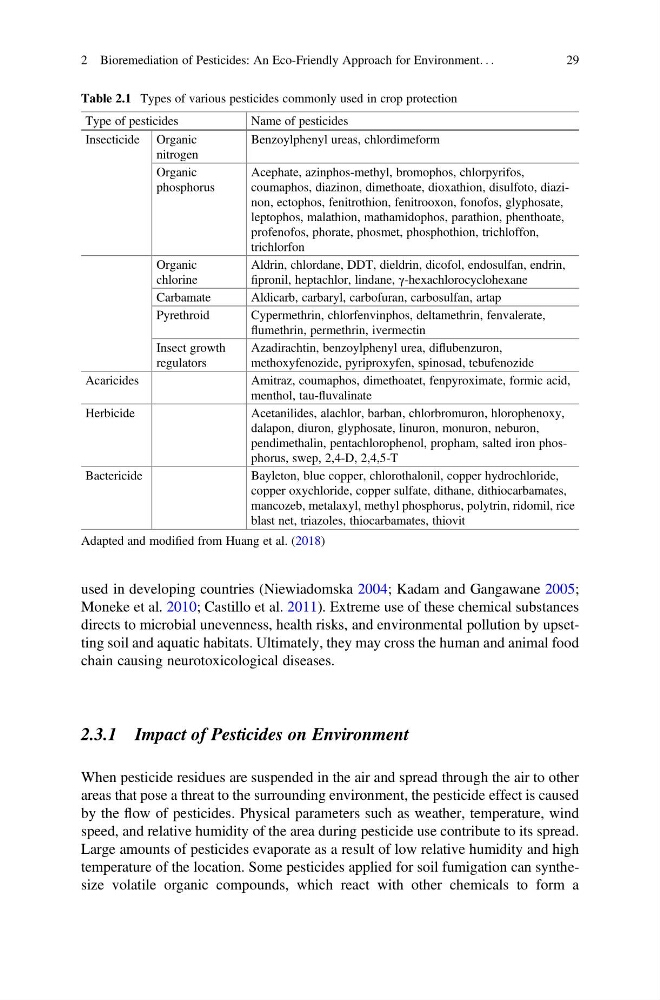
Table 2.1 Types of various pesticides commonly used in crop protection
Type of pesticides
Name of pesticides
Insecticide Organic
nitrogen
Benzoylphenyl ureas, chlordimeform
Organic
phosphorus
Acephate, azinphos-methyl, bromophos, chlorpyrifos,
coumaphos, diazinon, dimethoate, dioxathion, disulfoto, diazinon, ectophos, fenitrothion, fenitrooxon, fonofos, glyphosate,
leptophos, malathion, mathamidophos, parathion, phenthoate,
profenofos, phorate, phosmet, phosphothion, trichloffon,
trichlorfon
Organic
chlorine
Aldrin, chlordane, DDT, dieldrin, dicofol, endosulfan, endrin,
fipronil, heptachlor, lindane, γ-hexachlorocyclohexane
Carbamate
Aldicarb, carbaryl, carbofuran, carbosulfan, artap
Pyrethroid
Cypermethrin, chlorfenvinphos, deltamethrin, fenvalerate,
flumethrin, permethrin, ivermectin
Insect growth
regulators
Azadirachtin, benzoylphenyl urea, diflubenzuron,
methoxyfenozide, pyriproxyfen, spinosad, tebufenozide
Acaricides
Amitraz, coumaphos, dimethoatet, fenpyroximate, formic acid,
menthol, tau-fluvalinate
Herbicide
Acetanilides, alachlor, barban, chlorbromuron, hlorophenoxy,
dalapon, diuron, glyphosate, linuron, monuron, neburon,
pendimethalin, pentachlorophenol, propham, salted iron phosphorus, swep, 2,4-D, 2,4,5-T
Bactericide
Bayleton, blue copper, chlorothalonil, copper hydrochloride,
copper oxychloride, copper sulfate, dithane, dithiocarbamates,
mancozeb, metalaxyl, methyl phosphorus, polytrin, ridomil, rice
blast net, triazoles, thiocarbamates, thiovit
Adapted and modified from Huang et al. (2018)
2 Bioremediation of Pesticides: An Eco-Friendly Approach for Environment. . .
29
Moneke et al. 2010; Castillo et al. 2011). Extreme use of these chemical substances
directs to microbial unevenness, health risks, and environmental pollution by upsetting soil and aquatic habitats. Ultimately, they may cross the human and animal food
chain causing neurotoxicological diseases.
2.3.1 Impact of Pesticides on Environment
When pesticide residues are suspended in the air and spread through the air to other
areas that pose a threat to the surrounding environment, the pesticide effect is caused
by the flow of pesticides. Physical parameters such as weather, temperature, wind
speed, and relative humidity of the area during pesticide use contribute to its spread.
Large amounts of pesticides evaporate as a result of low relative humidity and high
temperature of the location. Some pesticides applied for soil fumigation can synthesize volatile organic compounds, which react with other chemicals to form a
Table 2.1 Types of various pesticides commonly used in crop protection
Type of pesticides
Name of pesticides
Insecticide Organic
nitrogen
Benzoylphenyl ureas, chlordimeform
Organic
phosphorus
Acephate, azinphos-methyl, bromophos, chlorpyrifos,
coumaphos, diazinon, dimethoate, dioxathion, disulfoto, diazinon, ectophos, fenitrothion, fenitrooxon, fonofos, glyphosate,
leptophos, malathion, mathamidophos, parathion, phenthoate,
profenofos, phorate, phosmet, phosphothion, trichloffon,
trichlorfon
Organic
chlorine
Aldrin, chlordane, DDT, dieldrin, dicofol, endosulfan, endrin,
fipronil, heptachlor, lindane, γ-hexachlorocyclohexane
Carbamate
Aldicarb, carbaryl, carbofuran, carbosulfan, artap
Pyrethroid
Cypermethrin, chlorfenvinphos, deltamethrin, fenvalerate,
flumethrin, permethrin, ivermectin
Insect growth
regulators
Azadirachtin, benzoylphenyl urea, diflubenzuron,
methoxyfenozide, pyriproxyfen, spinosad, tebufenozide
Acaricides
Amitraz, coumaphos, dimethoatet, fenpyroximate, formic acid,
menthol, tau-fluvalinate
Herbicide
Acetanilides, alachlor, barban, chlorbromuron, hlorophenoxy,
dalapon, diuron, glyphosate, linuron, monuron, neburon,
pendimethalin, pentachlorophenol, propham, salted iron phosphorus, swep, 2,4-D, 2,4,5-T
Bactericide
Bayleton, blue copper, chlorothalonil, copper hydrochloride,
copper oxychloride, copper sulfate, dithane, dithiocarbamates,
mancozeb, metalaxyl, methyl phosphorus, polytrin, ridomil, rice
blast net, triazoles, thiocarbamates, thiovit
Adapted and modified from Huang et al. (2018)
2 Bioremediation of Pesticides: An Eco-Friendly Approach for Environment. . .
29