

certain microbes to the site of contamination to accelerate the degradation process by
enhancing the physicochemical conditions to encourage the growth of microorganisms. This approach generally costs less than other remediated options and results in
complete transformation of organic contaminants to innocuous substance such as
carbon dioxide, water. The areal zone can be larger and reach areas that would
otherwise be inaccessible. There are some limitations of in situ method of bioremediation. It usually requires an acclimatized population of microorganisms. Toxic
concentration of organic compound may inhibit the activity of indigenous microbes.
Some contaminants cannot be biodegraded, and intermediate compounds may be
more toxic and/or mobile than the parent compound. Over the last several decades,
in situ degradation of biologically foreign chemical compounds such as solvents,
explosive, polycyclic aromatic hydrocarbons, heavy metals and radionuclides has
been used as a cost-effective alternative to incineration or burial in landfills (Alexander 1994).
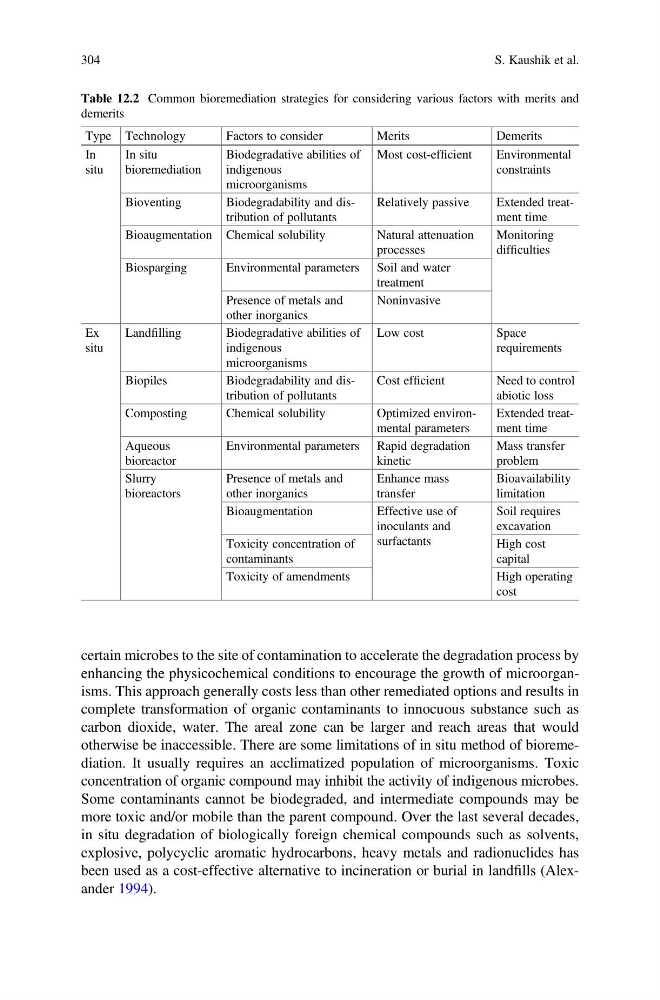
Table 12.2 Common bioremediation strategies for considering various factors with merits and
demerits
Type Technology
Factors to consider
Merits
Demerits
In
situ
In situ
bioremediation
Biodegradative abilities of
indigenous
microorganisms
Most cost-efficient
Environmental
constraints
Bioventing
Biodegradability and distribution of pollutants
Relatively passive
Extended treatment time
Bioaugmentation Chemical solubility
Natural attenuation
processes
Monitoring
difficulties
Biosparging
Environmental parameters Soil and water
treatment
Presence of metals and
other inorganics
Noninvasive
Ex
situ
Landfilling
Biodegradative abilities of
indigenous
microorganisms
Low cost
Space
requirements
Biopiles
Biodegradability and distribution of pollutants
Cost efficient
Need to control
abiotic loss
Composting
Chemical solubility
Optimized environmental parameters
Extended treatment time
Aqueous
bioreactor
Environmental parameters Rapid degradation
kinetic
Mass transfer
problem
Slurry
bioreactors
Presence of metals and
other inorganics
Enhance mass
transfer
Bioavailability
limitation
Bioaugmentation
Effective use of
inoculants and
surfactants
Soil requires
excavation
Toxicity concentration of
contaminants
High cost
capital
Toxicity of amendments
High operating
cost
304
S. Kaushik et al.
enhancing the physicochemical conditions to encourage the growth of microorganisms. This approach generally costs less than other remediated options and results in
complete transformation of organic contaminants to innocuous substance such as
carbon dioxide, water. The areal zone can be larger and reach areas that would
otherwise be inaccessible. There are some limitations of in situ method of bioremediation. It usually requires an acclimatized population of microorganisms. Toxic
concentration of organic compound may inhibit the activity of indigenous microbes.
Some contaminants cannot be biodegraded, and intermediate compounds may be
more toxic and/or mobile than the parent compound. Over the last several decades,
in situ degradation of biologically foreign chemical compounds such as solvents,
explosive, polycyclic aromatic hydrocarbons, heavy metals and radionuclides has
been used as a cost-effective alternative to incineration or burial in landfills (Alexander 1994).
Table 12.2 Common bioremediation strategies for considering various factors with merits and
demerits
Type Technology
Factors to consider
Merits
Demerits
In
situ
In situ
bioremediation
Biodegradative abilities of
indigenous
microorganisms
Most cost-efficient
Environmental
constraints
Bioventing
Biodegradability and distribution of pollutants
Relatively passive
Extended treatment time
Bioaugmentation Chemical solubility
Natural attenuation
processes
Monitoring
difficulties
Biosparging
Environmental parameters Soil and water
treatment
Presence of metals and
other inorganics
Noninvasive
Ex
situ
Landfilling
Biodegradative abilities of
indigenous
microorganisms
Low cost
Space
requirements
Biopiles
Biodegradability and distribution of pollutants
Cost efficient
Need to control
abiotic loss
Composting
Chemical solubility
Optimized environmental parameters
Extended treatment time
Aqueous
bioreactor
Environmental parameters Rapid degradation
kinetic
Mass transfer
problem
Slurry
bioreactors
Presence of metals and
other inorganics
Enhance mass
transfer
Bioavailability
limitation
Bioaugmentation
Effective use of
inoculants and
surfactants
Soil requires
excavation
Toxicity concentration of
contaminants
High cost
capital
Toxicity of amendments
High operating
cost
304
S. Kaushik et al.