

in nature and able to degrade numerous hydrocarbons including short-chain, longchain, and numerous aromatic compounds, including PAHs. These compounds have
low solubility in water. Thus, as the first step in hydrocarbon degradation entails a
membrane-bound oxygenase, it is important for microorganisms to be in direct
contact with the hydrocarbon substrates. One biological approach to accomplish
contact between the microorganisms and water-insoluble hydrocarbons is emulsification of the hydrocarbon. Therefore, it is not unexpected that microorganisms
growing on petroleum typically produce emulsifiers. These surfactants assist to
disperse the oil and to detach the bacteria from the oil droplets after utilizable
hydrocarbon has been depleted (Ron and Rosenberg 2002).
10.2.2 Biodegradation of Oil and Petroleum by Fungi
Crude oil is a primary source of profits for Iraq, which is certainly one of the most
important international oil producers and exporters, ranked nearly fourth internationally in terms of oil reserves. Incidental spills of crude oil and frequent illegal
disposal of oil wastes lead to serious damage to environments. Cleaning up oil
contaminants is a priority project for the restoration of our natural environment.
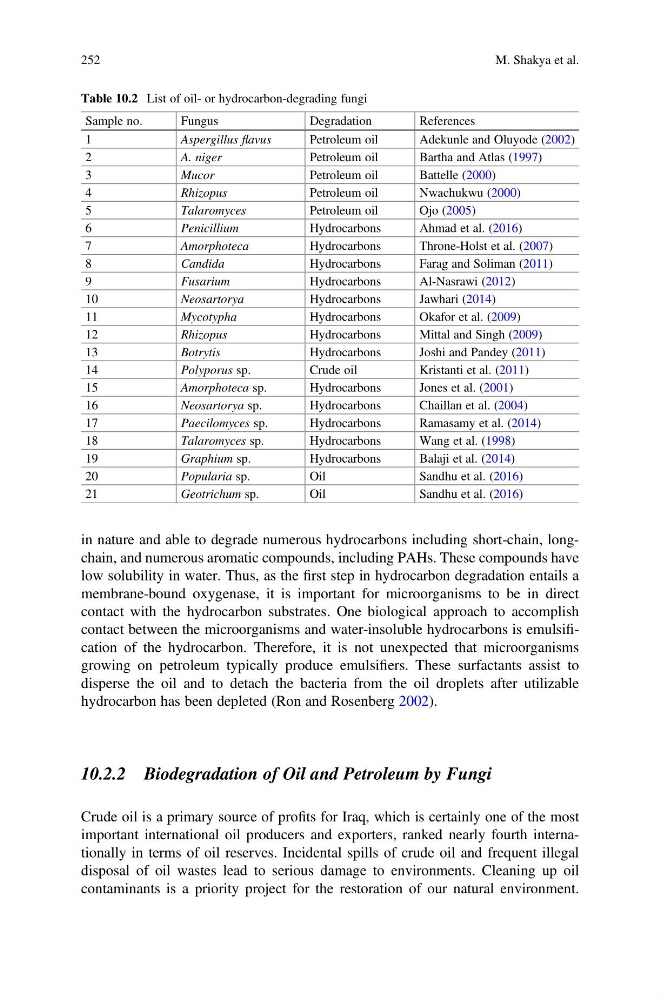
Table 10.2 List of oil- or hydrocarbon-degrading fungi
Sample no.
Fungus
Degradation
References
1
Aspergillus flavus
Petroleum oil
Adekunle and Oluyode (2002)
2
A. niger
Petroleum oil
Bartha and Atlas (1997)
3
Mucor
Petroleum oil
Battelle (2000)
4
Rhizopus
Petroleum oil
Nwachukwu (2000)
5
Talaromyces
Petroleum oil
Ojo (2005)
6
Penicillium
Hydrocarbons
Ahmad et al. (2016)
7
Amorphoteca
Hydrocarbons
Throne-Holst et al. (2007)
8
Candida
Hydrocarbons
Farag and Soliman (2011)
9
Fusarium
Hydrocarbons
Al-Nasrawi (2012)
10
Neosartorya
Hydrocarbons
Jawhari (2014)
11
Mycotypha
Hydrocarbons
Okafor et al. (2009)
12
Rhizopus
Hydrocarbons
Mittal and Singh (2009)
13
Botrytis
Hydrocarbons
Joshi and Pandey (2011)
14
Polyporus sp.
Crude oil
Kristanti et al. (2011)
15
Amorphoteca sp.
Hydrocarbons
Jones et al. (2001)
16
Neosartorya sp.
Hydrocarbons
Chaillan et al. (2004)
17
Paecilomyces sp.
Hydrocarbons
Ramasamy et al. (2014)
18
Talaromyces sp.
Hydrocarbons
Wang et al. (1998)
19
Graphium sp.
Hydrocarbons
Balaji et al. (2014)
20
Popularia sp.
Oil
Sandhu et al. (2016)
21
Geotrichum sp.
Oil
Sandhu et al. (2016)
252
M. Shakya et al.
low solubility in water. Thus, as the first step in hydrocarbon degradation entails a
membrane-bound oxygenase, it is important for microorganisms to be in direct
contact with the hydrocarbon substrates. One biological approach to accomplish
contact between the microorganisms and water-insoluble hydrocarbons is emulsification of the hydrocarbon. Therefore, it is not unexpected that microorganisms
growing on petroleum typically produce emulsifiers. These surfactants assist to
disperse the oil and to detach the bacteria from the oil droplets after utilizable
hydrocarbon has been depleted (Ron and Rosenberg 2002).
10.2.2 Biodegradation of Oil and Petroleum by Fungi
Crude oil is a primary source of profits for Iraq, which is certainly one of the most
important international oil producers and exporters, ranked nearly fourth internationally in terms of oil reserves. Incidental spills of crude oil and frequent illegal
disposal of oil wastes lead to serious damage to environments. Cleaning up oil
contaminants is a priority project for the restoration of our natural environment.
Table 10.2 List of oil- or hydrocarbon-degrading fungi
Sample no.
Fungus
Degradation
References
1
Aspergillus flavus
Petroleum oil
Adekunle and Oluyode (2002)
2
A. niger
Petroleum oil
Bartha and Atlas (1997)
3
Mucor
Petroleum oil
Battelle (2000)
4
Rhizopus
Petroleum oil
Nwachukwu (2000)
5
Talaromyces
Petroleum oil
Ojo (2005)
6
Penicillium
Hydrocarbons
Ahmad et al. (2016)
7
Amorphoteca
Hydrocarbons
Throne-Holst et al. (2007)
8
Candida
Hydrocarbons
Farag and Soliman (2011)
9
Fusarium
Hydrocarbons
Al-Nasrawi (2012)
10
Neosartorya
Hydrocarbons
Jawhari (2014)
11
Mycotypha
Hydrocarbons
Okafor et al. (2009)
12
Rhizopus
Hydrocarbons
Mittal and Singh (2009)
13
Botrytis
Hydrocarbons
Joshi and Pandey (2011)
14
Polyporus sp.
Crude oil
Kristanti et al. (2011)
15
Amorphoteca sp.
Hydrocarbons
Jones et al. (2001)
16
Neosartorya sp.
Hydrocarbons
Chaillan et al. (2004)
17
Paecilomyces sp.
Hydrocarbons
Ramasamy et al. (2014)
18
Talaromyces sp.
Hydrocarbons
Wang et al. (1998)
19
Graphium sp.
Hydrocarbons
Balaji et al. (2014)
20
Popularia sp.
Oil
Sandhu et al. (2016)
21
Geotrichum sp.
Oil
Sandhu et al. (2016)
252
M. Shakya et al.