

6 Identity by Descent in the Mapping of Genetic Traits
125
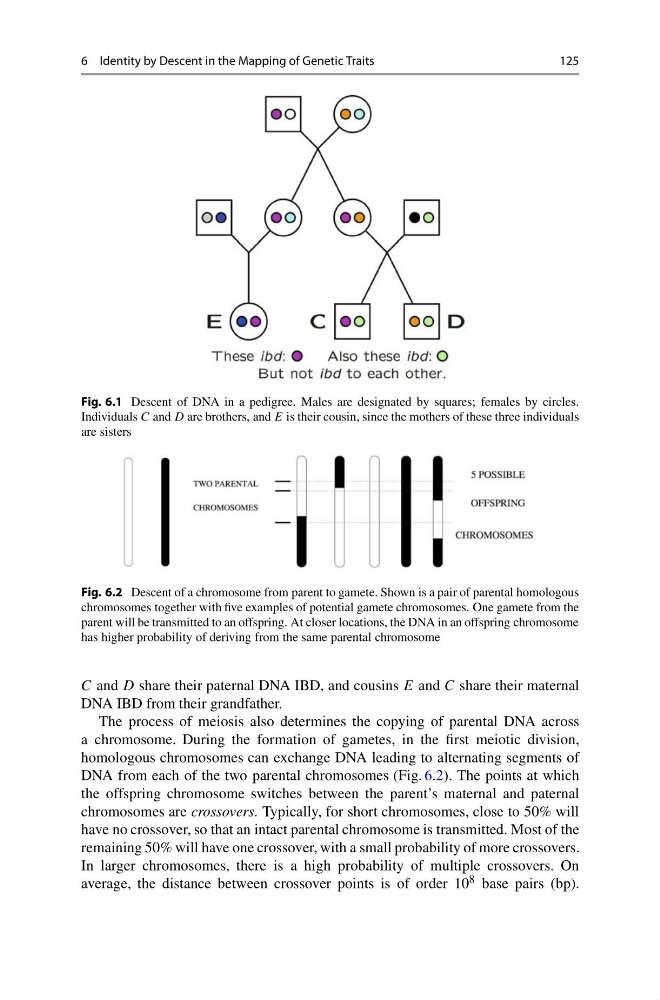
Fig. 6.1 Descent of DNA in a pedigree. Males are designated by squares; females by circles.
Individuals C and D are brothers, and E is their cousin, since the mothers of these three individuals
are sisters
Fig. 6.2 Descent of a chromosome from parent to gamete. Shown is a pair of parental homologous
chromosomes together with five examples of potential gamete chromosomes. One gamete from the
parent will be transmitted to an offspring. At closer locations, the DNA in an offspring chromosome
has higher probability of deriving from the same parental chromosome
C and D share their paternal DNA IBD, and cousins E and C share their maternal
DNA IBD from their grandfather.
The process of meiosis also determines the copying of parental DNA across
a chromosome. During the formation of gametes, in the first meiotic division,
homologous chromosomes can exchange DNA leading to alternating segments of
DNA from each of the two parental chromosomes (Fig. 6.2). The points at which
the offspring chromosome switches between the parent’s maternal and paternal
chromosomes are crossovers. Typically, for short chromosomes, close to 50% will
have no crossover, so that an intact parental chromosome is transmitted. Most of the
remaining 50% will have one crossover, with a small probability of more crossovers.
In larger chromosomes, there is a high probability of multiple crossovers. On
average, the distance between crossover points is of order 10 8 base pairs (bp).
125
Fig. 6.1 Descent of DNA in a pedigree. Males are designated by squares; females by circles.
Individuals C and D are brothers, and E is their cousin, since the mothers of these three individuals
are sisters
Fig. 6.2 Descent of a chromosome from parent to gamete. Shown is a pair of parental homologous
chromosomes together with five examples of potential gamete chromosomes. One gamete from the
parent will be transmitted to an offspring. At closer locations, the DNA in an offspring chromosome
has higher probability of deriving from the same parental chromosome
C and D share their paternal DNA IBD, and cousins E and C share their maternal
DNA IBD from their grandfather.
The process of meiosis also determines the copying of parental DNA across
a chromosome. During the formation of gametes, in the first meiotic division,
homologous chromosomes can exchange DNA leading to alternating segments of
DNA from each of the two parental chromosomes (Fig. 6.2). The points at which
the offspring chromosome switches between the parent’s maternal and paternal
chromosomes are crossovers. Typically, for short chromosomes, close to 50% will
have no crossover, so that an intact parental chromosome is transmitted. Most of the
remaining 50% will have one crossover, with a small probability of more crossovers.
In larger chromosomes, there is a high probability of multiple crossovers. On
average, the distance between crossover points is of order 10 8 base pairs (bp).