

260 Fabien Girard and Manohisoa Rakotondrabe
party respects the commitments. In contrast, written agreements represent the
State/the Fanjakana, requiring signatures and leading to distrust.
The conclusion is self-evident: if the boundary work is to ensure the mediation between different social worlds and to achieve a BCP as a bridge of dialogue between diverging ontologies, the importance of traditional crops in the
peasants’ cosmological system cannot be glossed over, just as it cannot be ignored
that medicinal plants and traditional pharmacopeia belong to a universe of which
Analavory peasants are not part.
With this in mind, recentring the protocol on the MLS of the Plant Treaty
and strengthening farmers’ collective action, which was Bioversity International’s original aim, could be an option. But this would have to be done keeping
in mind the specific mode of rationality which governs the on-farm conservation of crop genetic resources and farmers’ seed exchanges (see, in general,
Altieri et al., 1987; Badstue et al., 2006; Garine et al., 2018; Toledo, 1990), in
particular the cosmological system which presides over the circulation of traditional seeds in Analavory. In other words, reflections on “biocultural heritage”
(Girard & F rison, 2021; Toledo, 2001) seem to be a fundamental prerequisite for
resuming the boundary work in Analavory, a way to recall, in passing, that the
epithet “biocultural” in BCPs is not pure affectation or symbolism. A not-to-beforgotten lesson for the “boundary workers” of Natural Justice.
Annex
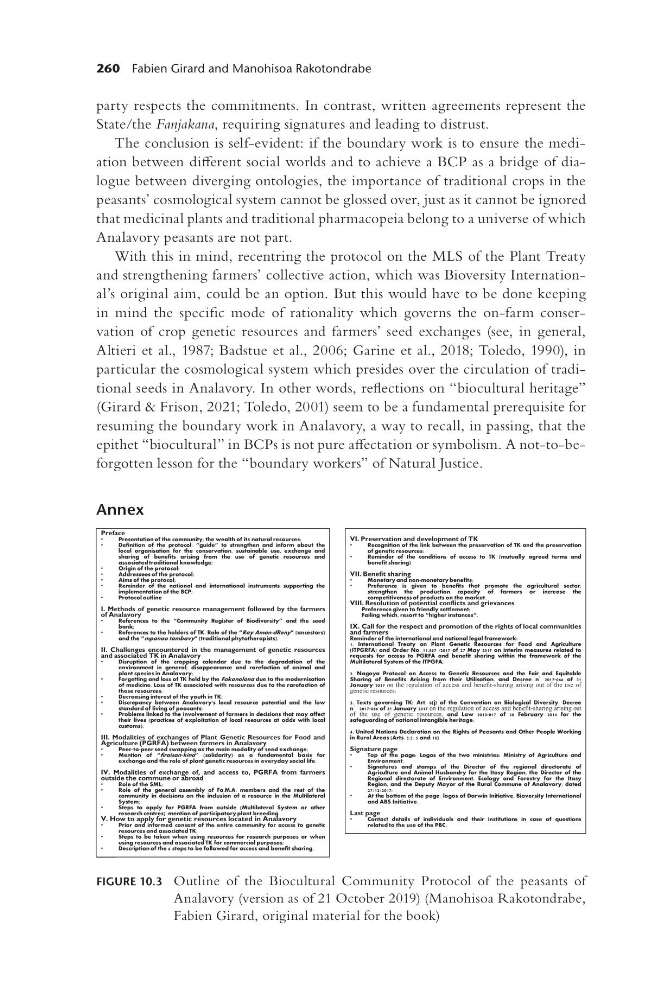
FIGURE 10.3 Outline of the Biocultural Community Protocol of the peasants of
Analavory (version as of 21 October 2019) (Manohisoa Rakotondrabe,
Fabien Girard, original material for the book)
party respects the commitments. In contrast, written agreements represent the
State/the Fanjakana, requiring signatures and leading to distrust.
The conclusion is self-evident: if the boundary work is to ensure the mediation between different social worlds and to achieve a BCP as a bridge of dialogue between diverging ontologies, the importance of traditional crops in the
peasants’ cosmological system cannot be glossed over, just as it cannot be ignored
that medicinal plants and traditional pharmacopeia belong to a universe of which
Analavory peasants are not part.
With this in mind, recentring the protocol on the MLS of the Plant Treaty
and strengthening farmers’ collective action, which was Bioversity International’s original aim, could be an option. But this would have to be done keeping
in mind the specific mode of rationality which governs the on-farm conservation of crop genetic resources and farmers’ seed exchanges (see, in general,
Altieri et al., 1987; Badstue et al., 2006; Garine et al., 2018; Toledo, 1990), in
particular the cosmological system which presides over the circulation of traditional seeds in Analavory. In other words, reflections on “biocultural heritage”
(Girard & F rison, 2021; Toledo, 2001) seem to be a fundamental prerequisite for
resuming the boundary work in Analavory, a way to recall, in passing, that the
epithet “biocultural” in BCPs is not pure affectation or symbolism. A not-to-beforgotten lesson for the “boundary workers” of Natural Justice.
Annex
FIGURE 10.3 Outline of the Biocultural Community Protocol of the peasants of
Analavory (version as of 21 October 2019) (Manohisoa Rakotondrabe,
Fabien Girard, original material for the book)