

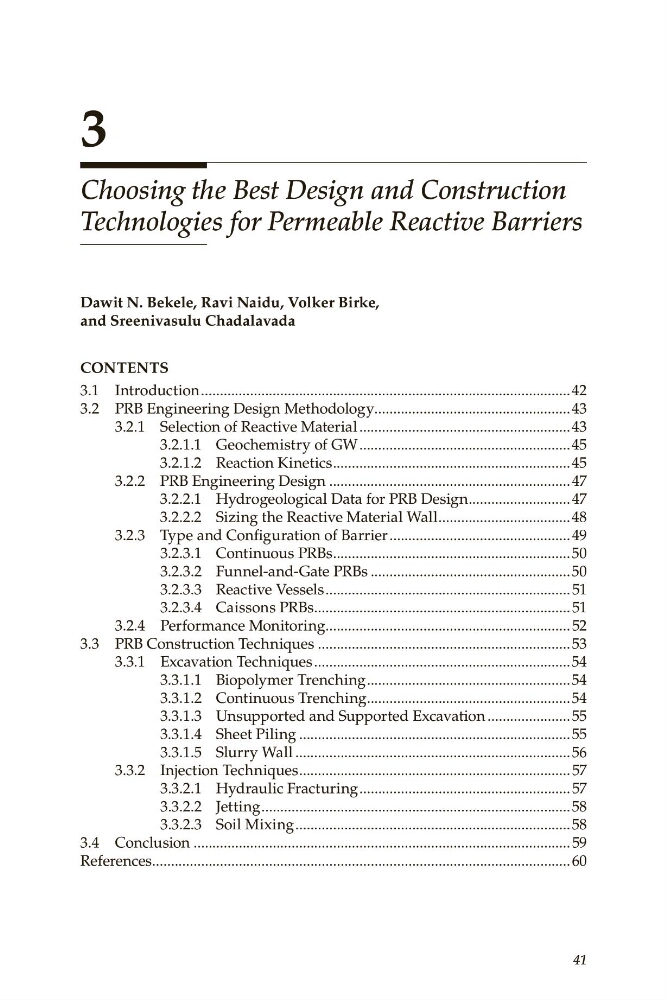
3.1 Introduction..................................................................................................42
3.2 PRB Engineering Design Methodology....................................................43
3.2.1 Selection of Reactive Material ........................................................43
3.2.1.1 Geochemistry of GW ........................................................ 45
3.2.1.2 Reaction Kinetics............................................................... 45
3.2.2 PRB Engineering Design ................................................................ 47
3.2.2.1 Hydrogeological Data for PRB Design........................... 47
3.2.2.2 Sizing the Reactive Material Wall................................... 48
3.2.3 Type and Configuration of Barrier................................................ 49
3.2.3.1 Continuous PRBs............................................................... 50
3.2.3.2 Funnel-and-Gate PRBs ..................................................... 50
3.2.3.3 Reactive Vessels................................................................. 51
3.2.3.4 Caissons PRBs.................................................................... 51
3.2.4 Performance Monitoring................................................................. 52
3.3 PRB Construction Techniques ................................................................... 53
3.3.1 Excavation Techniques ....................................................................54
3.3.1.1 Biopolymer Trenching......................................................54
3.3.1.2 Continuous Trenching......................................................54
3.3.1.3 Unsupported and Supported Excavation ...................... 55
3.3.1.4 Sheet Piling ........................................................................ 55
3.3.1.5 Slurry Wall ......................................................................... 56
3.3.2 Injection Techniques........................................................................ 57
3.3.2.1 Hydraulic Fracturing........................................................ 57
3.3.2.2 Jetting.................................................................................. 58
3.3.2.3 Soil Mixing......................................................................... 58
3.4 Conclusion .................................................................................................... 59
References............................................................................................................... 60
3
Choosing the Best Design and Construction
Technologies for Permeable Reactive Barriers
Dawit N. Bekele, Ravi Naidu, Volker Birke,
and Sreenivasulu Chadalavada
CONTENTS
41
3.2 PRB Engineering Design Methodology....................................................43
3.2.1 Selection of Reactive Material ........................................................43
3.2.1.1 Geochemistry of GW ........................................................ 45
3.2.1.2 Reaction Kinetics............................................................... 45
3.2.2 PRB Engineering Design ................................................................ 47
3.2.2.1 Hydrogeological Data for PRB Design........................... 47
3.2.2.2 Sizing the Reactive Material Wall................................... 48
3.2.3 Type and Configuration of Barrier................................................ 49
3.2.3.1 Continuous PRBs............................................................... 50
3.2.3.2 Funnel-and-Gate PRBs ..................................................... 50
3.2.3.3 Reactive Vessels................................................................. 51
3.2.3.4 Caissons PRBs.................................................................... 51
3.2.4 Performance Monitoring................................................................. 52
3.3 PRB Construction Techniques ................................................................... 53
3.3.1 Excavation Techniques ....................................................................54
3.3.1.1 Biopolymer Trenching......................................................54
3.3.1.2 Continuous Trenching......................................................54
3.3.1.3 Unsupported and Supported Excavation ...................... 55
3.3.1.4 Sheet Piling ........................................................................ 55
3.3.1.5 Slurry Wall ......................................................................... 56
3.3.2 Injection Techniques........................................................................ 57
3.3.2.1 Hydraulic Fracturing........................................................ 57
3.3.2.2 Jetting.................................................................................. 58
3.3.2.3 Soil Mixing......................................................................... 58
3.4 Conclusion .................................................................................................... 59
References............................................................................................................... 60
3
Choosing the Best Design and Construction
Technologies for Permeable Reactive Barriers
Dawit N. Bekele, Ravi Naidu, Volker Birke,
and Sreenivasulu Chadalavada
CONTENTS
41