

Multi-level governance of food waste 255
features, such as a consensual parliamentary political culture, traditionally
strong labour unions and social democratic parties, as well as a distinct
regional identity, they also vary in some respects, and as our research finds,
governance of food waste is one of them. The chapter describes these national
governance arrangements and explains this observed variation. We first briefly
discuss the theoretical and methodological foundation for our research, and
then present food waste governance from a historical perspective, with a particular focus on the actors and milestones involved. We then move to a comparative analysis of the three countries, from which we draw conclusions and
offer possible policy recommendations. We further categorise the observed
governance systems and highlight important actors, who, in each of these
cases, have proven particularly dedicated to food waste reduction.
13.2 Theoretical approach and method
We apply a multi- level governance framework to organise our comparative
analysis of the three country case studies. Multi- level governance is a concept
initially proposed to capture the changing nature of policymaking and policy
implementation in the European Union (Hooghe & Marks, 1996). The
approach builds on the growing complexity of tailoring accurate policy measures in modern states, especially in light of ‘subsidiarity’ and the emergence of
sub- national authority levels as part of the European Union. Marks was one
of the first to introduce the phenomenon in the 1990s (Stephenson, 2013,
p. 818), and the concept has picked up a great deal of academic currency
since, mostly because it has been shown to best reflect the nature of modern
European politics.
The diffusion of authorities and competences, the creation of transnational
regimes and the proliferation of public–private partnerships are all trends
observed in the last three decades, challenging traditional forms of hierarchical authority and undermining traditional centralised forms of government
(Hooghe & Marks, 2010, p. 17). ‘Multi- level’ refers to different levels of
‘governance’, i.e. ‘above’ national (European), national and sub- national,
but it also implies the involvement of both public and private actors at these
levels (Van Kersbergen & Van Waarden, 2004, pp. 149–150). Multi- level
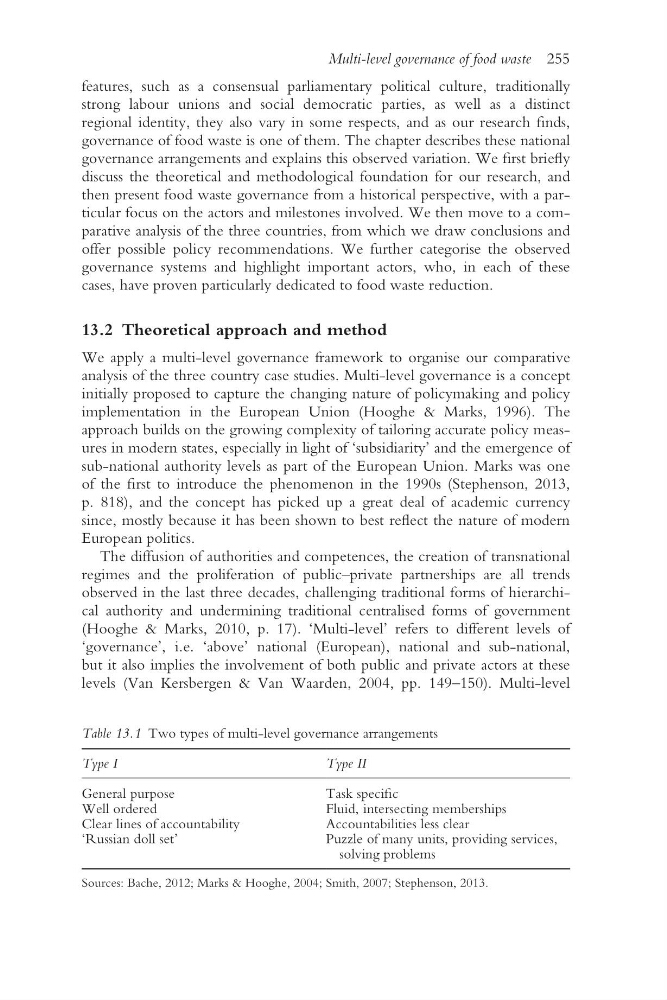
Table 13.1 Two types of multi-level governance arrangements
Type I
Type II
General purpose
Task specific
Well ordered
Fluid, intersecting memberships
Clear lines of accountability
Accountabilities less clear
‘Russian doll set’
Puzzle of many units, providing services,
solving problems
Sources: Bache, 2012; Marks & Hooghe, 2004; Smith, 2007; Stephenson, 2013.
features, such as a consensual parliamentary political culture, traditionally
strong labour unions and social democratic parties, as well as a distinct
regional identity, they also vary in some respects, and as our research finds,
governance of food waste is one of them. The chapter describes these national
governance arrangements and explains this observed variation. We first briefly
discuss the theoretical and methodological foundation for our research, and
then present food waste governance from a historical perspective, with a particular focus on the actors and milestones involved. We then move to a comparative analysis of the three countries, from which we draw conclusions and
offer possible policy recommendations. We further categorise the observed
governance systems and highlight important actors, who, in each of these
cases, have proven particularly dedicated to food waste reduction.
13.2 Theoretical approach and method
We apply a multi- level governance framework to organise our comparative
analysis of the three country case studies. Multi- level governance is a concept
initially proposed to capture the changing nature of policymaking and policy
implementation in the European Union (Hooghe & Marks, 1996). The
approach builds on the growing complexity of tailoring accurate policy measures in modern states, especially in light of ‘subsidiarity’ and the emergence of
sub- national authority levels as part of the European Union. Marks was one
of the first to introduce the phenomenon in the 1990s (Stephenson, 2013,
p. 818), and the concept has picked up a great deal of academic currency
since, mostly because it has been shown to best reflect the nature of modern
European politics.
The diffusion of authorities and competences, the creation of transnational
regimes and the proliferation of public–private partnerships are all trends
observed in the last three decades, challenging traditional forms of hierarchical authority and undermining traditional centralised forms of government
(Hooghe & Marks, 2010, p. 17). ‘Multi- level’ refers to different levels of
‘governance’, i.e. ‘above’ national (European), national and sub- national,
but it also implies the involvement of both public and private actors at these
levels (Van Kersbergen & Van Waarden, 2004, pp. 149–150). Multi- level
Table 13.1 Two types of multi-level governance arrangements
Type I
Type II
General purpose
Task specific
Well ordered
Fluid, intersecting memberships
Clear lines of accountability
Accountabilities less clear
‘Russian doll set’
Puzzle of many units, providing services,
solving problems
Sources: Bache, 2012; Marks & Hooghe, 2004; Smith, 2007; Stephenson, 2013.