

Beyond animal feed? 113
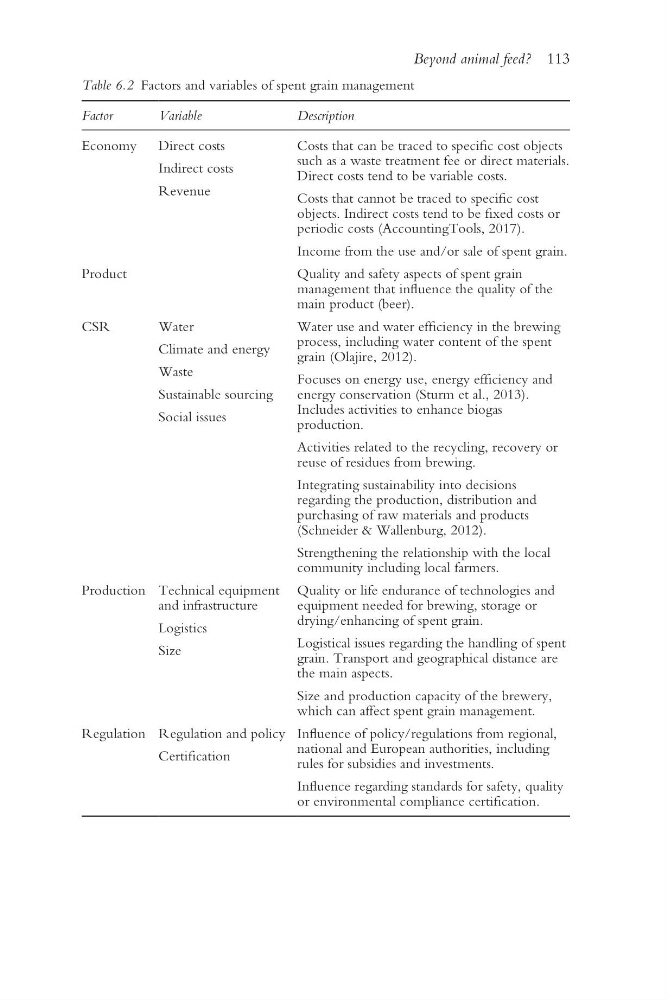
Table 6.2 Factors and variables of spent grain management
Factor
Variable
Description
Economy
Direct costs
Indirect costs
Revenue
Costs that can be traced to specific cost objects
such as a waste treatment fee or direct materials.
Direct costs tend to be variable costs.
Costs that cannot be traced to specific cost
objects. Indirect costs tend to be fixed costs or
periodic costs (AccountingTools, 2017).
Income from the use and/or sale of spent grain.
Product
Quality and safety aspects of spent grain
management that influence the quality of the
main product (beer).
CSR
Water
Climate and energy
Waste
Sustainable sourcing
Social issues
Water use and water efficiency in the brewing
process, including water content of the spent
grain (Olajire, 2012).
Focuses on energy use, energy efficiency and
energy conservation (Sturm et al., 2013).
Includes activities to enhance biogas
production.
Activities related to the recycling, recovery or
reuse of residues from brewing.
Integrating sustainability into decisions
regarding the production, distribution and
purchasing of raw materials and products
(Schneider & Wallenburg, 2012).
Strengthening the relationship with the local
community including local farmers.
Production Technical equipment
and infrastructure
Logistics
Size
Quality or life endurance of technologies and
equipment needed for brewing, storage or
drying/enhancing of spent grain.
Logistical issues regarding the handling of spent
grain. Transport and geographical distance are
the main aspects.
Size and production capacity of the brewery,
which can affect spent grain management.
Regulation Regulation and policy
Certification
Influence of policy/regulations from regional,
national and European authorities, including
rules for subsidies and investments.
Influence regarding standards for safety, quality
or environmental compliance certification.
Table 6.2 Factors and variables of spent grain management
Factor
Variable
Description
Economy
Direct costs
Indirect costs
Revenue
Costs that can be traced to specific cost objects
such as a waste treatment fee or direct materials.
Direct costs tend to be variable costs.
Costs that cannot be traced to specific cost
objects. Indirect costs tend to be fixed costs or
periodic costs (AccountingTools, 2017).
Income from the use and/or sale of spent grain.
Product
Quality and safety aspects of spent grain
management that influence the quality of the
main product (beer).
CSR
Water
Climate and energy
Waste
Sustainable sourcing
Social issues
Water use and water efficiency in the brewing
process, including water content of the spent
grain (Olajire, 2012).
Focuses on energy use, energy efficiency and
energy conservation (Sturm et al., 2013).
Includes activities to enhance biogas
production.
Activities related to the recycling, recovery or
reuse of residues from brewing.
Integrating sustainability into decisions
regarding the production, distribution and
purchasing of raw materials and products
(Schneider & Wallenburg, 2012).
Strengthening the relationship with the local
community including local farmers.
Production Technical equipment
and infrastructure
Logistics
Size
Quality or life endurance of technologies and
equipment needed for brewing, storage or
drying/enhancing of spent grain.
Logistical issues regarding the handling of spent
grain. Transport and geographical distance are
the main aspects.
Size and production capacity of the brewery,
which can affect spent grain management.
Regulation Regulation and policy
Certification
Influence of policy/regulations from regional,
national and European authorities, including
rules for subsidies and investments.
Influence regarding standards for safety, quality
or environmental compliance certification.