

46 Ground improvement by deep vibratory methods
low volume horizontal water jets situated near the vibrator coupling are
now switched on with the aim of undercutting the sand at the sides of the
bore and at making it to fall to the vibrator tip, thereby providing a sufficient volume of sand to be compacted. Ideally, the water flow should also
be strong enough in terms of volume to maintain a stable bore, balancing
any water losses along the bore and at the surface.
Compaction occurs as the vibrator is slowly withdrawn from the ground.
It is important at this stage that the vibrator maintains a good and permanent contact with the surrounding soil. When this contact is lost, the vibrator motions may become irregular resulting in insufficient compaction.
For better operational control, compaction is normally done in stages of
0.3–1.0 m maintaining the machine steady at each level either for a predetermined time or until monitored vibrator data indicate sufficient compaction having taken place (i.e., power consumption of the electric motor or
oil pressure of the hydraulic engine). These time intervals are generally
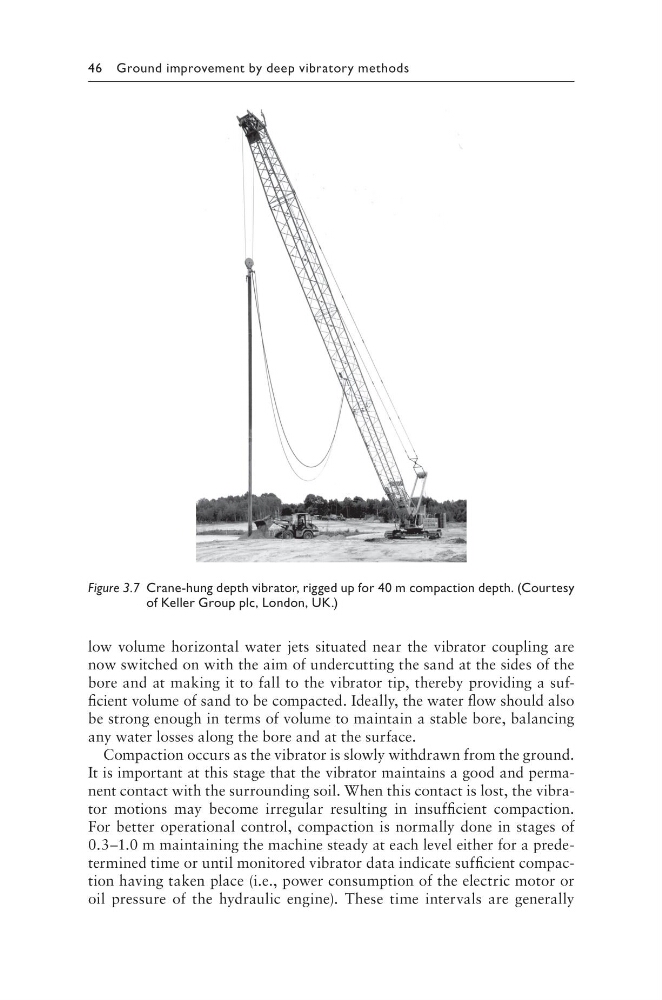
Figure 3.7 Crane-hung depth vibrator, rigged up for 40 m compaction depth. (Courtesy
of Keller Group plc, London, UK.)
low volume horizontal water jets situated near the vibrator coupling are
now switched on with the aim of undercutting the sand at the sides of the
bore and at making it to fall to the vibrator tip, thereby providing a sufficient volume of sand to be compacted. Ideally, the water flow should also
be strong enough in terms of volume to maintain a stable bore, balancing
any water losses along the bore and at the surface.
Compaction occurs as the vibrator is slowly withdrawn from the ground.
It is important at this stage that the vibrator maintains a good and permanent contact with the surrounding soil. When this contact is lost, the vibrator motions may become irregular resulting in insufficient compaction.
For better operational control, compaction is normally done in stages of
0.3–1.0 m maintaining the machine steady at each level either for a predetermined time or until monitored vibrator data indicate sufficient compaction having taken place (i.e., power consumption of the electric motor or
oil pressure of the hydraulic engine). These time intervals are generally
Figure 3.7 Crane-hung depth vibrator, rigged up for 40 m compaction depth. (Courtesy
of Keller Group plc, London, UK.)