

34 Ground improvement by deep vibratory methods
of the electric motor. A 50 Hz power source results in a 3000 or 1500 rpm
rotational motion with a single or double pole drive. When operating at
60 Hz, the rotational speed is 3600 or 1800 rpm, respectively.
The width of the horizontal oscillation 2a, or double amplitude, is linearly distributed over the length of the vibrator (see Figure 3.2). It is zero at
the vibrator coupling and reaches its maximum—typically between 10 and
almost 50 mm—at the point or nose cone of the freely suspended vibrator
when operating without any lateral confinement. This is also the point of
maximum acceleration a·ω 2 at the vibrator surface, which can reach more
than 50 g.
Electric motor
Flexible coupling
Water
Air supply
Extension tube
Fin
Upper water jets
Nose cone
Eccentric weight
Lower water jets
or
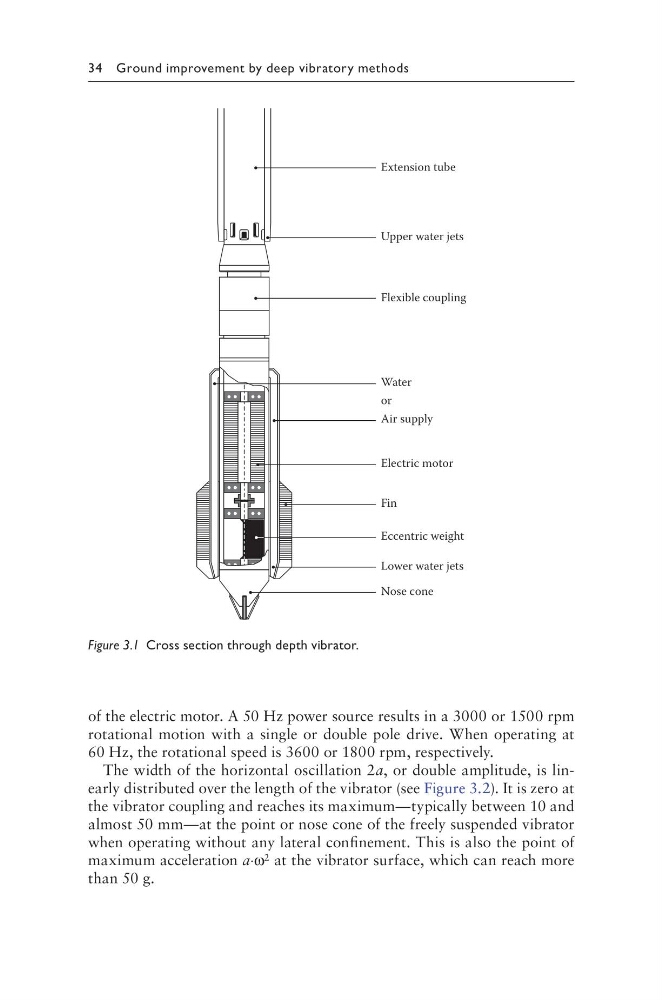
Figure 3.1 Cross section through depth vibrator.
of the electric motor. A 50 Hz power source results in a 3000 or 1500 rpm
rotational motion with a single or double pole drive. When operating at
60 Hz, the rotational speed is 3600 or 1800 rpm, respectively.
The width of the horizontal oscillation 2a, or double amplitude, is linearly distributed over the length of the vibrator (see Figure 3.2). It is zero at
the vibrator coupling and reaches its maximum—typically between 10 and
almost 50 mm—at the point or nose cone of the freely suspended vibrator
when operating without any lateral confinement. This is also the point of
maximum acceleration a·ω 2 at the vibrator surface, which can reach more
than 50 g.
Electric motor
Flexible coupling
Water
Air supply
Extension tube
Fin
Upper water jets
Nose cone
Eccentric weight
Lower water jets
or
Figure 3.1 Cross section through depth vibrator.