

116 Ground improvement by deep vibratory methods
discussed in this section. The terms vibro replacement stone column, vibro
stone column, and stone column are used synonymously. In contrast to a
single stone column, a group of stone columns is represented by a certain
number of stone columns that are arranged in such a way that they influence
each other in the ground when loaded and this is described as the group
effect. In contrast to the isolated stone column and the column group, large
numbers of regularly arranged stone columns of equal diameter and equal
separating distance are normally referred to as an infinite grid pattern of
stone columns. Their behavior under load can be described by the unit cell
concept, whereby—irrespective of the position of the column within the
grid—all columns behave equally, and the description of the mechanical
model of a single column is representative for the whole grid. Figure 4.8 gives
the geometry of the unit cell for triangular and square grid patterns.
The equivalent diameter of the circular unit cell d e as a function of the
column distance b can be calculated as
d
b
e = ⋅
C
(4.1)
with
C = 1.05 for the triangular pattern
C = 1.13 for the square pattern
Gravel pump
Barge
Weak soil
Rock
Water
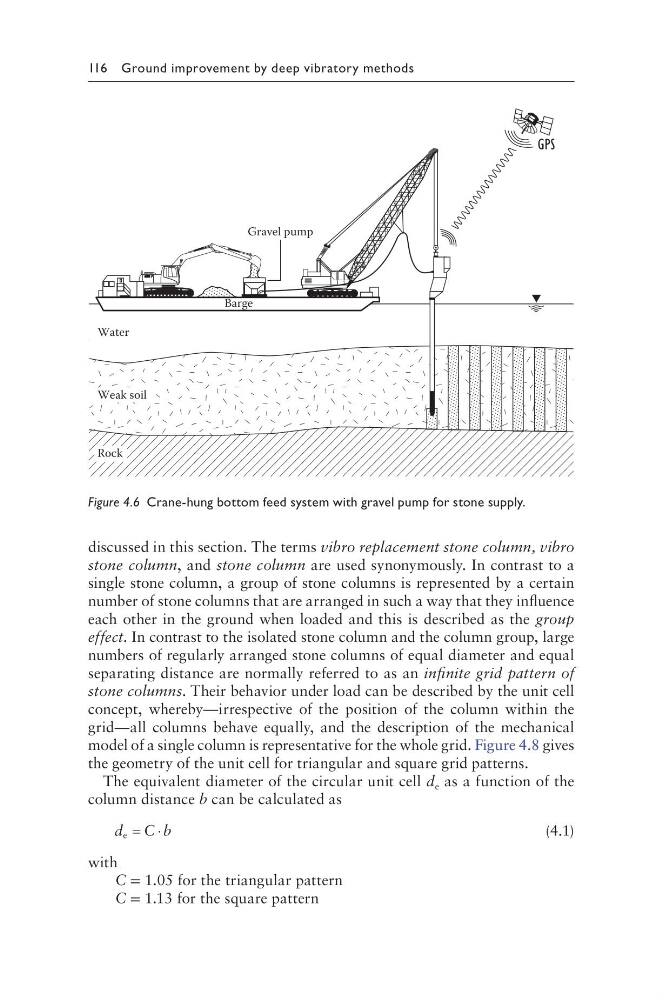
Figure 4.6 Crane-hung bottom feed system with gravel pump for stone supply.
discussed in this section. The terms vibro replacement stone column, vibro
stone column, and stone column are used synonymously. In contrast to a
single stone column, a group of stone columns is represented by a certain
number of stone columns that are arranged in such a way that they influence
each other in the ground when loaded and this is described as the group
effect. In contrast to the isolated stone column and the column group, large
numbers of regularly arranged stone columns of equal diameter and equal
separating distance are normally referred to as an infinite grid pattern of
stone columns. Their behavior under load can be described by the unit cell
concept, whereby—irrespective of the position of the column within the
grid—all columns behave equally, and the description of the mechanical
model of a single column is representative for the whole grid. Figure 4.8 gives
the geometry of the unit cell for triangular and square grid patterns.
The equivalent diameter of the circular unit cell d e as a function of the
column distance b can be calculated as
d
b
e = ⋅
C
(4.1)
with
C = 1.05 for the triangular pattern
C = 1.13 for the square pattern
Gravel pump
Barge
Weak soil
Rock
Water
Figure 4.6 Crane-hung bottom feed system with gravel pump for stone supply.