

114 Ground improvement by deep vibratory methods
depth vibrator with standard extension tubes and welded on gravel pipes. A
gravel container capable of carrying about 2 m 3 of stone backfill is situated
on top of the extension tube. Gravel is filled at ground level by payloaders into a hopper, which is pulled upward and delivers its contents via a
receiving mechanism into the gravel container, from where it is released by
special controls into the gravel pipe. Figure 4.5 shows a crane-hung bottom
feed assembly for constructing deep stone columns.
When stone columns need to be built through deep water, supply of
the backfill stone to the machine is often rather difficult to achieve. For
such applications, special pneumatic or hydraulic transport systems for the
gravel were developed which replace mechanical stone delivery by hoppers.
Figure 4.6 shows such an arrangement by which the gravel is transported
hydraulically via special pumps and hoses into the receiving tank from where
stone supply takes place through the gravel pipe in an uninterrupted manner
under constant air pressure until it is released at the vibrator nose cone into
the soil. Up and down movements compact the stone and displace it into
the soil, thus forming a stone column up to the sea bottom or ground level.
In very deep water, the length of the vibrator unit with its extension
tubes and the associated stone storage and delivery system may become
excessively long, requiring very large cranes to handle the whole apparatus. To avoid this drawback, specialist contractors have developed recently
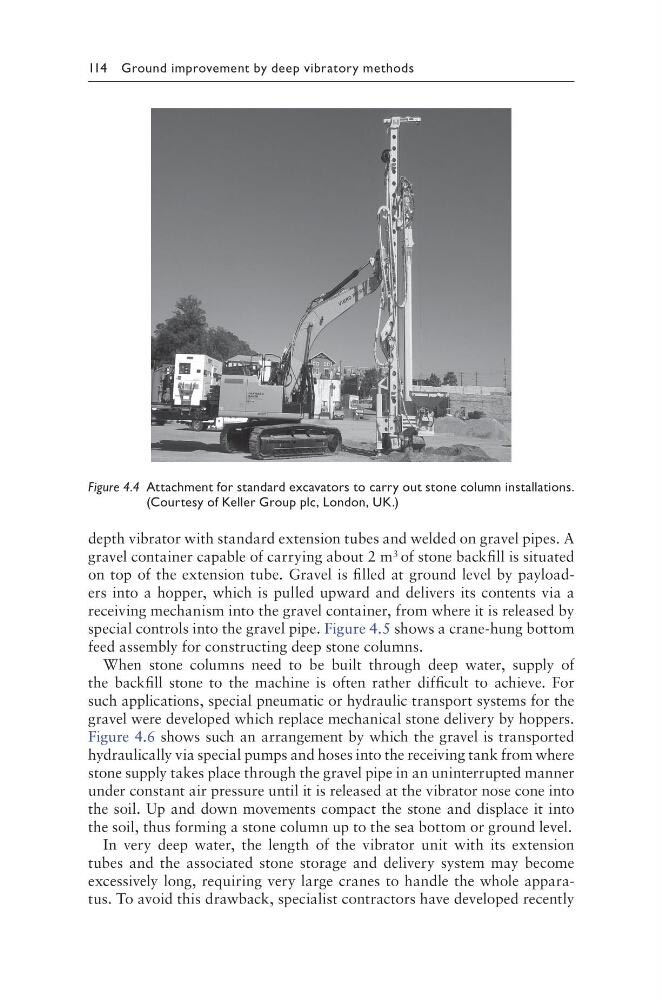
Figure 4.4 Attachment for standard excavators to carry out stone column installations.
(Courtesy of Keller Group plc, London, UK.)
depth vibrator with standard extension tubes and welded on gravel pipes. A
gravel container capable of carrying about 2 m 3 of stone backfill is situated
on top of the extension tube. Gravel is filled at ground level by payloaders into a hopper, which is pulled upward and delivers its contents via a
receiving mechanism into the gravel container, from where it is released by
special controls into the gravel pipe. Figure 4.5 shows a crane-hung bottom
feed assembly for constructing deep stone columns.
When stone columns need to be built through deep water, supply of
the backfill stone to the machine is often rather difficult to achieve. For
such applications, special pneumatic or hydraulic transport systems for the
gravel were developed which replace mechanical stone delivery by hoppers.
Figure 4.6 shows such an arrangement by which the gravel is transported
hydraulically via special pumps and hoses into the receiving tank from where
stone supply takes place through the gravel pipe in an uninterrupted manner
under constant air pressure until it is released at the vibrator nose cone into
the soil. Up and down movements compact the stone and displace it into
the soil, thus forming a stone column up to the sea bottom or ground level.
In very deep water, the length of the vibrator unit with its extension
tubes and the associated stone storage and delivery system may become
excessively long, requiring very large cranes to handle the whole apparatus. To avoid this drawback, specialist contractors have developed recently
Figure 4.4 Attachment for standard excavators to carry out stone column installations.
(Courtesy of Keller Group plc, London, UK.)