

102 Ground improvement by deep vibratory methods
3.6.7 Ground improvement works for the
extension of a major shipyard in Singapore
The economical development of the island state of Singapore during the
past 50 years depended to a large extent on its readiness to extend its territory into the sea by land reclamation. The construction of a large hull
shop on Tuas Island for a major shipbuilder in Singapore required extensive ground improvement measures which were carried out in 2013 and
2014 for the foundation of its heavy structures. The main facility is the
hull shop measuring 680 × 185 m. Its heavy loads result in floor loadings
typically ranging between 20 and 160 kPa with column loadings of 100–
2000 kN. The structural design was based upon relatively stringent deformation criteria: The postconstruction settlement was generally restricted
to only 50 mm (in certain areas up to 100 mm were allowed) with the differential settlement along crane rails not to exceed 1 in 1000.
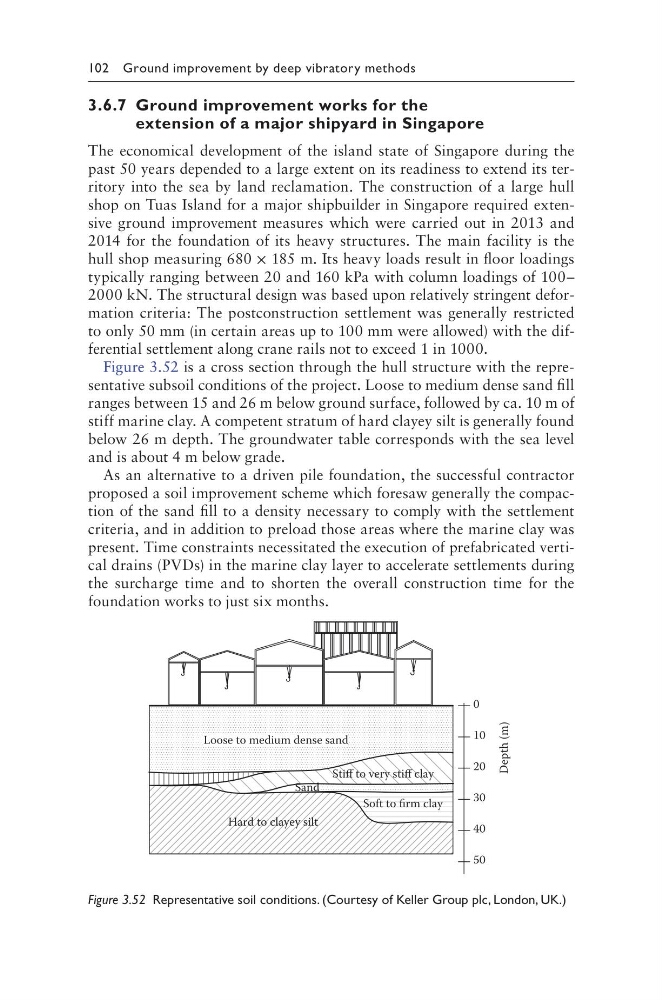
Figure 3.52 is a cross section through the hull structure with the representative subsoil conditions of the project. Loose to medium dense sand fill
ranges between 15 and 26 m below ground surface, followed by ca. 10 m of
stiff marine clay. A competent stratum of hard clayey silt is generally found
below 26 m depth. The groundwater table corresponds with the sea level
and is about 4 m below grade.
As an alternative to a driven pile foundation, the successful contractor
proposed a soil improvement scheme which foresaw generally the compaction of the sand fill to a density necessary to comply with the settlement
criteria, and in addition to preload those areas where the marine clay was
present. Time constraints necessitated the execution of prefabricated vertical drains (PVDs) in the marine clay layer to accelerate settlements during
the surcharge time and to shorten the overall construction time for the
foundation works to just six months.
Depth (m)
50
Sand
Loose to medium dense sand
Hard to clayey silt
Stiff to very stiff clay
Soft to firm clay
40
30
20
10
0
Figure 3.52 Representative soil conditions. (Courtesy of Keller Group plc, London, UK.)
3.6.7 Ground improvement works for the
extension of a major shipyard in Singapore
The economical development of the island state of Singapore during the
past 50 years depended to a large extent on its readiness to extend its territory into the sea by land reclamation. The construction of a large hull
shop on Tuas Island for a major shipbuilder in Singapore required extensive ground improvement measures which were carried out in 2013 and
2014 for the foundation of its heavy structures. The main facility is the
hull shop measuring 680 × 185 m. Its heavy loads result in floor loadings
typically ranging between 20 and 160 kPa with column loadings of 100–
2000 kN. The structural design was based upon relatively stringent deformation criteria: The postconstruction settlement was generally restricted
to only 50 mm (in certain areas up to 100 mm were allowed) with the differential settlement along crane rails not to exceed 1 in 1000.
Figure 3.52 is a cross section through the hull structure with the representative subsoil conditions of the project. Loose to medium dense sand fill
ranges between 15 and 26 m below ground surface, followed by ca. 10 m of
stiff marine clay. A competent stratum of hard clayey silt is generally found
below 26 m depth. The groundwater table corresponds with the sea level
and is about 4 m below grade.
As an alternative to a driven pile foundation, the successful contractor
proposed a soil improvement scheme which foresaw generally the compaction of the sand fill to a density necessary to comply with the settlement
criteria, and in addition to preload those areas where the marine clay was
present. Time constraints necessitated the execution of prefabricated vertical drains (PVDs) in the marine clay layer to accelerate settlements during
the surcharge time and to shorten the overall construction time for the
foundation works to just six months.
Depth (m)
50
Sand
Loose to medium dense sand
Hard to clayey silt
Stiff to very stiff clay
Soft to firm clay
40
30
20
10
0
Figure 3.52 Representative soil conditions. (Courtesy of Keller Group plc, London, UK.)