

60
et al. 2015), the two main haplotype lineages did not enter into contact in the populations of raulí. The eruption of Lanín volcano, belonging to a volcanoes chain,
contemporary to the moment of forests expansion (i.e. about 3000 y BP) probably
avoided the mixing of northern and southern migratory routes (Millerón et al. 2008).
Similar results were encountered in N. obliqua, highlighting the impact of volcanism on the evolutionary history of these species.
3.2.2 Recent Processes Shaping the Genetic Structure:
Identifying Hotspots of Diversity
Phylogeographic studies revealed major patterns in the genetic structure of raulí
populations that allowed the detection of two main groups with a north-south distribution in Argentina. In order to search for the most variable populations and
strengthen this structure, it is necessary to look into recent processes (i.e. gene flow)
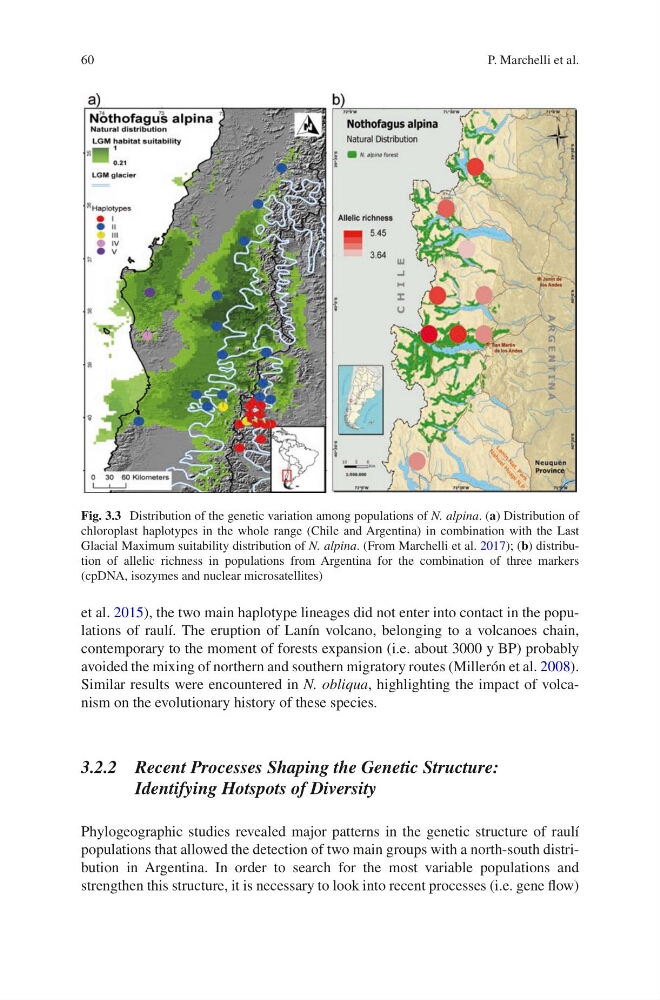
Fig. 3.3 Distribution of the genetic variation among populations of N. alpina. (a) Distribution of
chloroplast haplotypes in the whole range (Chile and Argentina) in combination with the Last
Glacial Maximum suitability distribution of N. alpina. (From Marchelli et al. 2017); (b) distribution of allelic richness in populations from Argentina for the combination of three markers
(cpDNA, isozymes and nuclear microsatellites)
P. Marchelli et al.
et al. 2015), the two main haplotype lineages did not enter into contact in the populations of raulí. The eruption of Lanín volcano, belonging to a volcanoes chain,
contemporary to the moment of forests expansion (i.e. about 3000 y BP) probably
avoided the mixing of northern and southern migratory routes (Millerón et al. 2008).
Similar results were encountered in N. obliqua, highlighting the impact of volcanism on the evolutionary history of these species.
3.2.2 Recent Processes Shaping the Genetic Structure:
Identifying Hotspots of Diversity
Phylogeographic studies revealed major patterns in the genetic structure of raulí
populations that allowed the detection of two main groups with a north-south distribution in Argentina. In order to search for the most variable populations and
strengthen this structure, it is necessary to look into recent processes (i.e. gene flow)
Fig. 3.3 Distribution of the genetic variation among populations of N. alpina. (a) Distribution of
chloroplast haplotypes in the whole range (Chile and Argentina) in combination with the Last
Glacial Maximum suitability distribution of N. alpina. (From Marchelli et al. 2017); (b) distribution of allelic richness in populations from Argentina for the combination of three markers
(cpDNA, isozymes and nuclear microsatellites)
P. Marchelli et al.