

439
16.3.2 Domestication Experience and Breeding Strategy
According to nursery trials, H. impetiginosus seeds germinate 7–10 days after sowing, with a germination capacity of 90%. In addition to this excellent germination
performance, the species had a great initial growth compared to other Handroanthus
species, reaching the field transplant size at 150 days, with a height of 37–40 cm
(Zapater et al. 2005).
Several experimental plots of the species have been installed in NWA; however
many are not documented. A 6-year-old plantation installed in Yuto Experimental
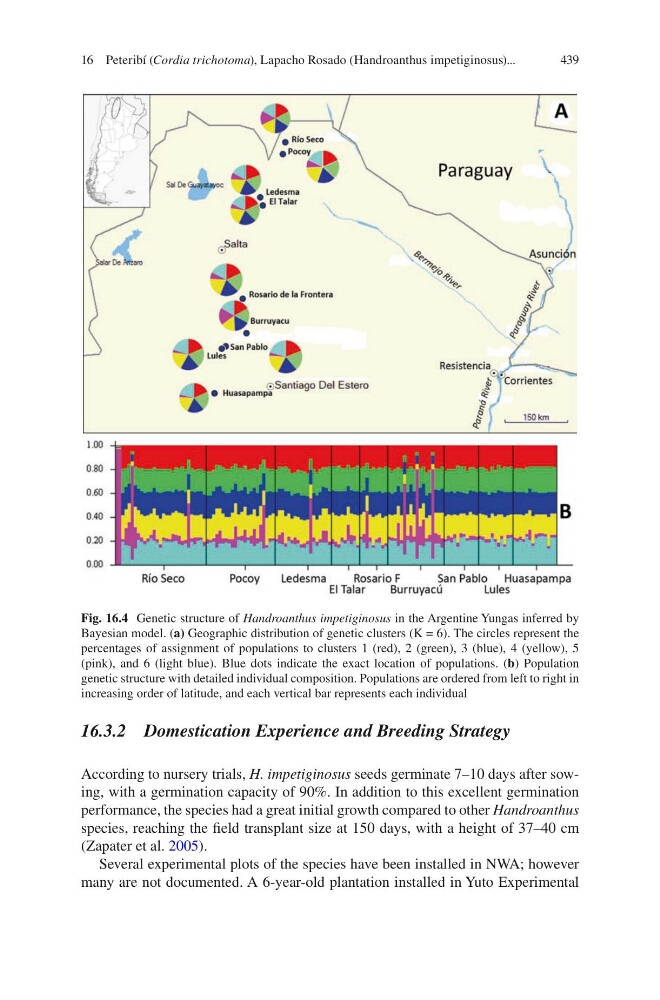
Fig. 16.4 Genetic structure of Handroanthus impetiginosus in the Argentine Yungas inferred by
Bayesian model. (a) Geographic distribution of genetic clusters (K = 6). The circles represent the
percentages of assignment of populations to clusters 1 (red), 2 (green), 3 (blue), 4 (yellow), 5
(pink), and 6 (light blue). Blue dots indicate the exact location of populations. (b) Population
genetic structure with detailed individual composition. Populations are ordered from left to right in
increasing order of latitude, and each vertical bar represents each individual
16 Peteribí (Cordia trichotoma), Lapacho Rosado (Handroanthus impetiginosus)...
16.3.2 Domestication Experience and Breeding Strategy
According to nursery trials, H. impetiginosus seeds germinate 7–10 days after sowing, with a germination capacity of 90%. In addition to this excellent germination
performance, the species had a great initial growth compared to other Handroanthus
species, reaching the field transplant size at 150 days, with a height of 37–40 cm
(Zapater et al. 2005).
Several experimental plots of the species have been installed in NWA; however
many are not documented. A 6-year-old plantation installed in Yuto Experimental
Fig. 16.4 Genetic structure of Handroanthus impetiginosus in the Argentine Yungas inferred by
Bayesian model. (a) Geographic distribution of genetic clusters (K = 6). The circles represent the
percentages of assignment of populations to clusters 1 (red), 2 (green), 3 (blue), 4 (yellow), 5
(pink), and 6 (light blue). Blue dots indicate the exact location of populations. (b) Population
genetic structure with detailed individual composition. Populations are ordered from left to right in
increasing order of latitude, and each vertical bar represents each individual
16 Peteribí (Cordia trichotoma), Lapacho Rosado (Handroanthus impetiginosus)...