

437
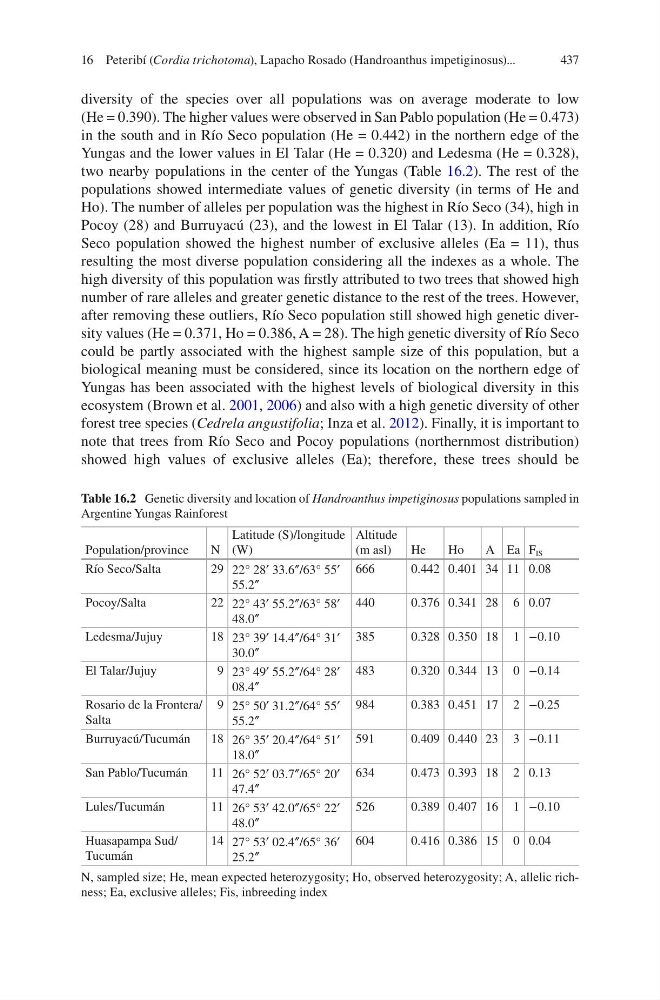
diversity of the species over all populations was on average moderate to low
(He = 0.390). The higher values were observed in San Pablo population (He = 0.473)
in the south and in Río Seco population (He = 0.442) in the northern edge of the
Yungas and the lower values in El Talar (He = 0.320) and Ledesma (He = 0.328),
two nearby populations in the center of the Yungas (Table 16.2). The rest of the
populations showed intermediate values of genetic diversity (in terms of He and
Ho). The number of alleles per population was the highest in Río Seco (34), high in
Pocoy (28) and Burruyacú (23), and the lowest in El Talar (13). In addition, Río
Seco population showed the highest number of exclusive alleles (Ea = 11), thus
resulting the most diverse population considering all the indexes as a whole. The
high diversity of this population was firstly attributed to two trees that showed high
number of rare alleles and greater genetic distance to the rest of the trees. However,
after removing these outliers, Río Seco population still showed high genetic diversity values (He = 0.371, Ho = 0.386, A = 28). The high genetic diversity of Río Seco
could be partly associated with the highest sample size of this population, but a
biological meaning must be considered, since its location on the northern edge of
Yungas has been associated with the highest levels of biological diversity in this
ecosystem (Brown et al. 2001, 2006) and also with a high genetic diversity of other
forest tree species (Cedrela angustifolia; Inza et al. 2012). Finally, it is important to
note that trees from Río Seco and Pocoy populations (northernmost distribution)
showed high values of exclusive alleles (Ea); therefore, these trees should be
Table 16.2 Genetic diversity and location of Handroanthus impetiginosus populations sampled in
Argentine Yungas Rainforest
Population/province
N
Latitude (S)/longitude
(W)
Altitude
(m asl)
He
Ho
A Ea F IS
Río Seco/Salta
29 22° 28′ 33.6″/63° 55′
55.2″
666
0.442 0.401 34 11 0.08
Pocoy/Salta
22 22° 43′ 55.2″/63° 58′
48.0″
440
0.376 0.341 28 6 0.07
Ledesma/Jujuy
18 23° 39′ 14.4″/64° 31′
30.0″
385
0.328 0.350 18 1 −0.10
El Talar/Jujuy
9 23° 49′ 55.2″/64° 28′
08.4″
483
0.320 0.344 13 0 −0.14
Rosario de la Frontera/
Salta
9 25° 50′ 31.2″/64° 55′
55.2″
984
0.383 0.451 17 2 −0.25
Burruyacú/Tucumán
18 26° 35′ 20.4″/64° 51′
18.0″
591
0.409 0.440 23 3 −0.11
San Pablo/Tucumán
11 26° 52′ 03.7″/65° 20′
47.4″
634
0.473 0.393 18 2 0.13
Lules/Tucumán
11 26° 53′ 42.0″/65° 22′
48.0″
526
0.389 0.407 16 1 −0.10
Huasapampa Sud/
Tucumán
14 27° 53′ 02.4″/65° 36′
25.2″
604
0.416 0.386 15 0 0.04
N, sampled size; He, mean expected heterozygosity; Ho, observed heterozygosity; A, allelic richness; Ea, exclusive alleles; Fis, inbreeding index
16 Peteribí (Cordia trichotoma), Lapacho Rosado (Handroanthus impetiginosus)...
diversity of the species over all populations was on average moderate to low
(He = 0.390). The higher values were observed in San Pablo population (He = 0.473)
in the south and in Río Seco population (He = 0.442) in the northern edge of the
Yungas and the lower values in El Talar (He = 0.320) and Ledesma (He = 0.328),
two nearby populations in the center of the Yungas (Table 16.2). The rest of the
populations showed intermediate values of genetic diversity (in terms of He and
Ho). The number of alleles per population was the highest in Río Seco (34), high in
Pocoy (28) and Burruyacú (23), and the lowest in El Talar (13). In addition, Río
Seco population showed the highest number of exclusive alleles (Ea = 11), thus
resulting the most diverse population considering all the indexes as a whole. The
high diversity of this population was firstly attributed to two trees that showed high
number of rare alleles and greater genetic distance to the rest of the trees. However,
after removing these outliers, Río Seco population still showed high genetic diversity values (He = 0.371, Ho = 0.386, A = 28). The high genetic diversity of Río Seco
could be partly associated with the highest sample size of this population, but a
biological meaning must be considered, since its location on the northern edge of
Yungas has been associated with the highest levels of biological diversity in this
ecosystem (Brown et al. 2001, 2006) and also with a high genetic diversity of other
forest tree species (Cedrela angustifolia; Inza et al. 2012). Finally, it is important to
note that trees from Río Seco and Pocoy populations (northernmost distribution)
showed high values of exclusive alleles (Ea); therefore, these trees should be
Table 16.2 Genetic diversity and location of Handroanthus impetiginosus populations sampled in
Argentine Yungas Rainforest
Population/province
N
Latitude (S)/longitude
(W)
Altitude
(m asl)
He
Ho
A Ea F IS
Río Seco/Salta
29 22° 28′ 33.6″/63° 55′
55.2″
666
0.442 0.401 34 11 0.08
Pocoy/Salta
22 22° 43′ 55.2″/63° 58′
48.0″
440
0.376 0.341 28 6 0.07
Ledesma/Jujuy
18 23° 39′ 14.4″/64° 31′
30.0″
385
0.328 0.350 18 1 −0.10
El Talar/Jujuy
9 23° 49′ 55.2″/64° 28′
08.4″
483
0.320 0.344 13 0 −0.14
Rosario de la Frontera/
Salta
9 25° 50′ 31.2″/64° 55′
55.2″
984
0.383 0.451 17 2 −0.25
Burruyacú/Tucumán
18 26° 35′ 20.4″/64° 51′
18.0″
591
0.409 0.440 23 3 −0.11
San Pablo/Tucumán
11 26° 52′ 03.7″/65° 20′
47.4″
634
0.473 0.393 18 2 0.13
Lules/Tucumán
11 26° 53′ 42.0″/65° 22′
48.0″
526
0.389 0.407 16 1 −0.10
Huasapampa Sud/
Tucumán
14 27° 53′ 02.4″/65° 36′
25.2″
604
0.416 0.386 15 0 0.04
N, sampled size; He, mean expected heterozygosity; Ho, observed heterozygosity; A, allelic richness; Ea, exclusive alleles; Fis, inbreeding index
16 Peteribí (Cordia trichotoma), Lapacho Rosado (Handroanthus impetiginosus)...