

35
Pampas region. In addition, the large afforestation with pinus species with industrial
purposes from the second half of the twentieth century contributed to the destruction of the forests. In Chile, more than 2.5 million ha of Pinus radiata and Eucalyptus
sp. were planted in former Subantarctic forests. In Argentina, the impact is lower
since only 100,000 ha were planted and not all of them in forests lands.
Although overexploitation continued during the twentieth century, a new conception of the forest emerged, and public policies aimed at the conservation of the
Subantarctic forest begun to take shape. In 1922, Argentina creates its first National
Park, initially named “Parque Nacional del Sur,” being since 1934 Nahuel Huapi
National Park. This park occupies a surface of 717,000 ha. From then on, a national
conservation policy was institutionalized, which was later imitated by provincial
and municipal jurisdictions, based on which numerous protected natural areas were
created. Until recent times, the aim was not focus on the preservation of vulnerable
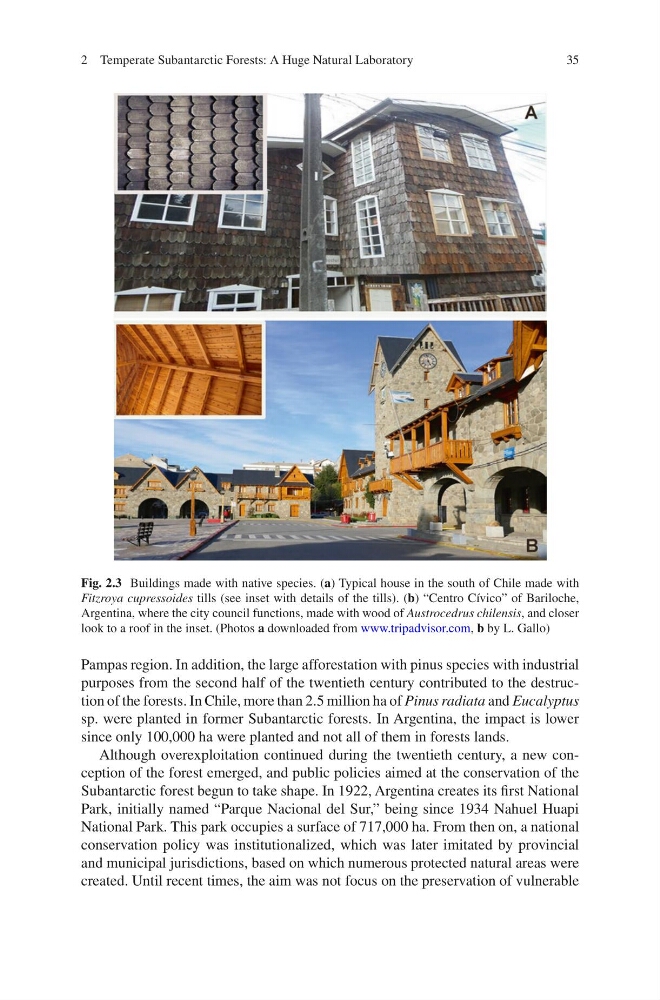
Fig. 2.3 Buildings made with native species. (a) Typical house in the south of Chile made with
Fitzroya cupressoides tills (see inset with details of the tills). (b) “Centro Cívico” of Bariloche,
Argentina, where the city council functions, made with wood of Austrocedrus chilensis, and closer
look to a roof in the inset. (Photos a downloaded from www.tripadvisor.com, b by L. Gallo)
2 Temperate Subantarctic Forests: A Huge Natural Laboratory
Pampas region. In addition, the large afforestation with pinus species with industrial
purposes from the second half of the twentieth century contributed to the destruction of the forests. In Chile, more than 2.5 million ha of Pinus radiata and Eucalyptus
sp. were planted in former Subantarctic forests. In Argentina, the impact is lower
since only 100,000 ha were planted and not all of them in forests lands.
Although overexploitation continued during the twentieth century, a new conception of the forest emerged, and public policies aimed at the conservation of the
Subantarctic forest begun to take shape. In 1922, Argentina creates its first National
Park, initially named “Parque Nacional del Sur,” being since 1934 Nahuel Huapi
National Park. This park occupies a surface of 717,000 ha. From then on, a national
conservation policy was institutionalized, which was later imitated by provincial
and municipal jurisdictions, based on which numerous protected natural areas were
created. Until recent times, the aim was not focus on the preservation of vulnerable
Fig. 2.3 Buildings made with native species. (a) Typical house in the south of Chile made with
Fitzroya cupressoides tills (see inset with details of the tills). (b) “Centro Cívico” of Bariloche,
Argentina, where the city council functions, made with wood of Austrocedrus chilensis, and closer
look to a roof in the inset. (Photos a downloaded from www.tripadvisor.com, b by L. Gallo)
2 Temperate Subantarctic Forests: A Huge Natural Laboratory