

385
summer (~25 °C), leaves of these plants were sampled, and subsequently their content of simple soluble sugar (glucose + fructose) was measured. In addition, another
sampling was done in autumn on four dates characterized by a temperature gradient
of 5°, from 18.3 °C to 13.6 °C. In each sampling, six leaflets per plant were collected: three were subjected to −10 °C in a test tube for 1 h and then immersed in
deionized water for 2 h at 25 °C. The other three leaflets were used for the control
treatment. The electrical conductivity was measured in both solutions, thus obtaining the value of index of tissue damage (ITD) as the ratio between the conductivity
of the control treatment and the conductivity of the −10 °C treatment (Grignola 2014).
Sugar concentration for the species and provenances studied varied according to
the period of the year. For autumn-winter season, significant differences in sugar
concentration were observed, but not in the summer season, differentiating C. fissilis from C. balansae, C. angustifolia, C. saltensis, and the hybrid. The highest value
was recorded in Guaraní provenance of C. fissilis (22.5 ± 0.7 mg of glucose + fructose per gram of dry leaves) (Grignola 2014). Regarding the damage of the cell
membranes due to freezing, significant differences among species were observed at
the four sampling dates, with C. fissilis differing from C. balansae, C. saltensis, and
the hybrid in three of the four sampling dates. The species from the Alto Paraná
Rainforest had the most negative value of ln-ITD, which means that it was the one
with the lowest solute release, namely, the one with the least damage to cell membranes. In addition, differences between the origins were demonstrated for the four
sampling dates. For the two lowest temperature dates, the two C. fissilis provenances
were different from the other ten tested. These results, besides differentiating C. fissilis from the Yungas species, would be indicative of a lower sensitivity to cold
conditions for the species of the Alto Paraná Rainforest, at least at the seedling stage
(Grignola 2014).
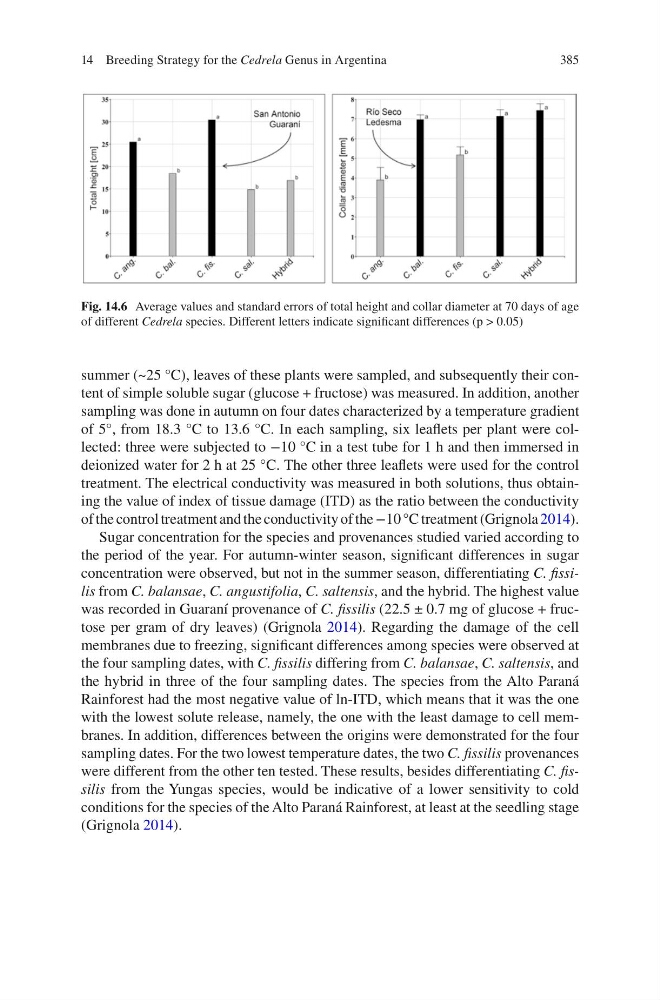
Fig. 14.6 Average values and standard errors of total height and collar diameter at 70 days of age
of different Cedrela species. Different letters indicate significant differences (p > 0.05)
14 Breeding Strategy for the Cedrela Genus in Argentina
summer (~25 °C), leaves of these plants were sampled, and subsequently their content of simple soluble sugar (glucose + fructose) was measured. In addition, another
sampling was done in autumn on four dates characterized by a temperature gradient
of 5°, from 18.3 °C to 13.6 °C. In each sampling, six leaflets per plant were collected: three were subjected to −10 °C in a test tube for 1 h and then immersed in
deionized water for 2 h at 25 °C. The other three leaflets were used for the control
treatment. The electrical conductivity was measured in both solutions, thus obtaining the value of index of tissue damage (ITD) as the ratio between the conductivity
of the control treatment and the conductivity of the −10 °C treatment (Grignola 2014).
Sugar concentration for the species and provenances studied varied according to
the period of the year. For autumn-winter season, significant differences in sugar
concentration were observed, but not in the summer season, differentiating C. fissilis from C. balansae, C. angustifolia, C. saltensis, and the hybrid. The highest value
was recorded in Guaraní provenance of C. fissilis (22.5 ± 0.7 mg of glucose + fructose per gram of dry leaves) (Grignola 2014). Regarding the damage of the cell
membranes due to freezing, significant differences among species were observed at
the four sampling dates, with C. fissilis differing from C. balansae, C. saltensis, and
the hybrid in three of the four sampling dates. The species from the Alto Paraná
Rainforest had the most negative value of ln-ITD, which means that it was the one
with the lowest solute release, namely, the one with the least damage to cell membranes. In addition, differences between the origins were demonstrated for the four
sampling dates. For the two lowest temperature dates, the two C. fissilis provenances
were different from the other ten tested. These results, besides differentiating C. fissilis from the Yungas species, would be indicative of a lower sensitivity to cold
conditions for the species of the Alto Paraná Rainforest, at least at the seedling stage
(Grignola 2014).
Fig. 14.6 Average values and standard errors of total height and collar diameter at 70 days of age
of different Cedrela species. Different letters indicate significant differences (p > 0.05)
14 Breeding Strategy for the Cedrela Genus in Argentina