

273
decrease of nursery time from 5 months with the traditional methods to 3 months
with the modern technics, also reducing the volume of substrate, and the cost of
both, production and movement of seedlings to the plantation. Information about
edaphic characteristics for site quality determination for cultivating P. alba is also
available. The best growth corresponds to soils with more than 50 cm of effective
root exploration depth, good drainage, and light surface texture (loamy and/or silty
sandy soils). On the contrary, in soils with somewhat poor drainage, shallow, heavy
(clayey) soils, and that are in subnormal relief (depressed, waterlogged), the algarrobos are small in size (Kees et al. 2019). To initiate the plantation, site preparation
depends on numerous factors, like previous use, type of soil, owner resources availability, and identification of possible soil limitations, among others. The usually
used tools are a disc harrow, and if required, a subsoiler to improve the water infiltration. Planting should be done outside the frost period and coinciding with either
the beginning or the end of the rainy season, which is concentrated in summer. The
planting period can be longer, but always depending on water availability and favorable temperatures (MAGyP 2016).
In P. alba, the stem is formed by the succession of branching orders, of which
three branches are generated, generally one aborts and one of the rest takes an orthotropic direction (upward) to continue with the trunk (Moglia and Giménez 2006).
As a result of this branching model, young algarrobo plants without management
show abundant branching, making it difficult to identify a main axis. Therefore,
formative and lift pruning are essential to allow knot-free timber to form around the
defect core. This management tends to be used for high-quality uses such as veneer,
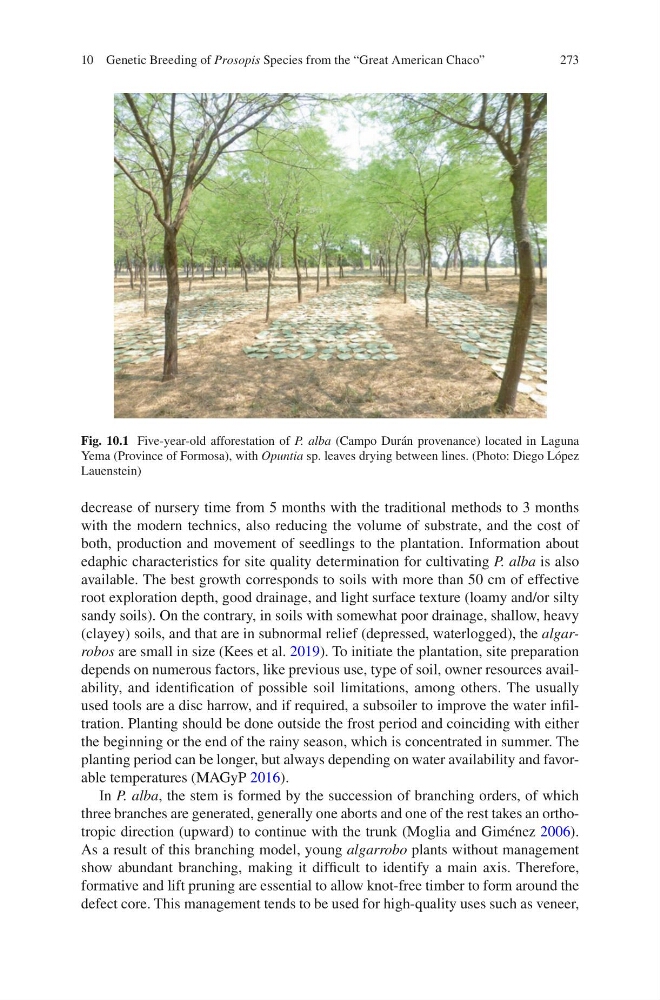
Fig. 10.1 Five-year-old afforestation of P. alba (Campo Durán provenance) located in Laguna
Yema (Province of Formosa), with Opuntia sp. leaves drying between lines. (Photo: Diego López
Lauenstein)
10 Genetic Breeding of Prosopis Species from the “Great American Chaco”
decrease of nursery time from 5 months with the traditional methods to 3 months
with the modern technics, also reducing the volume of substrate, and the cost of
both, production and movement of seedlings to the plantation. Information about
edaphic characteristics for site quality determination for cultivating P. alba is also
available. The best growth corresponds to soils with more than 50 cm of effective
root exploration depth, good drainage, and light surface texture (loamy and/or silty
sandy soils). On the contrary, in soils with somewhat poor drainage, shallow, heavy
(clayey) soils, and that are in subnormal relief (depressed, waterlogged), the algarrobos are small in size (Kees et al. 2019). To initiate the plantation, site preparation
depends on numerous factors, like previous use, type of soil, owner resources availability, and identification of possible soil limitations, among others. The usually
used tools are a disc harrow, and if required, a subsoiler to improve the water infiltration. Planting should be done outside the frost period and coinciding with either
the beginning or the end of the rainy season, which is concentrated in summer. The
planting period can be longer, but always depending on water availability and favorable temperatures (MAGyP 2016).
In P. alba, the stem is formed by the succession of branching orders, of which
three branches are generated, generally one aborts and one of the rest takes an orthotropic direction (upward) to continue with the trunk (Moglia and Giménez 2006).
As a result of this branching model, young algarrobo plants without management
show abundant branching, making it difficult to identify a main axis. Therefore,
formative and lift pruning are essential to allow knot-free timber to form around the
defect core. This management tends to be used for high-quality uses such as veneer,
Fig. 10.1 Five-year-old afforestation of P. alba (Campo Durán provenance) located in Laguna
Yema (Province of Formosa), with Opuntia sp. leaves drying between lines. (Photo: Diego López
Lauenstein)
10 Genetic Breeding of Prosopis Species from the “Great American Chaco”