

162
et al. 1982). When closing the stomata, the plant impedes the entrance of new air
into the leaves and continues fixating carbon from the air of the intercellular spaces
and sub-stomatal chambers. Consequently, the
13
C concentration starts to increase
in the intercellular air spaces, and the discrimination in favor of
12
C diminishes.
Thus, the enrichment of
12
C of the plant tissues decreases, making the proportion of
both isotopes in the plant less distant from that of the atmospheric CO 2 . Hence,
plants showing higher stomatal control show lower carbon isotope discrimination
when photosynthesis is not limited by non-stomatal factors. From the relation
between the carbon isotope composition of the plant and that of the atmospheric
CO 2 , the carbon isotope discrimination parameter Δ can be derived, which is
inversely correlated to WUE (Farquhar et al. 1989).
In order to know whether the Δ trait differs between the arid and humid extremes
of the cypress range and also to determine the intra population genetic variance,
Pastorino et al. (2012) sampled in a common garden field trial 246 5-year-old seedlings from 41 open-pollinated families corresponding to 1 humid (Río Azul) and 2
xeric, isolated populations from the steppe (Pilcañeu Norte and Pilcañeu Sur)
(Table 6.1). The trial had been installed in the field 2 years before tissue sampling
for the determination of their Δ values. Little twigs from each sampled seedling
were dried, ground, and analyzed with a mass spectrometer to measure their stable
carbon isotope composition (
13
C/
12
C). The main result of this work was that the arid
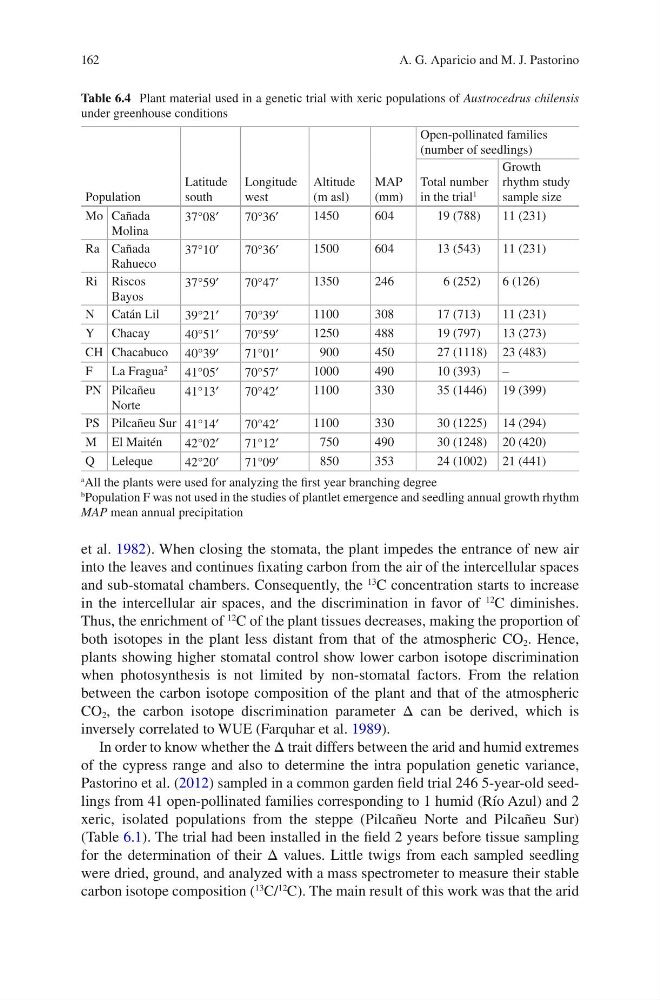
Table 6.4 Plant material used in a genetic trial with xeric populations of Austrocedrus chilensis
under greenhouse conditions
Population
Latitude
south
Longitude
west
Altitude
(m asl)
MAP
(mm)
Open-pollinated families
(number of seedlings)
Total number
in the trial
1
Growth
rhythm study
sample size
Mo Cañada
Molina
37°08′
70°36′
1450
604
19 (788)
11 (231)
Ra Cañada
Rahueco
37°10′
70°36′
1500
604
13 (543)
11 (231)
Ri Riscos
Bayos
37°59′
70°47′
1350
246
6 (252)
6 (126)
N Catán Lil
39°21′
70°39′
1100
308
17 (713)
11 (231)
Y Chacay
40°51′
70°59′
1250
488
19 (797)
13 (273)
CH Chacabuco 40°39′
71°01′
900
450
27 (1118) 23 (483)
F
La Fragua
2
41°05′
70°57′
1000
490
10 (393)
–
PN Pilcañeu
Norte
41°13′
70°42′
1100
330
35 (1446) 19 (399)
PS Pilcañeu Sur 41°14′
70°42′
1100
330
30 (1225) 14 (294)
M El Maitén
42°02′
71°12′
750
490
30 (1248) 20 (420)
Q Leleque
42°20′
71°09′
850
353
24 (1002) 21 (441)
a
All the plants were used for analyzing the first year branching degree
b
Population F was not used in the studies of plantlet emergence and seedling annual growth rhythm
MAP mean annual precipitation
A. G. Aparicio and M. J. Pastorino
et al. 1982). When closing the stomata, the plant impedes the entrance of new air
into the leaves and continues fixating carbon from the air of the intercellular spaces
and sub-stomatal chambers. Consequently, the
13
C concentration starts to increase
in the intercellular air spaces, and the discrimination in favor of
12
C diminishes.
Thus, the enrichment of
12
C of the plant tissues decreases, making the proportion of
both isotopes in the plant less distant from that of the atmospheric CO 2 . Hence,
plants showing higher stomatal control show lower carbon isotope discrimination
when photosynthesis is not limited by non-stomatal factors. From the relation
between the carbon isotope composition of the plant and that of the atmospheric
CO 2 , the carbon isotope discrimination parameter Δ can be derived, which is
inversely correlated to WUE (Farquhar et al. 1989).
In order to know whether the Δ trait differs between the arid and humid extremes
of the cypress range and also to determine the intra population genetic variance,
Pastorino et al. (2012) sampled in a common garden field trial 246 5-year-old seedlings from 41 open-pollinated families corresponding to 1 humid (Río Azul) and 2
xeric, isolated populations from the steppe (Pilcañeu Norte and Pilcañeu Sur)
(Table 6.1). The trial had been installed in the field 2 years before tissue sampling
for the determination of their Δ values. Little twigs from each sampled seedling
were dried, ground, and analyzed with a mass spectrometer to measure their stable
carbon isotope composition (
13
C/
12
C). The main result of this work was that the arid
Table 6.4 Plant material used in a genetic trial with xeric populations of Austrocedrus chilensis
under greenhouse conditions
Population
Latitude
south
Longitude
west
Altitude
(m asl)
MAP
(mm)
Open-pollinated families
(number of seedlings)
Total number
in the trial
1
Growth
rhythm study
sample size
Mo Cañada
Molina
37°08′
70°36′
1450
604
19 (788)
11 (231)
Ra Cañada
Rahueco
37°10′
70°36′
1500
604
13 (543)
11 (231)
Ri Riscos
Bayos
37°59′
70°47′
1350
246
6 (252)
6 (126)
N Catán Lil
39°21′
70°39′
1100
308
17 (713)
11 (231)
Y Chacay
40°51′
70°59′
1250
488
19 (797)
13 (273)
CH Chacabuco 40°39′
71°01′
900
450
27 (1118) 23 (483)
F
La Fragua
2
41°05′
70°57′
1000
490
10 (393)
–
PN Pilcañeu
Norte
41°13′
70°42′
1100
330
35 (1446) 19 (399)
PS Pilcañeu Sur 41°14′
70°42′
1100
330
30 (1225) 14 (294)
M El Maitén
42°02′
71°12′
750
490
30 (1248) 20 (420)
Q Leleque
42°20′
71°09′
850
353
24 (1002) 21 (441)
a
All the plants were used for analyzing the first year branching degree
b
Population F was not used in the studies of plantlet emergence and seedling annual growth rhythm
MAP mean annual precipitation
A. G. Aparicio and M. J. Pastorino