

126
flowering lag along altitude (Rusch 1993), an aspect that fosters hybridization in
contact areas. Accordingly, the high proportion of admixed individuals, mainly
detected around 42–44° S, suggests a tight correspondence between the frequency
and the geographic location of hybridization.
Colonization from multiple refugia, as reported before, implied population bottlenecks, founding events, and admixture of genetic lineages. The convergence of
isolated, independently evolving, intra-specific lineages during colonization might
increase genetic diversity (Comps et al. 2001; Alberto et al. 2008; Durand et al.
2009) due to their admixture (e.g., Vendramin et al. 1998; Petit et al. 2003). The
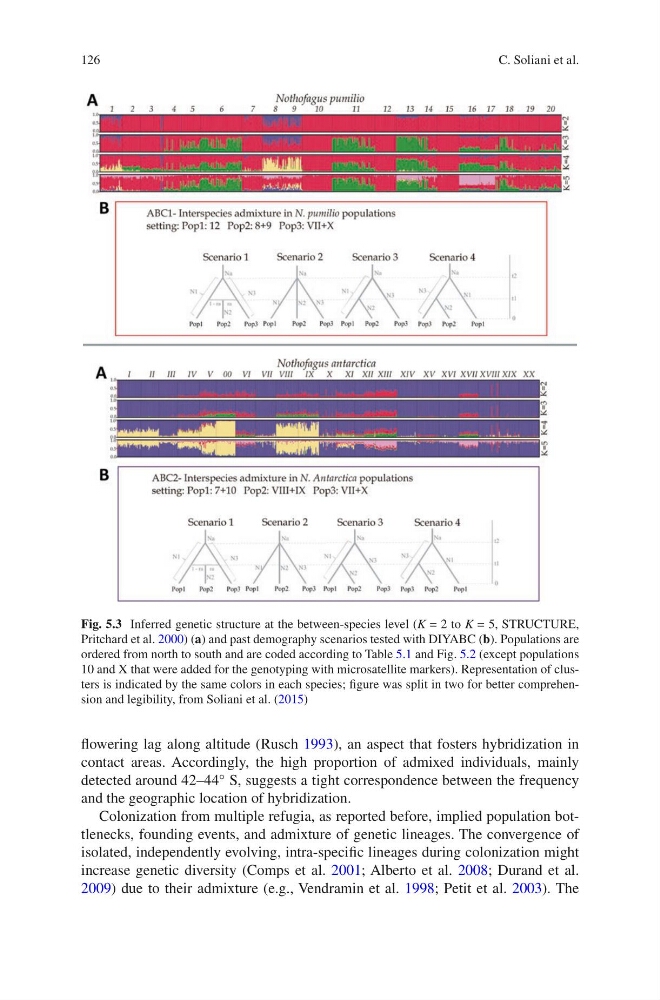
Fig. 5.3 Inferred genetic structure at the between-species level (K = 2 to K = 5, STRUCTURE,
Pritchard et al. 2000) (a) and past demography scenarios tested with DIYABC (b). Populations are
ordered from north to south and are coded according to Table 5.1 and Fig. 5.2 (except populations
10 and X that were added for the genotyping with microsatellite markers). Representation of clusters is indicated by the same colors in each species; figure was split in two for better comprehension and legibility, from Soliani et al. (2015)
C. Soliani et al.
flowering lag along altitude (Rusch 1993), an aspect that fosters hybridization in
contact areas. Accordingly, the high proportion of admixed individuals, mainly
detected around 42–44° S, suggests a tight correspondence between the frequency
and the geographic location of hybridization.
Colonization from multiple refugia, as reported before, implied population bottlenecks, founding events, and admixture of genetic lineages. The convergence of
isolated, independently evolving, intra-specific lineages during colonization might
increase genetic diversity (Comps et al. 2001; Alberto et al. 2008; Durand et al.
2009) due to their admixture (e.g., Vendramin et al. 1998; Petit et al. 2003). The
Fig. 5.3 Inferred genetic structure at the between-species level (K = 2 to K = 5, STRUCTURE,
Pritchard et al. 2000) (a) and past demography scenarios tested with DIYABC (b). Populations are
ordered from north to south and are coded according to Table 5.1 and Fig. 5.2 (except populations
10 and X that were added for the genotyping with microsatellite markers). Representation of clusters is indicated by the same colors in each species; figure was split in two for better comprehension and legibility, from Soliani et al. (2015)
C. Soliani et al.