

Organisation at the Ecosystem Level 71
Human action interferes in the O 2 cycle through the destruction of natural
vegetation and the use of fossil fuels. This interference significantly affects
the carbon cycle that is more sensitive to perturbations because the quantity of CO 2 in the atmosphere is small; it does not perturb the cycle of O 2
because it is abundant (21%) in the atmosphere. However, perturbations take
place in some parts of the O 2 cycle, with the most important being the depletion of the ozone layer (Chapter 9). Other perturbations are the problem of
deoxidation, occurring when O 2 does not have an adequate concentration
in the environment, thus becoming a limiting factor for some populations.
Such phenomena often arise in aquatic environments (Chapter 8), though
not in terrestrial environments, since even in a polluted urban atmosphere
(Chapter 6) O 2 has a stable concentration.
4.3.5 Phosphorous cycle
Phosphorous (P) is an important element of living matter and its relative
scarcity often turns it into a limiting factor for organisms’ development.
Many ecosystems’ primary production might be finally controlled by phosphorous, thus this element is considered to be the ultimate regulator of the
other biogeochemical cycles. Many scientists consider P as the weak link in
life’s chain on Earth, since its cycle is relatively imperfect and open.
Industrial products:
fertilizers, detergents etc.
Dissolved
phosphate ions
Organisms
(organic phosphorus)
Phosphate
rocks
Sediments
Processes
of plants,
of bacteria
Excretions,
waste,
special bacteria
Extraction
Geological
processes
Re-dissolution
through natural
and biological
processes
Erosion,
leaching
Sedimentation
Liquid
waste
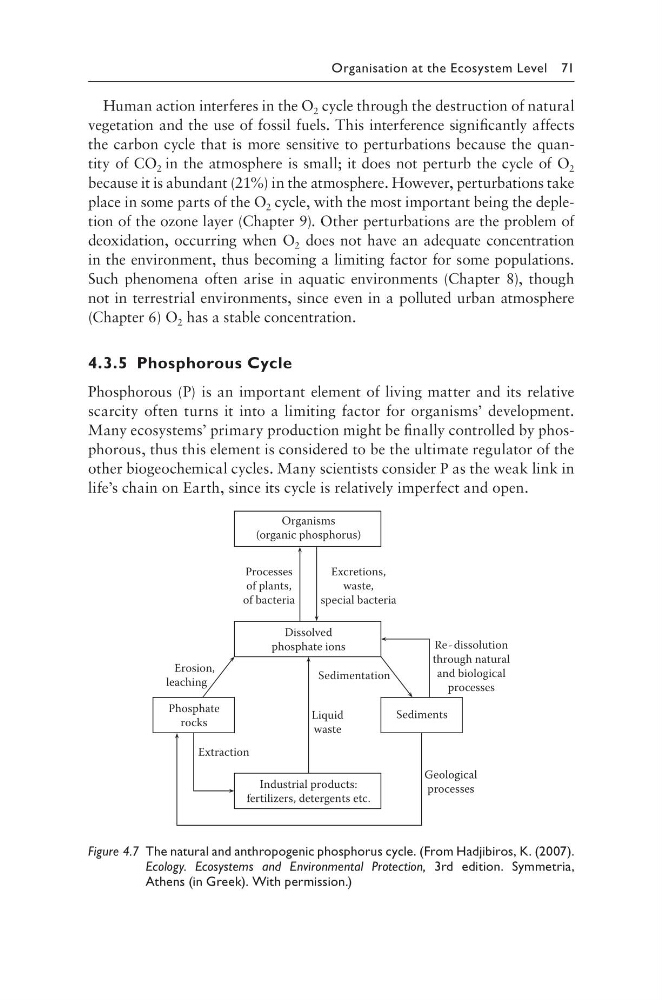
Figure 4.7 The natural and anthropogenic phosphorus cycle. (From Hadjibiros, K. (2007).
Ecology. Ecosystems and Environmental Protection, 3rd edition. Symmetria,
Athens (in Greek). With permission.)
Human action interferes in the O 2 cycle through the destruction of natural
vegetation and the use of fossil fuels. This interference significantly affects
the carbon cycle that is more sensitive to perturbations because the quantity of CO 2 in the atmosphere is small; it does not perturb the cycle of O 2
because it is abundant (21%) in the atmosphere. However, perturbations take
place in some parts of the O 2 cycle, with the most important being the depletion of the ozone layer (Chapter 9). Other perturbations are the problem of
deoxidation, occurring when O 2 does not have an adequate concentration
in the environment, thus becoming a limiting factor for some populations.
Such phenomena often arise in aquatic environments (Chapter 8), though
not in terrestrial environments, since even in a polluted urban atmosphere
(Chapter 6) O 2 has a stable concentration.
4.3.5 Phosphorous cycle
Phosphorous (P) is an important element of living matter and its relative
scarcity often turns it into a limiting factor for organisms’ development.
Many ecosystems’ primary production might be finally controlled by phosphorous, thus this element is considered to be the ultimate regulator of the
other biogeochemical cycles. Many scientists consider P as the weak link in
life’s chain on Earth, since its cycle is relatively imperfect and open.
Industrial products:
fertilizers, detergents etc.
Dissolved
phosphate ions
Organisms
(organic phosphorus)
Phosphate
rocks
Sediments
Processes
of plants,
of bacteria
Excretions,
waste,
special bacteria
Extraction
Geological
processes
Re-dissolution
through natural
and biological
processes
Erosion,
leaching
Sedimentation
Liquid
waste
Figure 4.7 The natural and anthropogenic phosphorus cycle. (From Hadjibiros, K. (2007).
Ecology. Ecosystems and Environmental Protection, 3rd edition. Symmetria,
Athens (in Greek). With permission.)