

Environment and Development 231
with the consideration of the man-nature relationship and lead to an
“Environmental Protection State”. The material base of this development
is already being created in an accelerating pace through new scientific and
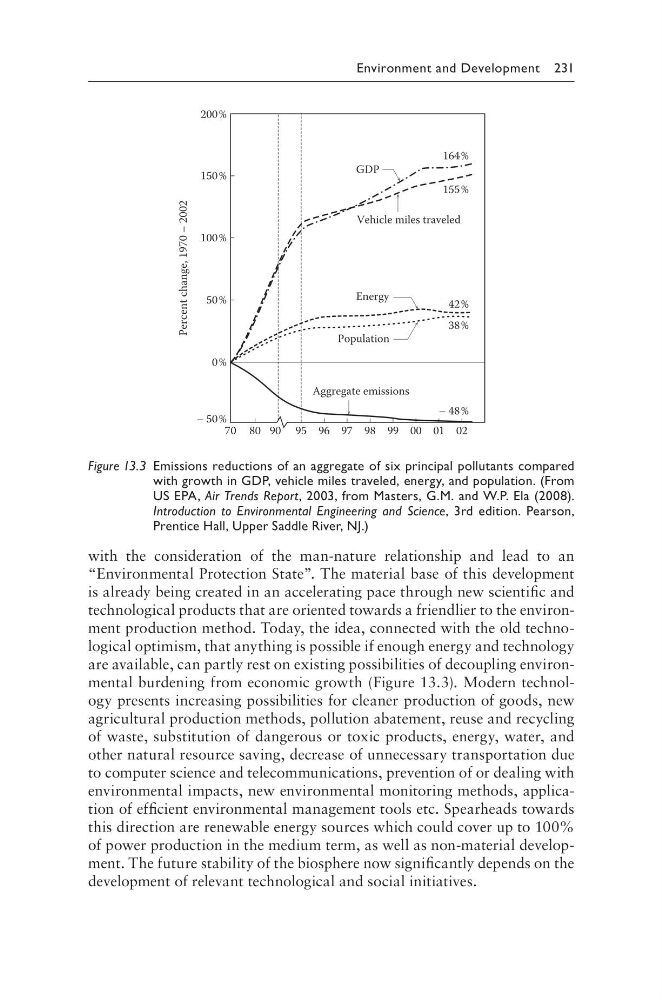
ment production method. Today, the idea, connected with the old technological optimism, that anything is possible if enough energy and technology
mental burdening from economic growth (Figure 13.3). Modern technology presents increasing possibilities for cleaner production of goods, new
agricultural production methods, pollution abatement, reuse and recycling
of waste, substitution of dangerous or toxic products, energy, water, and
other natural resource saving, decrease of unnecessary transportation due
to computer science and telecommunications, prevention of or dealing with
environmental impacts, new environmental monitoring methods, application of efficient environmental management tools etc. Spearheads towards
this direction are renewable energy sources which could cover up to 100%
of power production in the medium term, as well as non-material development. The future stability of the biosphere now significantly depends on the
development of relevant technological and social initiatives.
80
70
90 95 96 97 98 99 00 01 02
0 %
50 %
150 %
200 %
164%
GDP
Vehicle miles traveled
155%
42%
38%
– 48%
100 %
Percent change, 1970 – 2002
Energy
Population
Aggregate emissions
– 50 %
Figure 13.3 Emissions reductions of an aggregate of six principal pollutants compared
with growth in GDP, vehicle miles traveled, energy, and population. (From
US EPA, Air Trends Report, 2003, from Masters, G.M. and W.P. Ela (2008).
Introduction to Environmental Engineering and Science, 3rd edition. Pearson,
Prentice Hall, Upper Saddle River, NJ.)
with the consideration of the man-nature relationship and lead to an
“Environmental Protection State”. The material base of this development
is already being created in an accelerating pace through new scientific and
ment production method. Today, the idea, connected with the old technological optimism, that anything is possible if enough energy and technology
mental burdening from economic growth (Figure 13.3). Modern technology presents increasing possibilities for cleaner production of goods, new
agricultural production methods, pollution abatement, reuse and recycling
of waste, substitution of dangerous or toxic products, energy, water, and
other natural resource saving, decrease of unnecessary transportation due
to computer science and telecommunications, prevention of or dealing with
environmental impacts, new environmental monitoring methods, application of efficient environmental management tools etc. Spearheads towards
this direction are renewable energy sources which could cover up to 100%
of power production in the medium term, as well as non-material development. The future stability of the biosphere now significantly depends on the
development of relevant technological and social initiatives.
80
70
90 95 96 97 98 99 00 01 02
0 %
50 %
150 %
200 %
164%
GDP
Vehicle miles traveled
155%
42%
38%
– 48%
100 %
Percent change, 1970 – 2002
Energy
Population
Aggregate emissions
– 50 %
Figure 13.3 Emissions reductions of an aggregate of six principal pollutants compared
with growth in GDP, vehicle miles traveled, energy, and population. (From
US EPA, Air Trends Report, 2003, from Masters, G.M. and W.P. Ela (2008).
Introduction to Environmental Engineering and Science, 3rd edition. Pearson,
Prentice Hall, Upper Saddle River, NJ.)