

224 Ecology and Applied Environmental Science
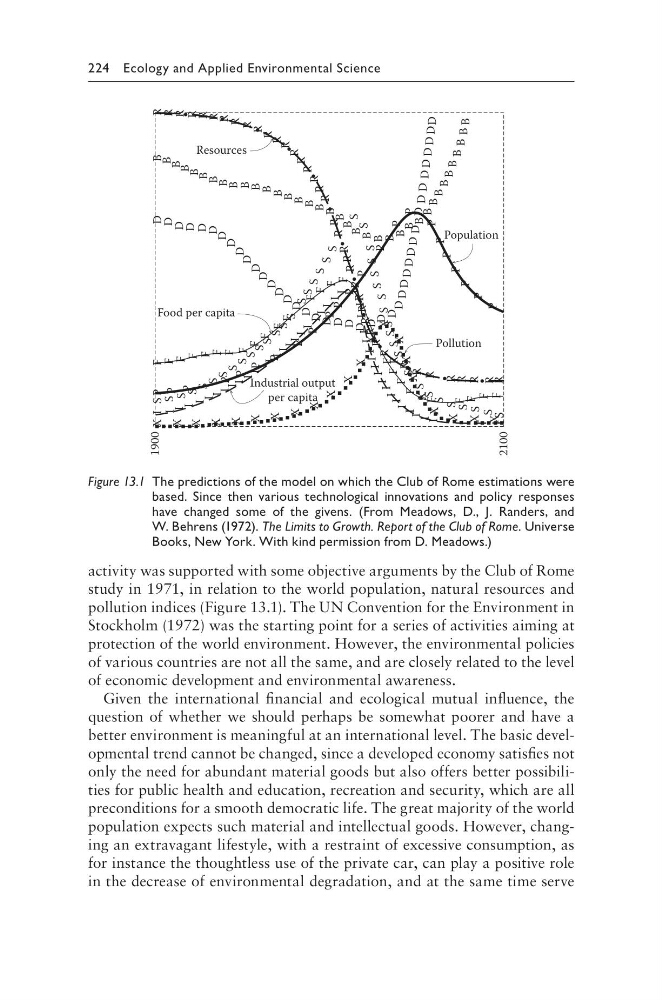
activity was supported with some objective arguments by the Club of Rome
study in 1971, in relation to the world population, natural resources and
pollution indices (Figure 13.1). The UN Convention for the Environment in
Stockholm (1972) was the starting point for a series of activities aiming at
protection of the world environment. However, the environmental policies
of various countries are not all the same, and are closely related to the level
of economic development and environmental awareness.
Given the international financial and ecological mutual influence, the
question of whether we should perhaps be somewhat poorer and have a
better environment is meaningful at an international level. The basic developmental trend cannot be changed, since a developed economy satisfies not
only the need for abundant material goods but also offers better possibilities for public health and education, recreation and security, which are all
preconditions for a smooth democratic life. The great majority of the world
population expects such material and intellectual goods. However, changing an extravagant lifestyle, with a restraint of excessive consumption, as
for instance the thoughtless use of the private car, can play a positive role
in the decrease of environmental degradation, and at the same time serve
B
D
S P
P
P
P
P
P
P
P
P
P
P
P
P
P
P
P
P
P
P
P
P
P
P
F
F
F
F
F
F
F
F
F
F
F
F
F
F
F
F
F
F
F
F
F
F
F
F
F
S
S
S
S
S
S
S
S
S
S
S
S
S
S
S
S
S
S
S
S
S
S
S
S
S
S
S
S
S
S
S
S
S
S
S
S
S
S
S
S
S
X
X
X
X
X
X
X
X
X
X
X
X
X
X
X
X
X
X
X
X
X
X
I
I
I
I
I
I
I
I
I
I
I
I
I
I
I
I
I
I
I
I
I
I
I
I
I
I
I
I
I
I
I
I
I
I
I
I
I
I
I
I
I
I
D
D
D
D
D
D
D
D
D
D
D
D
D
D
D
D
D
D
D
D
D
D
D
D
D
D
D
D
D
D
D
D
D
D
D
D
D
D
D
DD
R
R
R
R
R
R
R
R
R
R
R
R
R
R
R
R
R
R
R
R
R
R
R
R
R
R
R
R
R
R
R
R
R
R
R
R
R
R
R
R
B
B
B
B
B
B
B
B
B
B
B
B
B
B
B
B
B
B
B
B
B
B
B
B
B
B
B
B
B
B
B
B
B
B
B
B
1900
2100
Industrial output
per capita
Pollution
Population
Resources
Food per capita
Figure 13.1 The predictions of the model on which the Club of Rome estimations were
based. Since then various technological innovations and policy responses
have changed some of the givens. (From Meadows, D., J. Randers, and
W. Behrens (1972). The Limits to Growth. Report of the Club of Rome. Universe
Books, New York. With kind permission from D. Meadows.)
activity was supported with some objective arguments by the Club of Rome
study in 1971, in relation to the world population, natural resources and
pollution indices (Figure 13.1). The UN Convention for the Environment in
Stockholm (1972) was the starting point for a series of activities aiming at
protection of the world environment. However, the environmental policies
of various countries are not all the same, and are closely related to the level
of economic development and environmental awareness.
Given the international financial and ecological mutual influence, the
question of whether we should perhaps be somewhat poorer and have a
better environment is meaningful at an international level. The basic developmental trend cannot be changed, since a developed economy satisfies not
only the need for abundant material goods but also offers better possibilities for public health and education, recreation and security, which are all
preconditions for a smooth democratic life. The great majority of the world
population expects such material and intellectual goods. However, changing an extravagant lifestyle, with a restraint of excessive consumption, as
for instance the thoughtless use of the private car, can play a positive role
in the decrease of environmental degradation, and at the same time serve
B
D
S P
P
P
P
P
P
P
P
P
P
P
P
P
P
P
P
P
P
P
P
P
P
P
F
F
F
F
F
F
F
F
F
F
F
F
F
F
F
F
F
F
F
F
F
F
F
F
F
S
S
S
S
S
S
S
S
S
S
S
S
S
S
S
S
S
S
S
S
S
S
S
S
S
S
S
S
S
S
S
S
S
S
S
S
S
S
S
S
S
X
X
X
X
X
X
X
X
X
X
X
X
X
X
X
X
X
X
X
X
X
X
I
I
I
I
I
I
I
I
I
I
I
I
I
I
I
I
I
I
I
I
I
I
I
I
I
I
I
I
I
I
I
I
I
I
I
I
I
I
I
I
I
I
D
D
D
D
D
D
D
D
D
D
D
D
D
D
D
D
D
D
D
D
D
D
D
D
D
D
D
D
D
D
D
D
D
D
D
D
D
D
D
DD
R
R
R
R
R
R
R
R
R
R
R
R
R
R
R
R
R
R
R
R
R
R
R
R
R
R
R
R
R
R
R
R
R
R
R
R
R
R
R
R
B
B
B
B
B
B
B
B
B
B
B
B
B
B
B
B
B
B
B
B
B
B
B
B
B
B
B
B
B
B
B
B
B
B
B
B
1900
2100
Industrial output
per capita
Pollution
Population
Resources
Food per capita
Figure 13.1 The predictions of the model on which the Club of Rome estimations were
based. Since then various technological innovations and policy responses
have changed some of the givens. (From Meadows, D., J. Randers, and
W. Behrens (1972). The Limits to Growth. Report of the Club of Rome. Universe
Books, New York. With kind permission from D. Meadows.)