

138 Ecology and Applied Environmental Science
Many natural organic substances that occur at high concentrations in food
and drink have the potential for long-term toxicity similar to that of synthetic toxic substances.
Next we will examine classes of pollutants that occur frequently in the
environment and are associated with serious toxicity phenomena that often
accompany pollution. For the most part these are general inorganic or
organic pollutants. The risks to humans inherent in many toxic compounds
are certainly significant and only partially known. For example, there is still
considerable lack of knowledge about the response of the human organism to
the vast variety of potentially carcinogenic synthetic substances. In 2006 the
European Union published the Registration, Evaluation Authorisation and
Restriction of Chemicals (REACH) regulation, on the basis of which a database of chemical substances was created to provide consumers and professionals with information about possible risks. Its objective is to afford better
protection of health and the environment through better and timelier identification and notification of the properties of chemical substances. Gradual
replacement of the most dangerous substances is also sought when suitable
alternatives are found. The different chemical substances in use number over
100,000. REACH will register all the substances produced in Europe or
imported in quantities of over 1 ton per year, i.e. around 30,000 substances.
There is reason for serious concern about the potential hazard of around 900
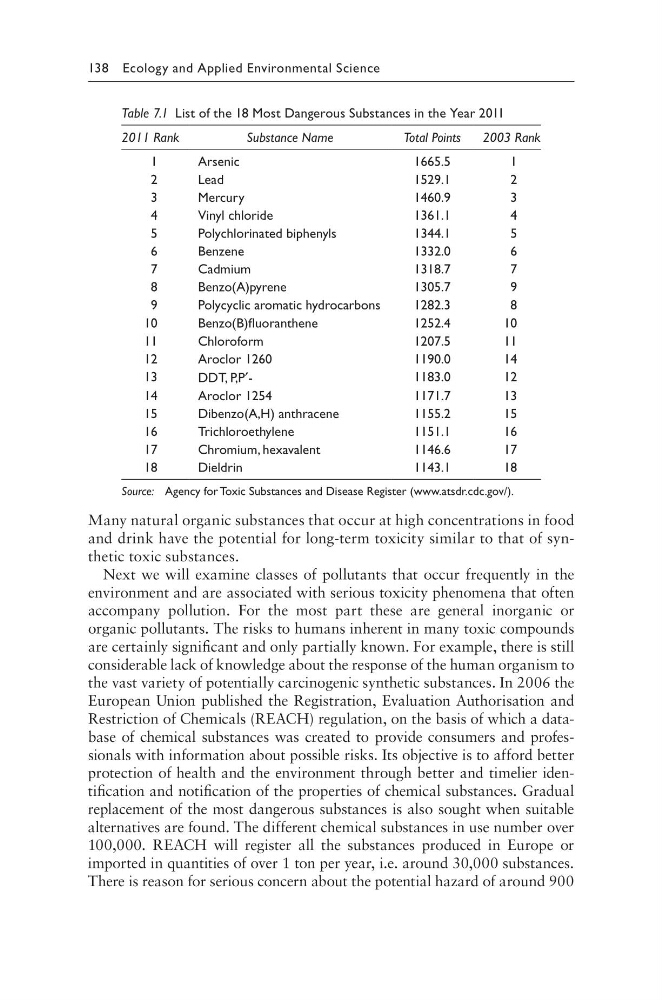
Table 7.1 List of the 18 Most Dangerous Substances in the Year 2011
2011 Rank
Substance Name
Total Points
2003 Rank
1
Arsenic
1665.5
1
2
Lead
1529.1
2
3
Mercury
1460.9
3
4
Vinyl chloride
1361.1
4
5
Polychlorinated biphenyls
1344.1
5
6
Benzene
1332.0
6
7
Cadmium
1318.7
7
8
Benzo(A)pyrene
1305.7
9
9
Polycyclic aromatic hydrocarbons
1282.3
8
10
Benzo(B)fluoranthene
1252.4
10
11
Chloroform
1207.5
11
12
Aroclor 1260
1190.0
14
13
DDT, P,P′1183.0
12
14
Aroclor 1254
1171.7
13
15
Dibenzo(A,H) anthracene
1155.2
15
16
Trichloroethylene
1151.1
16
17
Chromium, hexavalent
1146.6
17
18
Dieldrin
1143.1
18
Source: Agency for Toxic Substances and Disease Register (www.atsdr.cdc.gov/).
Many natural organic substances that occur at high concentrations in food
and drink have the potential for long-term toxicity similar to that of synthetic toxic substances.
Next we will examine classes of pollutants that occur frequently in the
environment and are associated with serious toxicity phenomena that often
accompany pollution. For the most part these are general inorganic or
organic pollutants. The risks to humans inherent in many toxic compounds
are certainly significant and only partially known. For example, there is still
considerable lack of knowledge about the response of the human organism to
the vast variety of potentially carcinogenic synthetic substances. In 2006 the
European Union published the Registration, Evaluation Authorisation and
Restriction of Chemicals (REACH) regulation, on the basis of which a database of chemical substances was created to provide consumers and professionals with information about possible risks. Its objective is to afford better
protection of health and the environment through better and timelier identification and notification of the properties of chemical substances. Gradual
replacement of the most dangerous substances is also sought when suitable
alternatives are found. The different chemical substances in use number over
100,000. REACH will register all the substances produced in Europe or
imported in quantities of over 1 ton per year, i.e. around 30,000 substances.
There is reason for serious concern about the potential hazard of around 900
Table 7.1 List of the 18 Most Dangerous Substances in the Year 2011
2011 Rank
Substance Name
Total Points
2003 Rank
1
Arsenic
1665.5
1
2
Lead
1529.1
2
3
Mercury
1460.9
3
4
Vinyl chloride
1361.1
4
5
Polychlorinated biphenyls
1344.1
5
6
Benzene
1332.0
6
7
Cadmium
1318.7
7
8
Benzo(A)pyrene
1305.7
9
9
Polycyclic aromatic hydrocarbons
1282.3
8
10
Benzo(B)fluoranthene
1252.4
10
11
Chloroform
1207.5
11
12
Aroclor 1260
1190.0
14
13
DDT, P,P′1183.0
12
14
Aroclor 1254
1171.7
13
15
Dibenzo(A,H) anthracene
1155.2
15
16
Trichloroethylene
1151.1
16
17
Chromium, hexavalent
1146.6
17
18
Dieldrin
1143.1
18
Source: Agency for Toxic Substances and Disease Register (www.atsdr.cdc.gov/).