

116 Ecology and Applied Environmental Science
The quality of the urban environment is to a large extent dependent on
air pollution (Chapter 9), pollution of surface and underground water
(Chapter 8) and the soil, pollution by solid waste (Chapter 6, Section 6.6),
and degradation of the natural environment in the urban and periurban
space (Chapter 6, Section 6.8), as well as the intensity of other disturbances
occurring mainly in cities, such as noise (Chapter 6, Section 6.5), poor quality of air in indoor spaces (Chapter 6, Section 6.7), etc. In addition, many
factors that contribute to undermine the quality of life in cities, such as traffic
congestion, insufficient green, open and public spaces, aesthetic degradation, risks from accidents or natural disasters, crime rates etc. are directly or
indirectly linked to the situation in the urban and periurban environment.
Addressing these problems requires adequate environmental management
(Chapter 11) as well as use of the appropriate technology (Chapter 10),
adapted to the special requirements of more or less developed countries.
6.2 thE city and urban activitiES
The study of the urban environment is part of the scientific field of urban
planning, whose main subject is the city. A related concept, but broader
Energy
sources
Raw
materials
Industrial
production
Energy
utilization
Recycling
of materials
City
dwellers
Solid
waste
Biodegradable,
non-biodegradable
waste
Aquatic receptors,
soil, atmosphere
Liquid
waste
Treatment
Reuse
Livestock
farming
production
Agricultural
production
Natural ecosystems:
producers, consumers, decomposers
CO 2
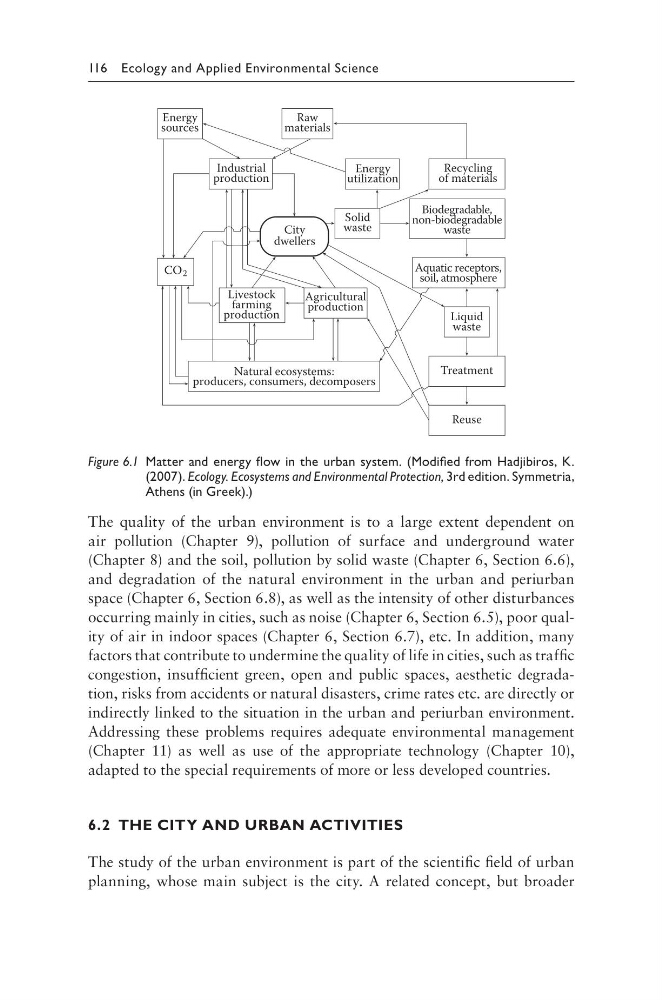
Figure 6.1 Matter and energy flow in the urban system. (Modified from Hadjibiros, K.
(2007). Ecology. Ecosystems and Environmental Protection, 3rd edition. Symmetria,
Athens (in Greek).)
The quality of the urban environment is to a large extent dependent on
air pollution (Chapter 9), pollution of surface and underground water
(Chapter 8) and the soil, pollution by solid waste (Chapter 6, Section 6.6),
and degradation of the natural environment in the urban and periurban
space (Chapter 6, Section 6.8), as well as the intensity of other disturbances
occurring mainly in cities, such as noise (Chapter 6, Section 6.5), poor quality of air in indoor spaces (Chapter 6, Section 6.7), etc. In addition, many
factors that contribute to undermine the quality of life in cities, such as traffic
congestion, insufficient green, open and public spaces, aesthetic degradation, risks from accidents or natural disasters, crime rates etc. are directly or
indirectly linked to the situation in the urban and periurban environment.
Addressing these problems requires adequate environmental management
(Chapter 11) as well as use of the appropriate technology (Chapter 10),
adapted to the special requirements of more or less developed countries.
6.2 thE city and urban activitiES
The study of the urban environment is part of the scientific field of urban
planning, whose main subject is the city. A related concept, but broader
Energy
sources
Raw
materials
Industrial
production
Energy
utilization
Recycling
of materials
City
dwellers
Solid
waste
Biodegradable,
non-biodegradable
waste
Aquatic receptors,
soil, atmosphere
Liquid
waste
Treatment
Reuse
Livestock
farming
production
Agricultural
production
Natural ecosystems:
producers, consumers, decomposers
CO 2
Figure 6.1 Matter and energy flow in the urban system. (Modified from Hadjibiros, K.
(2007). Ecology. Ecosystems and Environmental Protection, 3rd edition. Symmetria,
Athens (in Greek).)