

variety of issues noted about the obstacles of registration, but there seems to be a
point at the top of these problems that if the issue is resolved, the flow of production
and introduction of new products will change, and that is changing the attitudes of
regulatory authorities such as the PPO in the field of BC. This administrative,
executive, and legislative structure of the country in the field of pest control,
stemming from the belief in the chemical pesticides is the key control method and
even the only way to manage the pests that has led to an attitude of biological inputs
in harmony and as the same as chemical inputs. Currently, the most important and
widely used MCA is Bacillus thuringiensis (Bt). This bacterium is currently produced in high quality in bulk in the country, is competitively priced with its chemical
counterparts, and most importantly, kills the target pest rapidly, unlike other types of
BCAs. However, there is no widespread use of Bt products in the country.
Another reason for the low number and types of microbial pesticides comes from
the fact that large and reputable producers in the country, with dozen of chemical
pesticides, lack the motivation to follow the research and development of new
products. One example of this is the production of MCAs with high-inflation and
free foreign currency prices in the country, while the government has subsidized
currency for synthetic chemicals and hence imports are high. This makes no sense
except to demand non-production domestically. Therefore, it can be said that the
number, variety, quality and quantity of microbial pesticides in the country are
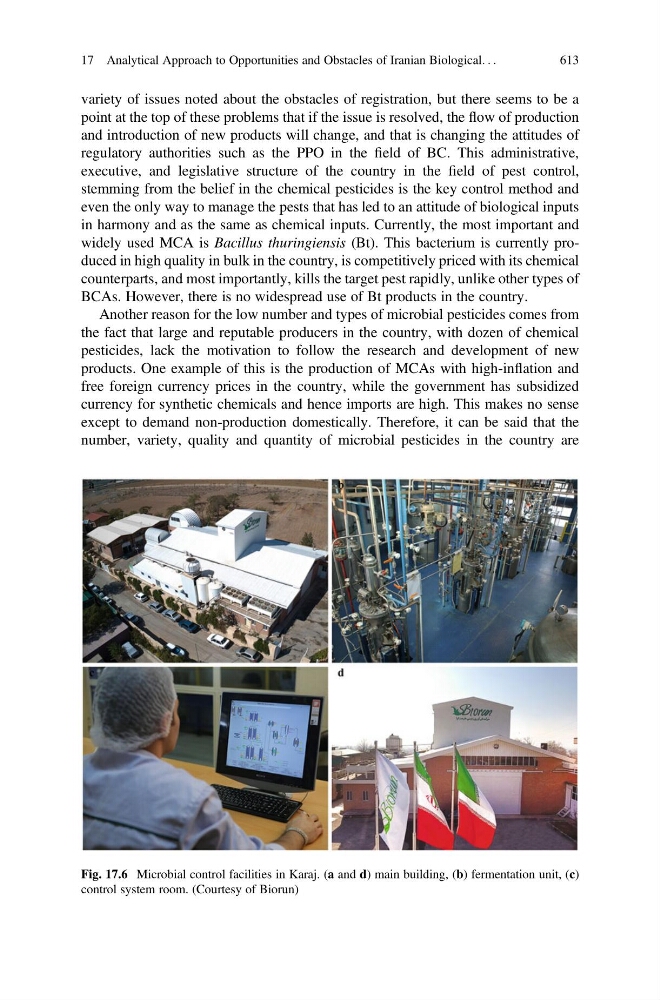
Fig. 17.6 Microbial control facilities in Karaj. (a and d) main building, (b) fermentation unit, (c)
control system room. (Courtesy of Biorun)
17 Analytical Approach to Opportunities and Obstacles of Iranian Biological. . .
613