

A comprehensive study of changes in mass rearing and augmentation tactics in
the country can help better realize the development of BC using Trichogramma and
overcome the obstacles and enhance its strengths. The key point shown at these
levels is that the application rates are set according to a plan and whether the
anticipated infrastructure has been met, the levels have increased, but finally,
infrastructure has had its effect and the annual usage of the agent has been changed.
This kind of planning has caused the method itself to be questioned. The voluntary
acceptance of farmers at the beginning of the plan caused a rapid development, but
due to the effect of many factors, it has led to a lack of acceptance by many farmers
and finally to some who believe that this method is ineffective. For example, experts
in the agro-industrial company of Dasht-e-Naz, Sari, Mazandaran province, concluded failure of the plan for use Trichogramma in the farms of this company in
2010. Another example is the immediate acceptance of the Trichogramma use in the
pomegranate orchards of the Fars province over the past few years, followed by
incomplete implementation and finally, distrust farmers imply biocontrol development occurred without having the infrastructure and the required criteria for mass
rearing and release program. In a review by Attaran and Dadpour Moghanloo
(2011), they had an analysis on the use of Trichogramma as BCA of Chilo
suppressalis, and varied evolutionary processes were reviewed.
About forty years ago, biocontrol of the rice stem borer was initiated. The
Trichogramma wasps were first introduced and released at a low level. The basic
tasks of collecting, identifying, releasing and evaluating the process of
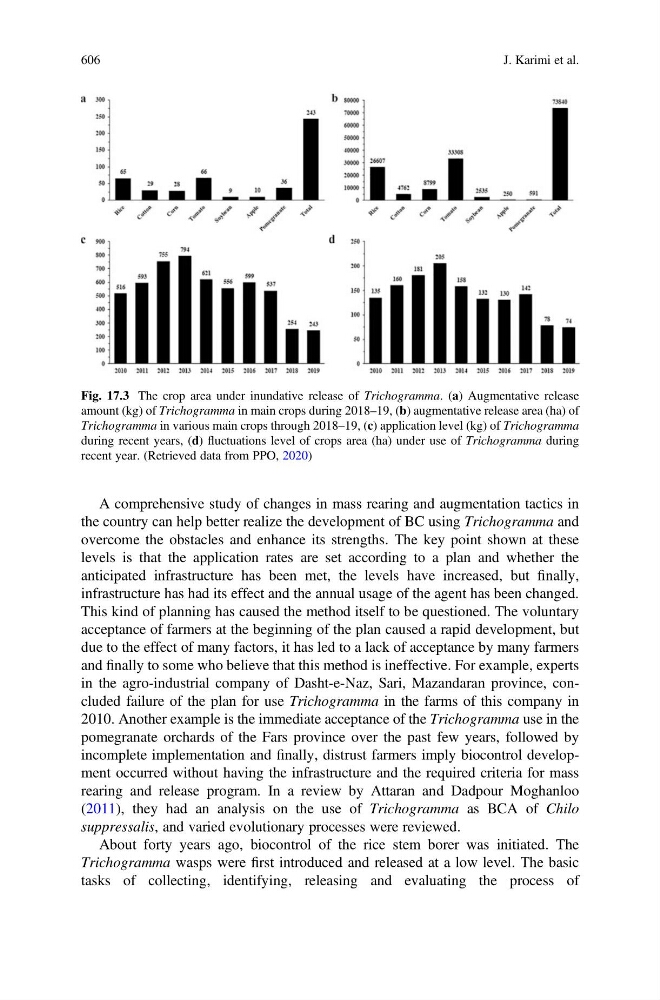
Fig. 17.3 The crop area under inundative release of Trichogramma. (a) Augmentative release
amount (kg) of Trichogramma in main crops during 2018–19, (b) augmentative release area (ha) of
Trichogramma in various main crops through 2018–19, (c) application level (kg) of Trichogramma
during recent years, (d) fluctuations level of crops area (ha) under use of Trichogramma during
recent year. (Retrieved data from PPO, 2020)
606
J. Karimi et al.