

resistance to insects. In 2004, the first filed experiments for evaluating the efficiency
of Bt rice was carried out in Iran (Tohidfar and Salehi Jouzani 2008).
Rice as one of the most important food crops is widely produced and indeed
consumed in Iran. Iran is also one of the pioneers in the development of transgenic
lines of rice (James 2007). Many studies have focused on the development of
transgenic rice lines with enhanced resistance to lepidopterans (Ghareyazie et al.
1997; Alinia et al. 2000). Bt-transformed Tarom Molaii rice, a high quality aromatic
rice, expressing cry1Ab Bt gene, showed resistance to the major rice pests in Iran,
striped stem borer, C. suppressalis Walker (Lep.: Crambidae) and yellow stem borer,
Scirpophaga incertulas Walker (Lep.: Pyralidea) (Ghareyazie et al. 1997). Different
field and greenhouse studies indicated the efficiency of this transgenic rice line. Bt
rice was the first genetically modified (GM) crop grown in Iran and the first GM rice
released worldwide was generated by one of the most important Iranian agricultural
biotechnology institutes, the Agricultural Biotechnology Research Institute of Iran
(ABRII) with collaboration with the International Rice Research Institute (Mousavi
et al. 2007). The Bt rice line expressing cry1Ab gene has undergone different risk
assessments and safety analyses. Moreover, different physiological characteristics
have been studied in Bt rice and compared with non-transgenic rice. The incorporation of Bt cry1Ab gene in rice has not adversely affected the plant features. Many
studies have focused on the efficiency of Bt crops under field conditions.
Field trials were conducted to evaluate the efficiency and safety of genetically
modified rice lines in Iran (Mousavi et al. 2007). Resistance of Bt rice lines was
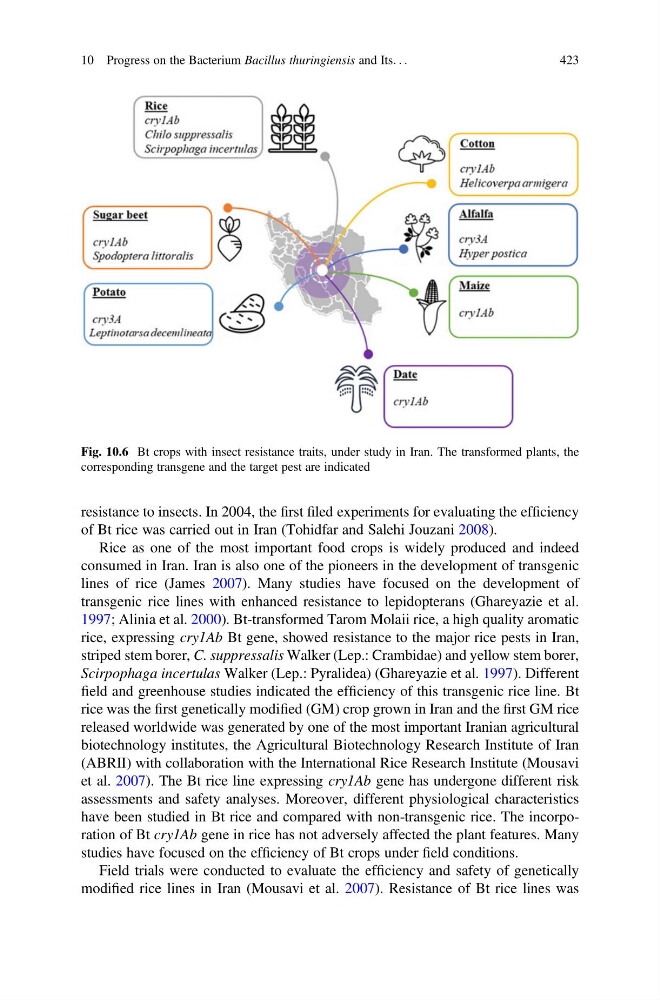
Fig. 10.6 Bt crops with insect resistance traits, under study in Iran. The transformed plants, the
corresponding transgene and the target pest are indicated
10 Progress on the Bacterium Bacillus thuringiensis and Its. . .
423
of Bt rice was carried out in Iran (Tohidfar and Salehi Jouzani 2008).
Rice as one of the most important food crops is widely produced and indeed
consumed in Iran. Iran is also one of the pioneers in the development of transgenic
lines of rice (James 2007). Many studies have focused on the development of
transgenic rice lines with enhanced resistance to lepidopterans (Ghareyazie et al.
1997; Alinia et al. 2000). Bt-transformed Tarom Molaii rice, a high quality aromatic
rice, expressing cry1Ab Bt gene, showed resistance to the major rice pests in Iran,
striped stem borer, C. suppressalis Walker (Lep.: Crambidae) and yellow stem borer,
Scirpophaga incertulas Walker (Lep.: Pyralidea) (Ghareyazie et al. 1997). Different
field and greenhouse studies indicated the efficiency of this transgenic rice line. Bt
rice was the first genetically modified (GM) crop grown in Iran and the first GM rice
released worldwide was generated by one of the most important Iranian agricultural
biotechnology institutes, the Agricultural Biotechnology Research Institute of Iran
(ABRII) with collaboration with the International Rice Research Institute (Mousavi
et al. 2007). The Bt rice line expressing cry1Ab gene has undergone different risk
assessments and safety analyses. Moreover, different physiological characteristics
have been studied in Bt rice and compared with non-transgenic rice. The incorporation of Bt cry1Ab gene in rice has not adversely affected the plant features. Many
studies have focused on the efficiency of Bt crops under field conditions.
Field trials were conducted to evaluate the efficiency and safety of genetically
modified rice lines in Iran (Mousavi et al. 2007). Resistance of Bt rice lines was
Fig. 10.6 Bt crops with insect resistance traits, under study in Iran. The transformed plants, the
corresponding transgene and the target pest are indicated
10 Progress on the Bacterium Bacillus thuringiensis and Its. . .
423