

bipyramidal crystal and very few produced spherical parasporal inclusions. The
shape of Bt crystals was correlated with the gene content, and based on the results
of this correlation, the Bt strains harboring dipteran-active genes (cry and/or cyt) had
cuboidal, rhomboidal and spherical parasporal inclusions (Salehi Jouzani et al.
2008b). The morphology of parasporal crystals was studied both based on shape
and size (Keshavarzi 2008). Based on the crystal morphology studies, the bipyramidal crystals are the most frequent crystals in most of the Iranian Bt collections.
10.8.2 Biochemical Tests
Different biochemical experiments were carried out for the determination of
B. thuringiensis sub-species. The esculin utilization, acid formation from salicin
and sucrose, lecithinase production were performed to characterize the biochemical
types of Bt strains (Keshavarzi 2008). Different biochemical characteristics of 37 Bt
strains were examined for classification of Bt isolates such as hydrolysis of starch
and gelatin, fermentation of glucose, sucrose, salicin, cellobiose, mannose, ADH and
urease, and production of indole and H 2 S. The reaction of Bt strains to biochemical
discriminative tests differed and classified in the diverse groups (Khojand et al.
2013). Based on the biochemical experiments, B. thuringiensis subsp. kurstaki has
been reported as the most abundant sub-species in Iran.
10.8.3 PCR-Based Screening
The identification of Bt insecticidal genes by PCR-based methods is a quick and
useful method, with some limitations, for characterization and somehow prediction
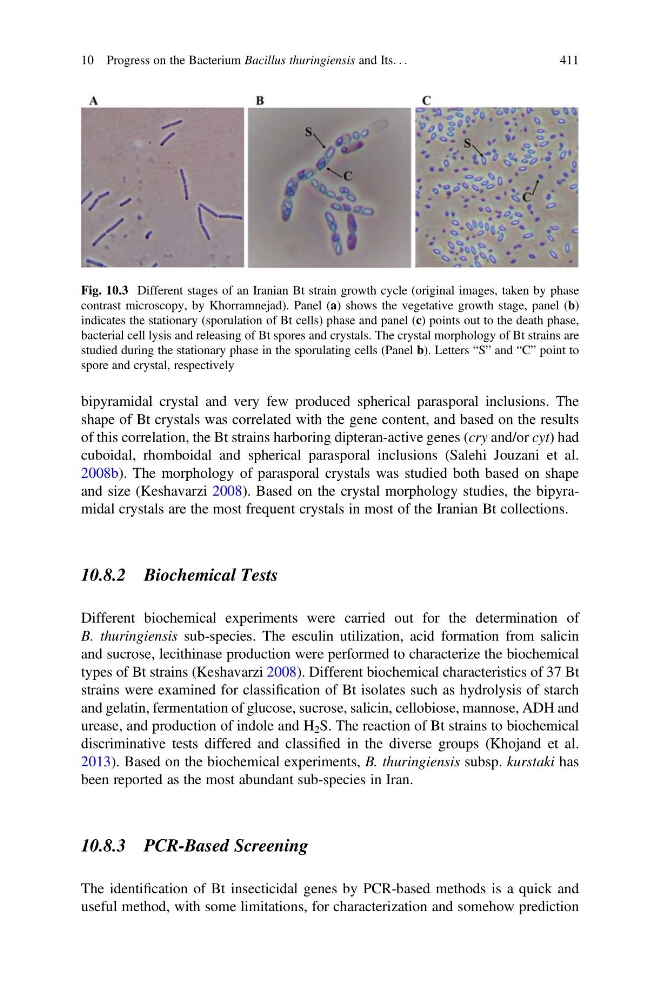
Fig. 10.3 Different stages of an Iranian Bt strain growth cycle (original images, taken by phase
contrast microscopy, by Khorramnejad). Panel (a) shows the vegetative growth stage, panel (b)
indicates the stationary (sporulation of Bt cells) phase and panel (c) points out to the death phase,
bacterial cell lysis and releasing of Bt spores and crystals. The crystal morphology of Bt strains are
studied during the stationary phase in the sporulating cells (Panel b). Letters “S” and “C” point to
spore and crystal, respectively
10 Progress on the Bacterium Bacillus thuringiensis and Its. . .
411
shape of Bt crystals was correlated with the gene content, and based on the results
of this correlation, the Bt strains harboring dipteran-active genes (cry and/or cyt) had
cuboidal, rhomboidal and spherical parasporal inclusions (Salehi Jouzani et al.
2008b). The morphology of parasporal crystals was studied both based on shape
and size (Keshavarzi 2008). Based on the crystal morphology studies, the bipyramidal crystals are the most frequent crystals in most of the Iranian Bt collections.
10.8.2 Biochemical Tests
Different biochemical experiments were carried out for the determination of
B. thuringiensis sub-species. The esculin utilization, acid formation from salicin
and sucrose, lecithinase production were performed to characterize the biochemical
types of Bt strains (Keshavarzi 2008). Different biochemical characteristics of 37 Bt
strains were examined for classification of Bt isolates such as hydrolysis of starch
and gelatin, fermentation of glucose, sucrose, salicin, cellobiose, mannose, ADH and
urease, and production of indole and H 2 S. The reaction of Bt strains to biochemical
discriminative tests differed and classified in the diverse groups (Khojand et al.
2013). Based on the biochemical experiments, B. thuringiensis subsp. kurstaki has
been reported as the most abundant sub-species in Iran.
10.8.3 PCR-Based Screening
The identification of Bt insecticidal genes by PCR-based methods is a quick and
useful method, with some limitations, for characterization and somehow prediction
Fig. 10.3 Different stages of an Iranian Bt strain growth cycle (original images, taken by phase
contrast microscopy, by Khorramnejad). Panel (a) shows the vegetative growth stage, panel (b)
indicates the stationary (sporulation of Bt cells) phase and panel (c) points out to the death phase,
bacterial cell lysis and releasing of Bt spores and crystals. The crystal morphology of Bt strains are
studied during the stationary phase in the sporulating cells (Panel b). Letters “S” and “C” point to
spore and crystal, respectively
10 Progress on the Bacterium Bacillus thuringiensis and Its. . .
411