

colemani is distributed in the Mediterranean area (Kavallieratos et al. 2004;
Rakhshani et al. 2015b). Re-examination of the voucher specimens used in studies
on the biology of Aphidius colemani in Iran (Zamani et al. 2006, 2007, 2012; Talebi
et al. 2006) is necessary to confirm the recorded data, as they most probably belong
to Aphidius platensis Brethes.
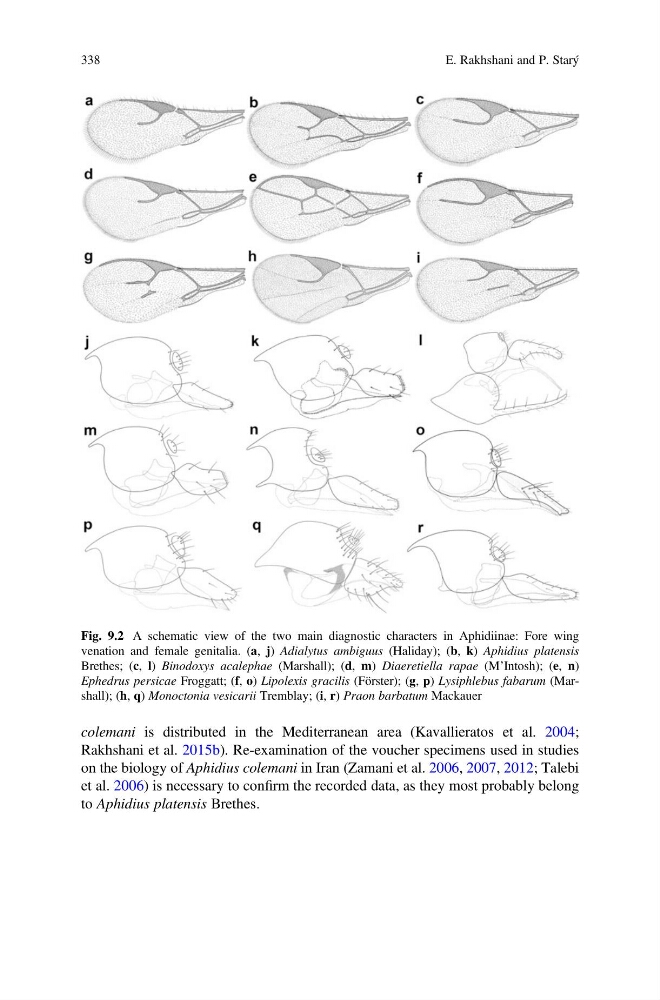
Fig. 9.2 A schematic view of the two main diagnostic characters in Aphidiinae: Fore wing
venation and female genitalia. (a, j) Adialytus ambiguus (Haliday); (b, k) Aphidius platensis
Brethes; (c, l) Binodoxys acalephae (Marshall); (d, m) Diaeretiella rapae (M’Intosh); (e, n)
Ephedrus persicae Froggatt; (f, o) Lipolexis gracilis (Förster); (g, p) Lysiphlebus fabarum (Marshall); (h, q) Monoctonia vesicarii Tremblay; (i, r) Praon barbatum Mackauer
338
E. Rakhshani and P. Starý
Rakhshani et al. 2015b). Re-examination of the voucher specimens used in studies
on the biology of Aphidius colemani in Iran (Zamani et al. 2006, 2007, 2012; Talebi
et al. 2006) is necessary to confirm the recorded data, as they most probably belong
to Aphidius platensis Brethes.
Fig. 9.2 A schematic view of the two main diagnostic characters in Aphidiinae: Fore wing
venation and female genitalia. (a, j) Adialytus ambiguus (Haliday); (b, k) Aphidius platensis
Brethes; (c, l) Binodoxys acalephae (Marshall); (d, m) Diaeretiella rapae (M’Intosh); (e, n)
Ephedrus persicae Froggatt; (f, o) Lipolexis gracilis (Förster); (g, p) Lysiphlebus fabarum (Marshall); (h, q) Monoctonia vesicarii Tremblay; (i, r) Praon barbatum Mackauer
338
E. Rakhshani and P. Starý