

ecosystems. This large superfamily consists of two rather well-known families,
Braconidae and Ichneumonidae.
The family Braconidae comprises more than 21,221 valid species classified into
45 subfamilies (Yu et al. 2012). Braconids parasitize larvae of holometabolous and
hemimetabolous insects and develop on or inside the body of their hosts as
ectoparasitoids and endoparasitoids, respectively. Ectoparasitoids can be found in
the subfamilies Braconinae and Doryctinae and endoparasitoids in the rest of the
subfamilies. Adults of ectoparasitoids search for larvae of mainly Lepidoptera or
Coleoptera in the cryptic places and after finding a larva, paralyze the larva by
injecting venoms from the poison glands located at the base of ovipositor and then
lay their egg(s) near or on the body of the host larva. Ectoparasitoids are not highly
hosted specific and can be developed on different hosts (polyphagous).
Endoparasitoids start their developing growth from egg, larva or even adult stages
of their hosts. They are known as egg-larval, egg-pupal or larva-pupal (Opiinae and
Alysiinae, parasitoids of Diptera), larval or adult parasitoids. Endoparasitoids use
both exposed and concealed hosts mainly in the orders Lepidoptera and Coleoptera.
Although parasitism of Diptera is very rare in the ectoparasitoids of Braconidae,
species of the two subfamilies, Opiinae and Alyssinae are mainly specialized in
dipterans of the families Agromyzidae and Tephritidae. Endoparasitoid braconids
have evolutionarily a narrow, taxonomic related host range. They are not polyphagous as seen in ectoparasitoids and many of them represent oligophagous or
monophagous life history. Members of the subfamilies Agathidinae, Cheloninae
and Microgasterinae are specialized in the Lepidoptera, Acaeliinae on the lepidopterous miners, Brachistinae on coleopterous weevils, Helconinae on cerambycid
beetles and Ichneutinae on sawflies (Tobias 1995).
The family Ichneumonidae contains more than 25,285 extant species classified
into 6 higher groups and 44 subfamilies (Yu et al. 2012). Ichneumon wasps comprise
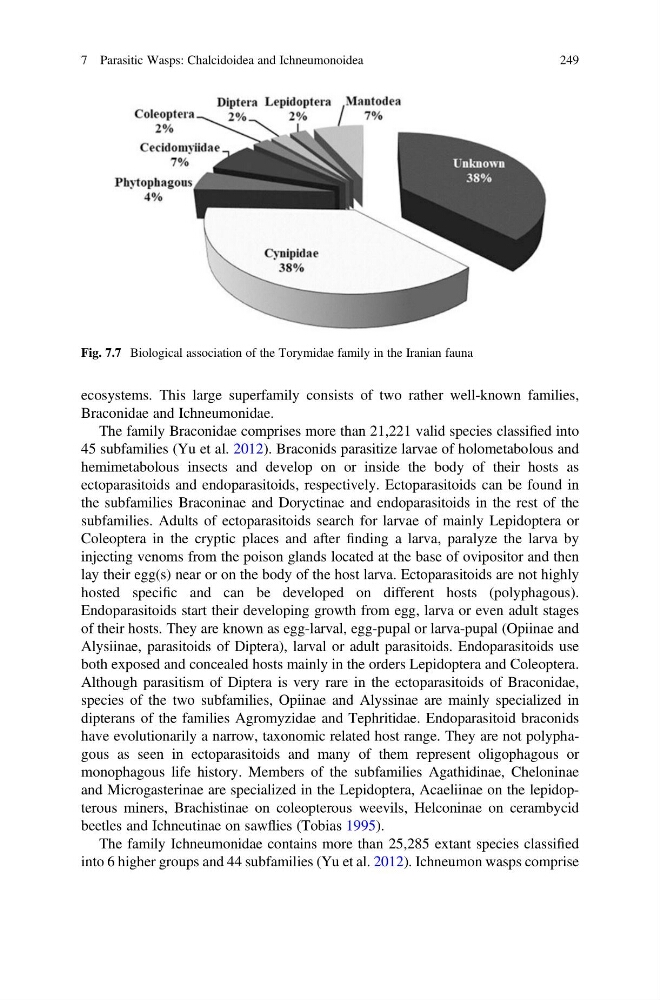
Fig. 7.7 Biological association of the Torymidae family in the Iranian fauna
7 Parasitic Wasps: Chalcidoidea and Ichneumonoidea
249
Braconidae and Ichneumonidae.
The family Braconidae comprises more than 21,221 valid species classified into
45 subfamilies (Yu et al. 2012). Braconids parasitize larvae of holometabolous and
hemimetabolous insects and develop on or inside the body of their hosts as
ectoparasitoids and endoparasitoids, respectively. Ectoparasitoids can be found in
the subfamilies Braconinae and Doryctinae and endoparasitoids in the rest of the
subfamilies. Adults of ectoparasitoids search for larvae of mainly Lepidoptera or
Coleoptera in the cryptic places and after finding a larva, paralyze the larva by
injecting venoms from the poison glands located at the base of ovipositor and then
lay their egg(s) near or on the body of the host larva. Ectoparasitoids are not highly
hosted specific and can be developed on different hosts (polyphagous).
Endoparasitoids start their developing growth from egg, larva or even adult stages
of their hosts. They are known as egg-larval, egg-pupal or larva-pupal (Opiinae and
Alysiinae, parasitoids of Diptera), larval or adult parasitoids. Endoparasitoids use
both exposed and concealed hosts mainly in the orders Lepidoptera and Coleoptera.
Although parasitism of Diptera is very rare in the ectoparasitoids of Braconidae,
species of the two subfamilies, Opiinae and Alyssinae are mainly specialized in
dipterans of the families Agromyzidae and Tephritidae. Endoparasitoid braconids
have evolutionarily a narrow, taxonomic related host range. They are not polyphagous as seen in ectoparasitoids and many of them represent oligophagous or
monophagous life history. Members of the subfamilies Agathidinae, Cheloninae
and Microgasterinae are specialized in the Lepidoptera, Acaeliinae on the lepidopterous miners, Brachistinae on coleopterous weevils, Helconinae on cerambycid
beetles and Ichneutinae on sawflies (Tobias 1995).
The family Ichneumonidae contains more than 25,285 extant species classified
into 6 higher groups and 44 subfamilies (Yu et al. 2012). Ichneumon wasps comprise
Fig. 7.7 Biological association of the Torymidae family in the Iranian fauna
7 Parasitic Wasps: Chalcidoidea and Ichneumonoidea
249