

Fanzago. The temperature dependent functional response of P. plumifer to
Rhyncaphytoptus ficifoliae Keife adults confirmed that temperature did not affect
the type of response but did on searching efficiency and handling time (Kouhjani
Gorji et al. 2009). According to functional response parameters, the optimum
temperature for P. plumifer was 25
C associated with the highest attack rate and
lowest handling time (Louni et al. 2016), while the maximum gross fecundity and
fertility values were recorded at 25 and 30
C (Kouhjani Gorji et al. 2010).
Conclusively, they recommended 25–30
C as the best temperature for using
P. plumifer (Kouhjani Gorji et al. 2008). Moreover, in a laboratory bioassay,
according to residue tests of IOBC recommendation, proved that two acaricides
fenpyroximate and abamectin was harmful for this species (Nadimi et al. 2008a). In a
field research, Baradaran Anaraki and Arbabi (2008) claimed that P. plumifer could
not control fig spider mite successfully, which could be allocated to late emergence
and inability to feed on adults.
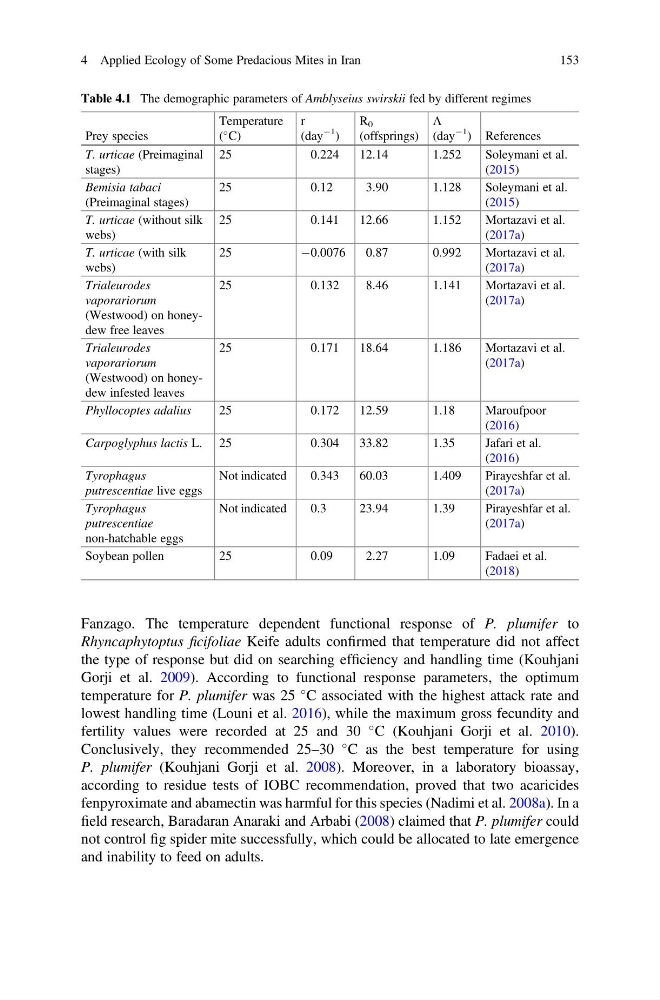
Table 4.1 The demographic parameters of Amblyseius swirskii fed by different regimes
Prey species
Temperature
(
C)
r
(day
À1
)
R 0
(offsprings)
Λ
(day
À1 ) References
T. urticae (Preimaginal
stages)
25
0.224
12.14
1.252
Soleymani et al.
(2015)
Bemisia tabaci
(Preimaginal stages)
25
0.12
3.90
1.128
Soleymani et al.
(2015)
T. urticae (without silk
webs)
25
0.141
12.66
1.152
Mortazavi et al.
(2017a)
T. urticae (with silk
webs)
25
À0.0076
0.87
0.992
Mortazavi et al.
(2017a)
Trialeurodes
vaporariorum
(Westwood) on honeydew free leaves
25
0.132
8.46
1.141
Mortazavi et al.
(2017a)
Trialeurodes
vaporariorum
(Westwood) on honeydew infested leaves
25
0.171
18.64
1.186
Mortazavi et al.
(2017a)
Phyllocoptes adalius
25
0.172
12.59
1.18
Maroufpoor
(2016)
Carpoglyphus lactis L. 25
0.304
33.82
1.35
Jafari et al.
(2016)
Tyrophagus
putrescentiae live eggs
Not indicated
0.343
60.03
1.409
Pirayeshfar et al.
(2017a)
Tyrophagus
putrescentiae
non-hatchable eggs
Not indicated
0.3
23.94
1.39
Pirayeshfar et al.
(2017a)
Soybean pollen
25
0.09
2.27
1.09
Fadaei et al.
(2018)
4 Applied Ecology of Some Predacious Mites in Iran
153
Rhyncaphytoptus ficifoliae Keife adults confirmed that temperature did not affect
the type of response but did on searching efficiency and handling time (Kouhjani
Gorji et al. 2009). According to functional response parameters, the optimum
temperature for P. plumifer was 25
C associated with the highest attack rate and
lowest handling time (Louni et al. 2016), while the maximum gross fecundity and
fertility values were recorded at 25 and 30
C (Kouhjani Gorji et al. 2010).
Conclusively, they recommended 25–30
C as the best temperature for using
P. plumifer (Kouhjani Gorji et al. 2008). Moreover, in a laboratory bioassay,
according to residue tests of IOBC recommendation, proved that two acaricides
fenpyroximate and abamectin was harmful for this species (Nadimi et al. 2008a). In a
field research, Baradaran Anaraki and Arbabi (2008) claimed that P. plumifer could
not control fig spider mite successfully, which could be allocated to late emergence
and inability to feed on adults.
Table 4.1 The demographic parameters of Amblyseius swirskii fed by different regimes
Prey species
Temperature
(
C)
r
(day
À1
)
R 0
(offsprings)
Λ
(day
À1 ) References
T. urticae (Preimaginal
stages)
25
0.224
12.14
1.252
Soleymani et al.
(2015)
Bemisia tabaci
(Preimaginal stages)
25
0.12
3.90
1.128
Soleymani et al.
(2015)
T. urticae (without silk
webs)
25
0.141
12.66
1.152
Mortazavi et al.
(2017a)
T. urticae (with silk
webs)
25
À0.0076
0.87
0.992
Mortazavi et al.
(2017a)
Trialeurodes
vaporariorum
(Westwood) on honeydew free leaves
25
0.132
8.46
1.141
Mortazavi et al.
(2017a)
Trialeurodes
vaporariorum
(Westwood) on honeydew infested leaves
25
0.171
18.64
1.186
Mortazavi et al.
(2017a)
Phyllocoptes adalius
25
0.172
12.59
1.18
Maroufpoor
(2016)
Carpoglyphus lactis L. 25
0.304
33.82
1.35
Jafari et al.
(2016)
Tyrophagus
putrescentiae live eggs
Not indicated
0.343
60.03
1.409
Pirayeshfar et al.
(2017a)
Tyrophagus
putrescentiae
non-hatchable eggs
Not indicated
0.3
23.94
1.39
Pirayeshfar et al.
(2017a)
Soybean pollen
25
0.09
2.27
1.09
Fadaei et al.
(2018)
4 Applied Ecology of Some Predacious Mites in Iran
153