

88
6.2.2 Pectinase Characterization and Purification
Studies of enzyme stability showed the importance of structure and function of
enzymes and how to overcome the major restraint for the rapid development of
biotechnological processes. Therefore, selection and protein engineering of enzyme
structure were carried out to enhance the enzyme stability to a desired levels to be
suitable for more industrial applications. As reported by Gummadi and Panda
(2003), the physical parameters including pH and temperature are influencing the
stability of pectinases. Kashyap et al. (2000) has found that there are two types of
pectinases which are acidic and alkaline where the acidic pectinases come from the
fungi and alkaline pectinases produced by alkalophilic bacteria, mainly from
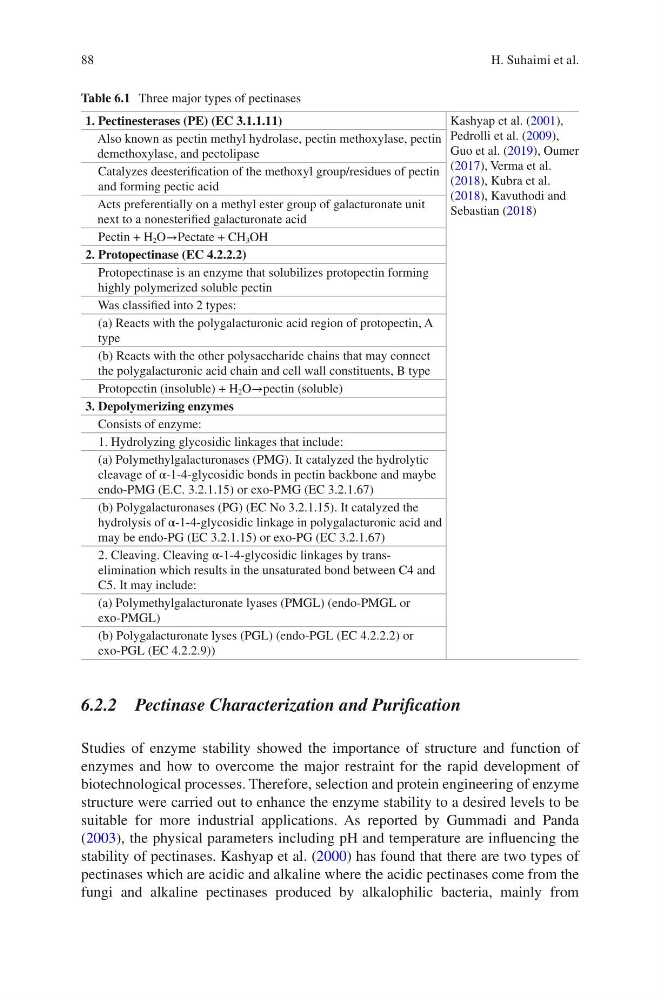
Table 6.1 Three major types of pectinases
1. Pectinesterases (PE) (EC 3.1.1.11)
Kashyap et al. (2001),
Pedrolli et al. (2009),
Guo et al. (2019), Oumer
(2017), Verma et al.
(2018), Kubra et al.
(2018), Kavuthodi and
Sebastian (2018)
Also known as pectin methyl hydrolase, pectin methoxylase, pectin
demethoxylase, and pectolipase
Catalyzes deesterification of the methoxyl group/residues of pectin
and forming pectic acid
Acts preferentially on a methyl ester group of galacturonate unit
next to a nonesterified galacturonate acid
Pectin + H 2 O→Pectate + CH 3 OH
2. Protopectinase (EC 4.2.2.2)
Protopectinase is an enzyme that solubilizes protopectin forming
highly polymerized soluble pectin
Was classified into 2 types:
(a) Reacts with the polygalacturonic acid region of protopectin, A
type
(b) Reacts with the other polysaccharide chains that may connect
the polygalacturonic acid chain and cell wall constituents, B type
Protopectin (insoluble) + H 2 O→pectin (soluble)
3. Depolymerizing enzymes
Consists of enzyme:
1. Hydrolyzing glycosidic linkages that include:
(a) Polymethylgalacturonases (PMG). It catalyzed the hydrolytic
cleavage of α-1-4-glycosidic bonds in pectin backbone and maybe
endo-PMG (E.C. 3.2.1.15) or exo-PMG (EC 3.2.1.67)
(b) Polygalacturonases (PG) (EC No 3.2.1.15). It catalyzed the
hydrolysis of α-1-4-glycosidic linkage in polygalacturonic acid and
may be endo-PG (EC 3.2.1.15) or exo-PG (EC 3.2.1.67)
2. Cleaving. Cleaving α-1-4-glycosidic linkages by transelimination which results in the unsaturated bond between C4 and
C5. It may include:
(a) Polymethylgalacturonate lyases (PMGL) (endo-PMGL or
exo-PMGL)
(b) Polygalacturonate lyses (PGL) (endo-PGL (EC 4.2.2.2) or
exo-PGL (EC 4.2.2.9))
H. Suhaimi et al.
6.2.2 Pectinase Characterization and Purification
Studies of enzyme stability showed the importance of structure and function of
enzymes and how to overcome the major restraint for the rapid development of
biotechnological processes. Therefore, selection and protein engineering of enzyme
structure were carried out to enhance the enzyme stability to a desired levels to be
suitable for more industrial applications. As reported by Gummadi and Panda
(2003), the physical parameters including pH and temperature are influencing the
stability of pectinases. Kashyap et al. (2000) has found that there are two types of
pectinases which are acidic and alkaline where the acidic pectinases come from the
fungi and alkaline pectinases produced by alkalophilic bacteria, mainly from
Table 6.1 Three major types of pectinases
1. Pectinesterases (PE) (EC 3.1.1.11)
Kashyap et al. (2001),
Pedrolli et al. (2009),
Guo et al. (2019), Oumer
(2017), Verma et al.
(2018), Kubra et al.
(2018), Kavuthodi and
Sebastian (2018)
Also known as pectin methyl hydrolase, pectin methoxylase, pectin
demethoxylase, and pectolipase
Catalyzes deesterification of the methoxyl group/residues of pectin
and forming pectic acid
Acts preferentially on a methyl ester group of galacturonate unit
next to a nonesterified galacturonate acid
Pectin + H 2 O→Pectate + CH 3 OH
2. Protopectinase (EC 4.2.2.2)
Protopectinase is an enzyme that solubilizes protopectin forming
highly polymerized soluble pectin
Was classified into 2 types:
(a) Reacts with the polygalacturonic acid region of protopectin, A
type
(b) Reacts with the other polysaccharide chains that may connect
the polygalacturonic acid chain and cell wall constituents, B type
Protopectin (insoluble) + H 2 O→pectin (soluble)
3. Depolymerizing enzymes
Consists of enzyme:
1. Hydrolyzing glycosidic linkages that include:
(a) Polymethylgalacturonases (PMG). It catalyzed the hydrolytic
cleavage of α-1-4-glycosidic bonds in pectin backbone and maybe
endo-PMG (E.C. 3.2.1.15) or exo-PMG (EC 3.2.1.67)
(b) Polygalacturonases (PG) (EC No 3.2.1.15). It catalyzed the
hydrolysis of α-1-4-glycosidic linkage in polygalacturonic acid and
may be endo-PG (EC 3.2.1.15) or exo-PG (EC 3.2.1.67)
2. Cleaving. Cleaving α-1-4-glycosidic linkages by transelimination which results in the unsaturated bond between C4 and
C5. It may include:
(a) Polymethylgalacturonate lyases (PMGL) (endo-PMGL or
exo-PMGL)
(b) Polygalacturonate lyses (PGL) (endo-PGL (EC 4.2.2.2) or
exo-PGL (EC 4.2.2.9))
H. Suhaimi et al.