

125
7.6 Application in Food Industries
Linoleic acid (LA) and alpha-linoleic acid (ALA) are the precursors of ω-6 and ω-3
chain of PUFA, respectively. However, mammals lack the enzyme delta-12 desaturase that converts oleic acid to LA. Thus, both these fatty acids LA and ALA are
regarded as essential in our diet from which other PUFAs can be derived in body.
However, it has been found that this conversion efficiency in humans is very low. In
females, only 10% of ALA is converted to EPA or DHA. Since human milk is a rich
source of a number of PUFAs for a growing infant, sufficient intake of lipids is recommended for lactating mothers (Ganesan et al. 2014). Besides it was revealed that
the blood levels of ARA in breast-fed infants are comparatively higher than infants
fed with formula milk (Stahmann 2011). Since 90% of brain essential fatty acids are
ARA and DHA, food formulations especially infant formulas are often supplemented with ARA-rich oil for better development of brain and nerve. The current
market trends project that by 2025 industrial ARA production demand can reach an
estimated 410 thousand tons. Mortierella alpine has been commercially exploited
as a good source of ARA. ARASCO, RAO and SUNGTA are some commercially
available oils with more than 40% ARA content (Mamani et al. 2019). The FDA of
the USA has also given GRAS status to an oil combination of two-volume ARA and
one-volume DHA for providing PUFA to infants (Ratledge 2013).
Ω-3 fatty acids such as EPA and DHA have also been implicated in a number of
health-related benefits such as weight, cardiovascular and Alzheimer disease management (Swanson et al. 2012). An EPA oil rich in supplement for humans has been
developed by DuPont. It is produced by genetically engineered Yarrowia lipolytica
cells and sold under the trade name New Harvest™. The product contains purified
lipids from the biomass. The EPA-rich biomass is also used to raise farmed salmon
(Xie et al. 2015). Farmed fishes usually have lower levels of ω-3 PUFA due to their
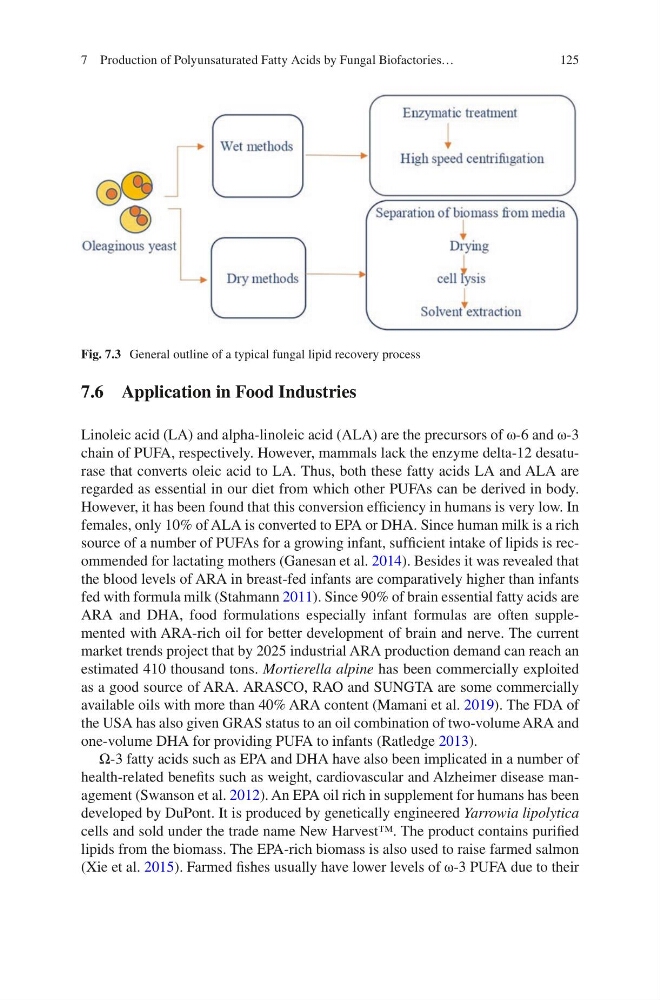
Fig. 7.3 General outline of a typical fungal lipid recovery process
7 Production of Polyunsaturated Fatty Acids by Fungal Biofactories…
7.6 Application in Food Industries
Linoleic acid (LA) and alpha-linoleic acid (ALA) are the precursors of ω-6 and ω-3
chain of PUFA, respectively. However, mammals lack the enzyme delta-12 desaturase that converts oleic acid to LA. Thus, both these fatty acids LA and ALA are
regarded as essential in our diet from which other PUFAs can be derived in body.
However, it has been found that this conversion efficiency in humans is very low. In
females, only 10% of ALA is converted to EPA or DHA. Since human milk is a rich
source of a number of PUFAs for a growing infant, sufficient intake of lipids is recommended for lactating mothers (Ganesan et al. 2014). Besides it was revealed that
the blood levels of ARA in breast-fed infants are comparatively higher than infants
fed with formula milk (Stahmann 2011). Since 90% of brain essential fatty acids are
ARA and DHA, food formulations especially infant formulas are often supplemented with ARA-rich oil for better development of brain and nerve. The current
market trends project that by 2025 industrial ARA production demand can reach an
estimated 410 thousand tons. Mortierella alpine has been commercially exploited
as a good source of ARA. ARASCO, RAO and SUNGTA are some commercially
available oils with more than 40% ARA content (Mamani et al. 2019). The FDA of
the USA has also given GRAS status to an oil combination of two-volume ARA and
one-volume DHA for providing PUFA to infants (Ratledge 2013).
Ω-3 fatty acids such as EPA and DHA have also been implicated in a number of
health-related benefits such as weight, cardiovascular and Alzheimer disease management (Swanson et al. 2012). An EPA oil rich in supplement for humans has been
developed by DuPont. It is produced by genetically engineered Yarrowia lipolytica
cells and sold under the trade name New Harvest™. The product contains purified
lipids from the biomass. The EPA-rich biomass is also used to raise farmed salmon
(Xie et al. 2015). Farmed fishes usually have lower levels of ω-3 PUFA due to their
Fig. 7.3 General outline of a typical fungal lipid recovery process
7 Production of Polyunsaturated Fatty Acids by Fungal Biofactories…