

scientists around the world can now exploit NGS technologies and take advantage of the
increasingly growing amount of sequencing information to interpret their findings. This in
turn has brought us closer to precision and personalized medicine, where treatments are
tailored to a particular tumor from an individual patient, potentially improving efficacy and
minimizing side effects.
2.2
Driver Mutations and Their Biological Mechanisms of Action
The first genes influencing cancer development were discovered almost 40 years ago, and
since then, more than 550 cancer driver genes have been described [1], most identified
through modern sequencing technologies. Different types and patterns of mutations affect
these genes, which are also specific to tumor stage and cancer type.
2.2.1 Oncogenes
Oncogenes are defined as those genes that have gained activity, which confers a selective
advantage to the carrier cell, through the acquisition of somatic mutations. Their
non-mutated counterparts are usually referred to as proto-oncogenes. Somatic gain-offunction mutations were described in the first oncogene, RAS, almost 40 years ago, which
were shown to render the protein constitutively active and lead to continuous mitogenic
signal transduction [3]. As expected, in general gain-of-function alterations tend to affect
particular amino acids within a protein that usually lead it to be “locked in” in an active
conformation by increasing its mitogenic signal transduction capabilities or by reducing its
sensitivity to inhibitors.
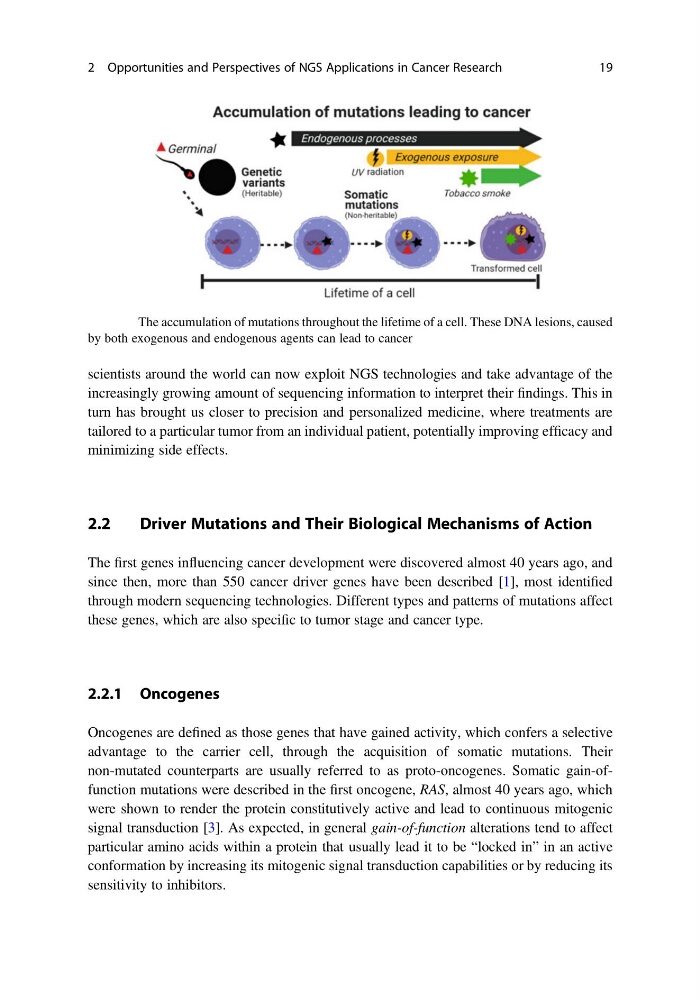
Fig. 2.1 The accumulation of mutations throughout the lifetime of a cell. These DNA lesions, caused
by both exogenous and endogenous agents can lead to cancer
2 Opportunities and Perspectives of NGS Applications in Cancer Research
19
increasingly growing amount of sequencing information to interpret their findings. This in
turn has brought us closer to precision and personalized medicine, where treatments are
tailored to a particular tumor from an individual patient, potentially improving efficacy and
minimizing side effects.
2.2
Driver Mutations and Their Biological Mechanisms of Action
The first genes influencing cancer development were discovered almost 40 years ago, and
since then, more than 550 cancer driver genes have been described [1], most identified
through modern sequencing technologies. Different types and patterns of mutations affect
these genes, which are also specific to tumor stage and cancer type.
2.2.1 Oncogenes
Oncogenes are defined as those genes that have gained activity, which confers a selective
advantage to the carrier cell, through the acquisition of somatic mutations. Their
non-mutated counterparts are usually referred to as proto-oncogenes. Somatic gain-offunction mutations were described in the first oncogene, RAS, almost 40 years ago, which
were shown to render the protein constitutively active and lead to continuous mitogenic
signal transduction [3]. As expected, in general gain-of-function alterations tend to affect
particular amino acids within a protein that usually lead it to be “locked in” in an active
conformation by increasing its mitogenic signal transduction capabilities or by reducing its
sensitivity to inhibitors.
Fig. 2.1 The accumulation of mutations throughout the lifetime of a cell. These DNA lesions, caused
by both exogenous and endogenous agents can lead to cancer
2 Opportunities and Perspectives of NGS Applications in Cancer Research
19