

the buffer. Since DSS has nine equivalent protons, the
integrated peak at 0.0 ppm should be calibrated to 450 μM.
Compound resonances can then be compared directly to this
calibrated integral. The measured concentration is approximate
(since a relatively short relaxation delay is used), some variation
will be observed depending on the relaxation rate of the
observed resonance), and care should be taken when integrating strongly coupled peaks when using excitation sculpting.
However, the method is simple, fast, readily applicable, and
sufficient to identify compounds that show limited solubility
under the experimental conditions.
4. There are a number of specific requirements for a buffer suitable for
1 H-observed LO-NMR FBS. Most importantly, the
protein should be folded, stable, and active in the chosen
buffer. However, if possible, high concentrations of additives
such as glycerol or detergent should be avoided since these will
dominate the NMR spectra and hinder observation of the
ligand resonances. A high buffering capacity is advised since
the samples will often contain high concentrations of fragments, which can perturb the final pH of the sample; as such,
it is advised to use relatively high concentrations (50 mM or
higher) of a buffer, which has a pKa close to the required
pH. Where possible, phosphate buffer is preferred since it
does not contain any observable resonances, although it is
not compatible with some proteins and can cause issues at
high molarity in some cryoprobes. High salt concentrations
(typically greater than 250 mM) are also be an issue with
cryoprobes, although this can be ameliorated by using 3-mm
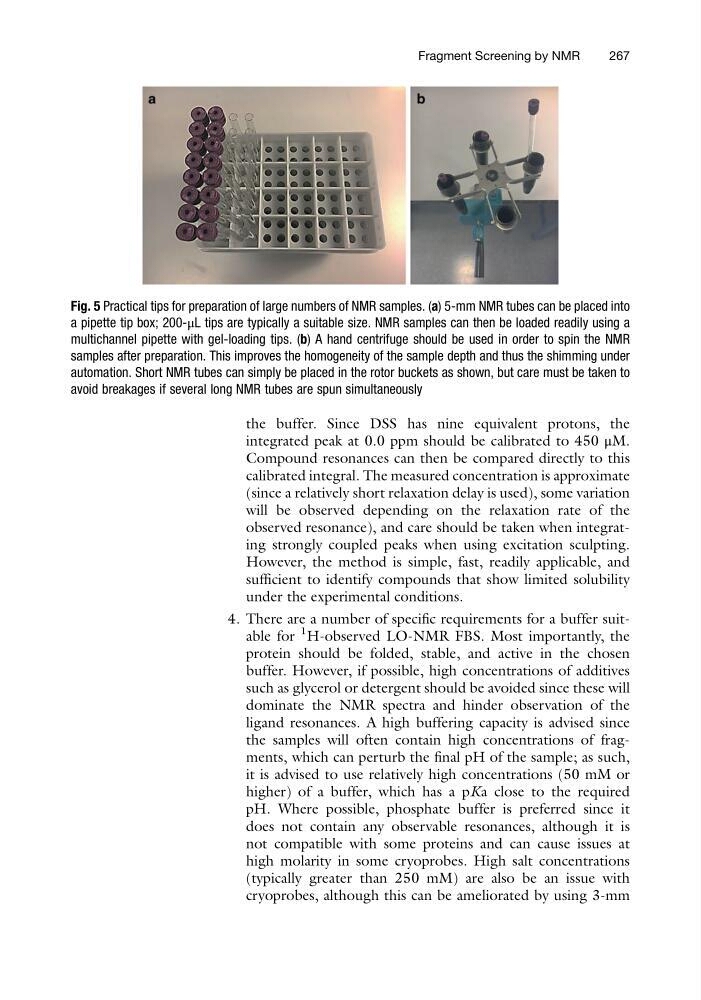
Fig. 5 Practical tips for preparation of large numbers of NMR samples. (a) 5-mm NMR tubes can be placed into
a pipette tip box; 200-μL tips are typically a suitable size. NMR samples can then be loaded readily using a
multichannel pipette with gel-loading tips. (b) A hand centrifuge should be used in order to spin the NMR
samples after preparation. This improves the homogeneity of the sample depth and thus the shimming under
automation. Short NMR tubes can simply be placed in the rotor buckets as shown, but care must be taken to
avoid breakages if several long NMR tubes are spun simultaneously
Fragment Screening by NMR
267
integrated peak at 0.0 ppm should be calibrated to 450 μM.
Compound resonances can then be compared directly to this
calibrated integral. The measured concentration is approximate
(since a relatively short relaxation delay is used), some variation
will be observed depending on the relaxation rate of the
observed resonance), and care should be taken when integrating strongly coupled peaks when using excitation sculpting.
However, the method is simple, fast, readily applicable, and
sufficient to identify compounds that show limited solubility
under the experimental conditions.
4. There are a number of specific requirements for a buffer suitable for
1 H-observed LO-NMR FBS. Most importantly, the
protein should be folded, stable, and active in the chosen
buffer. However, if possible, high concentrations of additives
such as glycerol or detergent should be avoided since these will
dominate the NMR spectra and hinder observation of the
ligand resonances. A high buffering capacity is advised since
the samples will often contain high concentrations of fragments, which can perturb the final pH of the sample; as such,
it is advised to use relatively high concentrations (50 mM or
higher) of a buffer, which has a pKa close to the required
pH. Where possible, phosphate buffer is preferred since it
does not contain any observable resonances, although it is
not compatible with some proteins and can cause issues at
high molarity in some cryoprobes. High salt concentrations
(typically greater than 250 mM) are also be an issue with
cryoprobes, although this can be ameliorated by using 3-mm
Fig. 5 Practical tips for preparation of large numbers of NMR samples. (a) 5-mm NMR tubes can be placed into
a pipette tip box; 200-μL tips are typically a suitable size. NMR samples can then be loaded readily using a
multichannel pipette with gel-loading tips. (b) A hand centrifuge should be used in order to spin the NMR
samples after preparation. This improves the homogeneity of the sample depth and thus the shimming under
automation. Short NMR tubes can simply be placed in the rotor buckets as shown, but care must be taken to
avoid breakages if several long NMR tubes are spun simultaneously
Fragment Screening by NMR
267