

assay must be reliable, with few false-negative results; and the assay
must be robust, able to avoid (or at least to identify) artifacts that
give rise to false-positive results [15]. As a result, biophysical methods have tended to dominate fragment-based screening (FBS), with
NMR often regarded as the “gold standard” method for identifying
and characterizing low-affinity intermolecular interactions
[16, 17].
NMR is often regarded as a technique restricted to expert users,
both in terms of data acquisition and data analysis. However, this
chapter will attempt to describe fragment screening by NMR for
the nonspecialist, focussing on ligand-observed
1 H-detected NMR
screening experiments, with the intention of making this approach
more accessible. There will be an emphasis on the practicalities and
requirements specific to using NMR as an assay method to identify
low-affinity interactions. The theory underlying the common NMR
experiments used in FBS will be touched upon, but an extensive
discussion of these experiments lies outside of the scope of this
chapter; many excellent reviews have been written, which discuss
these experiments in detail [16, 18–20], and the reader is urged to
consult these for further information.
NMR is a solution-based technique, which can be used in nearphysiological conditions; solid-state NMR is also widely used, but
not typically in FBS. NMR does not require any chemical modification of protein or fragment, such as the introduction of a fluorophore or a heterogeneous phase such as a solid support. As a result,
Preliminary
Hits
Set of Validated
Fragment Hits
Robust
Screen
Characterised
Target
Curated
Library
Validat ion &
Characterisat ion
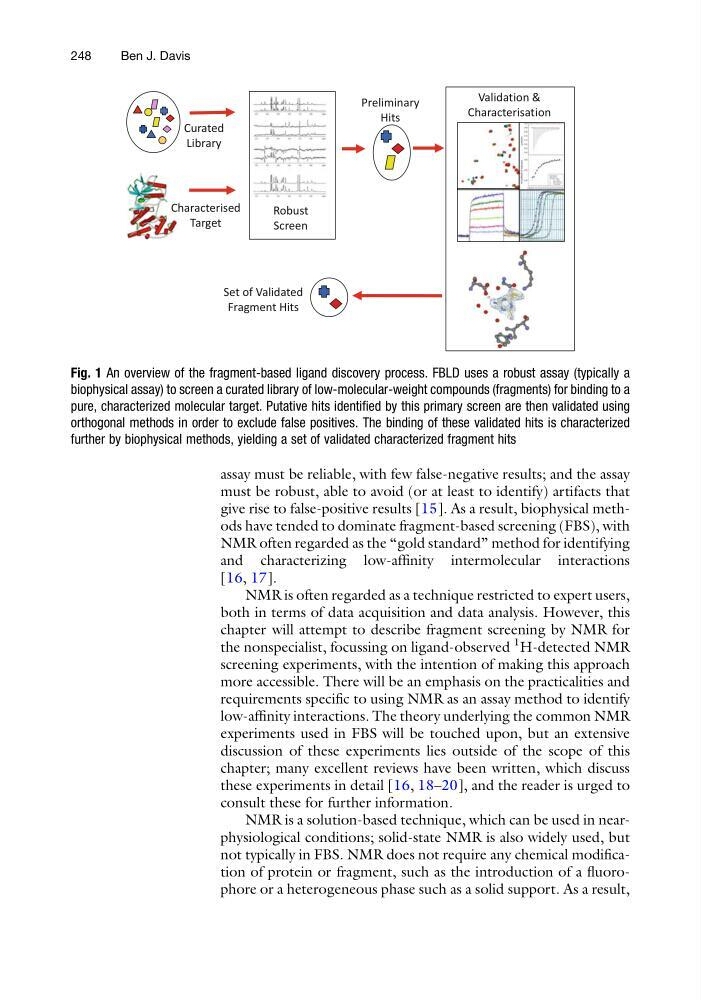
Fig. 1 An overview of the fragment-based ligand discovery process. FBLD uses a robust assay (typically a
biophysical assay) to screen a curated library of low-molecular-weight compounds (fragments) for binding to a
pure, characterized molecular target. Putative hits identified by this primary screen are then validated using
orthogonal methods in order to exclude false positives. The binding of these validated hits is characterized
further by biophysical methods, yielding a set of validated characterized fragment hits
248
Ben J. Davis
must be robust, able to avoid (or at least to identify) artifacts that
give rise to false-positive results [15]. As a result, biophysical methods have tended to dominate fragment-based screening (FBS), with
NMR often regarded as the “gold standard” method for identifying
and characterizing low-affinity intermolecular interactions
[16, 17].
NMR is often regarded as a technique restricted to expert users,
both in terms of data acquisition and data analysis. However, this
chapter will attempt to describe fragment screening by NMR for
the nonspecialist, focussing on ligand-observed
1 H-detected NMR
screening experiments, with the intention of making this approach
more accessible. There will be an emphasis on the practicalities and
requirements specific to using NMR as an assay method to identify
low-affinity interactions. The theory underlying the common NMR
experiments used in FBS will be touched upon, but an extensive
discussion of these experiments lies outside of the scope of this
chapter; many excellent reviews have been written, which discuss
these experiments in detail [16, 18–20], and the reader is urged to
consult these for further information.
NMR is a solution-based technique, which can be used in nearphysiological conditions; solid-state NMR is also widely used, but
not typically in FBS. NMR does not require any chemical modification of protein or fragment, such as the introduction of a fluorophore or a heterogeneous phase such as a solid support. As a result,
Preliminary
Hits
Set of Validated
Fragment Hits
Robust
Screen
Characterised
Target
Curated
Library
Validat ion &
Characterisat ion
Fig. 1 An overview of the fragment-based ligand discovery process. FBLD uses a robust assay (typically a
biophysical assay) to screen a curated library of low-molecular-weight compounds (fragments) for binding to a
pure, characterized molecular target. Putative hits identified by this primary screen are then validated using
orthogonal methods in order to exclude false positives. The binding of these validated hits is characterized
further by biophysical methods, yielding a set of validated characterized fragment hits
248
Ben J. Davis