

(tuned for optimum sensitivity on the local instrument). Spray is a
function of viscosity and surface tension, so additives in the assay
will change these properties. For example, the addition of surfactants
or organic solvents will reduce the surface tension and will therefore
require less acoustic power to generate a mist of the same droplet
size. For assays with a significant content of these additives, it may be
necessary to run protocols utilizing lower acoustic energy for a
screen.
3.1.6 Detection
Ion detection and isotope ratio measurement accuracy is key to the
system’s ability to quantify the output of the enzyme reaction. The
MS system has an analog to digital converter (ADC) that requires
software settings to provide a baseline measurement for the detection of a “real” ion event. There is also a gain control in the voltage
applied to the detector plates. As part of the routine qualification of
instrument performance, a series of concentrations of a single
sample should be acquired. The ratio of carbon-12 to carbon-13
should be measured and plotted against ion counts. Accuracy is lost
at both high and low ion counts. This information informs the user
of the useable range of operation for the assay.
3.2 Assay
Development
for AMI-MS
Detailed assay development for acoustic mist ionization mass spectrometry assays is important for producing a robust assay for use in
HTS due to the sensitivity of these assays to minor alterations in
conditions. There are many variables that can elicit a significant
change in the sensitivity or robustness of an assay, which would alter
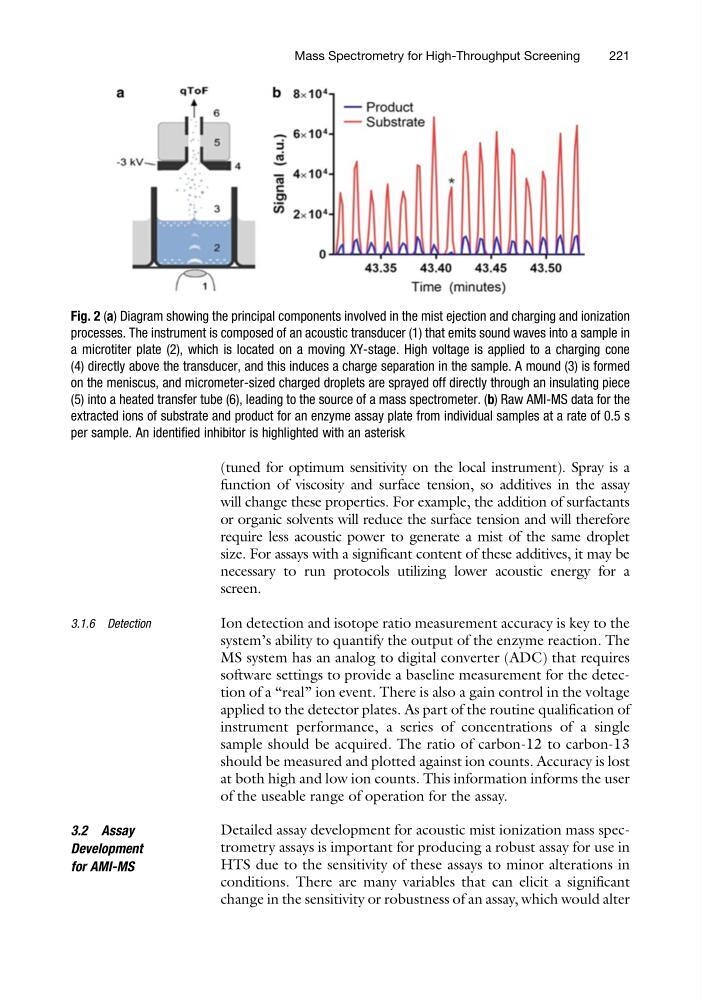
Fig. 2 (a) Diagram showing the principal components involved in the mist ejection and charging and ionization
processes. The instrument is composed of an acoustic transducer (1) that emits sound waves into a sample in
a microtiter plate (2), which is located on a moving XY-stage. High voltage is applied to a charging cone
(4) directly above the transducer, and this induces a charge separation in the sample. A mound (3) is formed
on the meniscus, and micrometer-sized charged droplets are sprayed off directly through an insulating piece
(5) into a heated transfer tube (6), leading to the source of a mass spectrometer. (b) Raw AMI-MS data for the
extracted ions of substrate and product for an enzyme assay plate from individual samples at a rate of 0.5 s
per sample. An identified inhibitor is highlighted with an asterisk
Mass Spectrometry for High-Throughput Screening
221
function of viscosity and surface tension, so additives in the assay
will change these properties. For example, the addition of surfactants
or organic solvents will reduce the surface tension and will therefore
require less acoustic power to generate a mist of the same droplet
size. For assays with a significant content of these additives, it may be
necessary to run protocols utilizing lower acoustic energy for a
screen.
3.1.6 Detection
Ion detection and isotope ratio measurement accuracy is key to the
system’s ability to quantify the output of the enzyme reaction. The
MS system has an analog to digital converter (ADC) that requires
software settings to provide a baseline measurement for the detection of a “real” ion event. There is also a gain control in the voltage
applied to the detector plates. As part of the routine qualification of
instrument performance, a series of concentrations of a single
sample should be acquired. The ratio of carbon-12 to carbon-13
should be measured and plotted against ion counts. Accuracy is lost
at both high and low ion counts. This information informs the user
of the useable range of operation for the assay.
3.2 Assay
Development
for AMI-MS
Detailed assay development for acoustic mist ionization mass spectrometry assays is important for producing a robust assay for use in
HTS due to the sensitivity of these assays to minor alterations in
conditions. There are many variables that can elicit a significant
change in the sensitivity or robustness of an assay, which would alter
Fig. 2 (a) Diagram showing the principal components involved in the mist ejection and charging and ionization
processes. The instrument is composed of an acoustic transducer (1) that emits sound waves into a sample in
a microtiter plate (2), which is located on a moving XY-stage. High voltage is applied to a charging cone
(4) directly above the transducer, and this induces a charge separation in the sample. A mound (3) is formed
on the meniscus, and micrometer-sized charged droplets are sprayed off directly through an insulating piece
(5) into a heated transfer tube (6), leading to the source of a mass spectrometer. (b) Raw AMI-MS data for the
extracted ions of substrate and product for an enzyme assay plate from individual samples at a rate of 0.5 s
per sample. An identified inhibitor is highlighted with an asterisk
Mass Spectrometry for High-Throughput Screening
221