

239
A Program to Reduce Toxic Chemical Use
Chromium and Chromium Compounds
Cobalt and Cobalt Compounds
Arsenic and Arsenic Compounds
Lead and Lead Compounds
Polychlorinated Biphenyls
Mercury and Mercury Compounds
Acrylamide
Acrylonitrile
1,3-Butadiene
Acrolein
Manganese and Manganese
Cadmium and Cadmium Compounds
Nickel and Nickel Compounds
Aluminum
Formaldehyde
Tetrachloroethylene
1-Chloro-1,1,2,2-Tetrafluoroethane
2-Chloro-1,1,1,2-Tetrafluoroethane
Ethylene Oxide
Hexachlorobenzene
Benzene
Fomesafen
Vinyl Chloride
Hydrazine
Beryllium and Beryllium Compounds
Barium and Barium Compounds
Chlorine
Acetaldehyde
Hydrochloric Acid
2-Nitropropane
Propylene Oxide
0.00001 0.0001
0.001
0.01
0.1
1
10
100
2007 TRI Release Impacts (millions of effective toxic doses per capita)
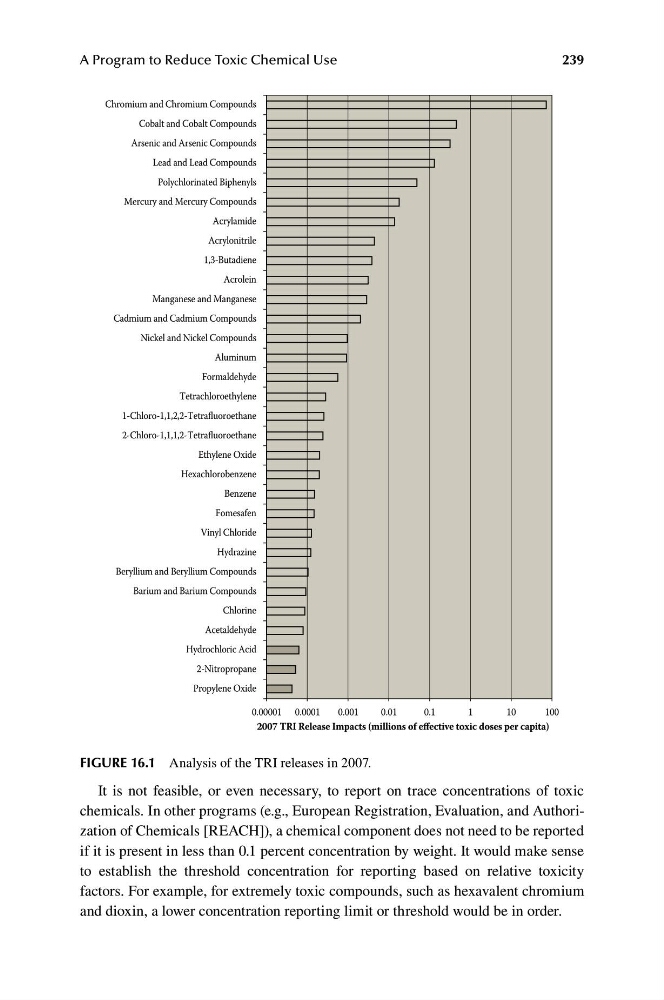
FIGURE 16.1 Analysis of the TRI releases in 2007.
It is not feasible, or even necessary, to report on trace concentrations of toxic
chemicals. In other programs (e.g., European Registration, Evaluation, and Authorization of Chemicals [REACH]), a chemical component does not need to be reported
if it is present in less than 0.1 percent concentration by weight. It would make sense
to establish the threshold concentration for reporting based on relative toxicity
factors. For example, for extremely toxic compounds, such as hexavalent chromium
and dioxin, a lower concentration reporting limit or threshold would be in order.
A Program to Reduce Toxic Chemical Use
Chromium and Chromium Compounds
Cobalt and Cobalt Compounds
Arsenic and Arsenic Compounds
Lead and Lead Compounds
Polychlorinated Biphenyls
Mercury and Mercury Compounds
Acrylamide
Acrylonitrile
1,3-Butadiene
Acrolein
Manganese and Manganese
Cadmium and Cadmium Compounds
Nickel and Nickel Compounds
Aluminum
Formaldehyde
Tetrachloroethylene
1-Chloro-1,1,2,2-Tetrafluoroethane
2-Chloro-1,1,1,2-Tetrafluoroethane
Ethylene Oxide
Hexachlorobenzene
Benzene
Fomesafen
Vinyl Chloride
Hydrazine
Beryllium and Beryllium Compounds
Barium and Barium Compounds
Chlorine
Acetaldehyde
Hydrochloric Acid
2-Nitropropane
Propylene Oxide
0.00001 0.0001
0.001
0.01
0.1
1
10
100
2007 TRI Release Impacts (millions of effective toxic doses per capita)
FIGURE 16.1 Analysis of the TRI releases in 2007.
It is not feasible, or even necessary, to report on trace concentrations of toxic
chemicals. In other programs (e.g., European Registration, Evaluation, and Authorization of Chemicals [REACH]), a chemical component does not need to be reported
if it is present in less than 0.1 percent concentration by weight. It would make sense
to establish the threshold concentration for reporting based on relative toxicity
factors. For example, for extremely toxic compounds, such as hexavalent chromium
and dioxin, a lower concentration reporting limit or threshold would be in order.