

2.4.4 Thermal Stress
Thermal stress is often caused by extreme fluctuations in temperature such as heat,
chilling, and freezing stress. High temperature or heat stress causes the burning of
aerial plant tissues (mostly, leaves), scorched twigs, senescence, and discoloration of
leaves (Fahad et al. 2017). A rise in temperature can cause a loss in germination
vigor of seeds and therefore poor growth and yield. They may also lead to reduced
flower and seed-set in sorghum and several cereal crops (Fahad et al. 2017). Similar
observations have also been made in maize and sugarcane. Heat stress leads to
reduction in oil, protein, and starch contents of oilseed crops. Several physiological
and biochemical processes are damaged on exposure to heat stress leading to water
scarcity, reduction in leaf tissue, reduced root conductance, and increased transpiration (Huang et al. 2012). It also impacts nutrient metabolism in plants. Nitrate
reductase activity is drastically reduced under temperature stress (Klimenko et al.
2006). As observed in drought and salt stress, heat stress also visibly affects
photosynthesis and associated apparatus. Low CO 2 availability, stomatal closure,
reduced moisture, and changes in photosynthetic pigments are noted under heat
stress (Fahad et al. 2017). Heat stress also impairs photosystem II along with the
regeneration capacity of RuBP (Wise et al. 2004).
Foliar application of Si is an effective method for protecting rice and grapevine
plants growing in chilling and freezing growth conditions, respectively (Habibi
2015; Azeem et al. 2016). Temperature and salinity stress modulate catalase activity
in wheat and Salvia, which is effectively countered by the application of exogenous
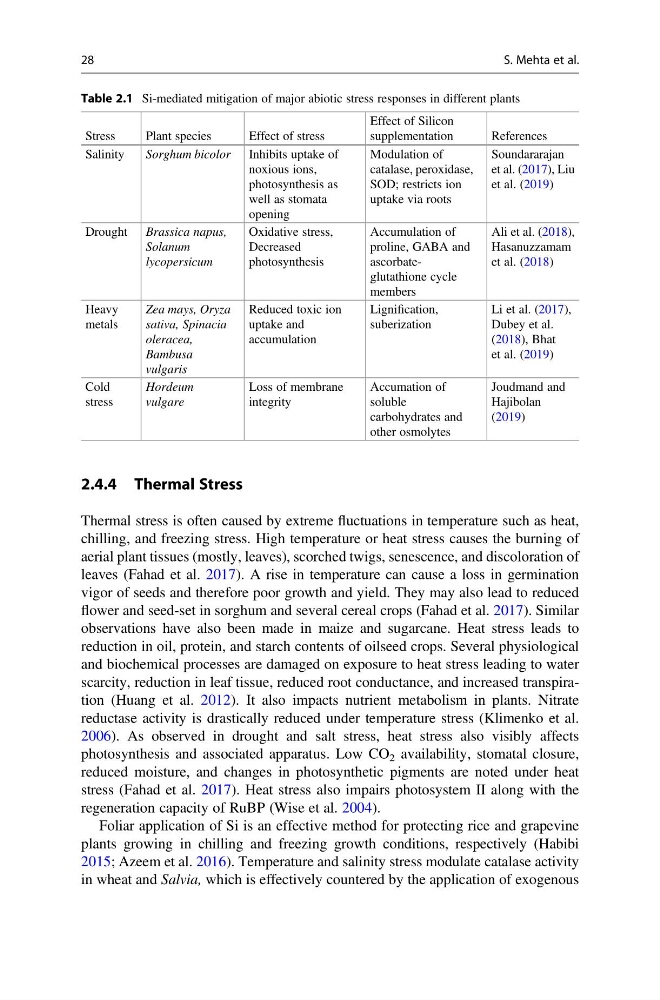
Table 2.1 Si-mediated mitigation of major abiotic stress responses in different plants
Stress
Plant species
Effect of stress
Effect of Silicon
supplementation
References
Salinity
Sorghum bicolor Inhibits uptake of
noxious ions,
photosynthesis as
well as stomata
opening
Modulation of
catalase, peroxidase,
SOD; restricts ion
uptake via roots
Soundararajan
et al. (2017), Liu
et al. (2019)
Drought Brassica napus,
Solanum
lycopersicum
Oxidative stress,
Decreased
photosynthesis
Accumulation of
proline, GABA and
ascorbateglutathione cycle
members
Ali et al. (2018),
Hasanuzzamam
et al. (2018)
Heavy
metals
Zea mays, Oryza
sativa, Spinacia
oleracea,
Bambusa
vulgaris
Reduced toxic ion
uptake and
accumulation
Lignification,
suberization
Li et al. (2017),
Dubey et al.
(2018), Bhat
et al. (2019)
Cold
stress
Hordeum
vulgare
Loss of membrane
integrity
Accumation of
soluble
carbohydrates and
other osmolytes
Joudmand and
Hajibolan
(2019)
28
S. Mehta et al.
Thermal stress is often caused by extreme fluctuations in temperature such as heat,
chilling, and freezing stress. High temperature or heat stress causes the burning of
aerial plant tissues (mostly, leaves), scorched twigs, senescence, and discoloration of
leaves (Fahad et al. 2017). A rise in temperature can cause a loss in germination
vigor of seeds and therefore poor growth and yield. They may also lead to reduced
flower and seed-set in sorghum and several cereal crops (Fahad et al. 2017). Similar
observations have also been made in maize and sugarcane. Heat stress leads to
reduction in oil, protein, and starch contents of oilseed crops. Several physiological
and biochemical processes are damaged on exposure to heat stress leading to water
scarcity, reduction in leaf tissue, reduced root conductance, and increased transpiration (Huang et al. 2012). It also impacts nutrient metabolism in plants. Nitrate
reductase activity is drastically reduced under temperature stress (Klimenko et al.
2006). As observed in drought and salt stress, heat stress also visibly affects
photosynthesis and associated apparatus. Low CO 2 availability, stomatal closure,
reduced moisture, and changes in photosynthetic pigments are noted under heat
stress (Fahad et al. 2017). Heat stress also impairs photosystem II along with the
regeneration capacity of RuBP (Wise et al. 2004).
Foliar application of Si is an effective method for protecting rice and grapevine
plants growing in chilling and freezing growth conditions, respectively (Habibi
2015; Azeem et al. 2016). Temperature and salinity stress modulate catalase activity
in wheat and Salvia, which is effectively countered by the application of exogenous
Table 2.1 Si-mediated mitigation of major abiotic stress responses in different plants
Stress
Plant species
Effect of stress
Effect of Silicon
supplementation
References
Salinity
Sorghum bicolor Inhibits uptake of
noxious ions,
photosynthesis as
well as stomata
opening
Modulation of
catalase, peroxidase,
SOD; restricts ion
uptake via roots
Soundararajan
et al. (2017), Liu
et al. (2019)
Drought Brassica napus,
Solanum
lycopersicum
Oxidative stress,
Decreased
photosynthesis
Accumulation of
proline, GABA and
ascorbateglutathione cycle
members
Ali et al. (2018),
Hasanuzzamam
et al. (2018)
Heavy
metals
Zea mays, Oryza
sativa, Spinacia
oleracea,
Bambusa
vulgaris
Reduced toxic ion
uptake and
accumulation
Lignification,
suberization
Li et al. (2017),
Dubey et al.
(2018), Bhat
et al. (2019)
Cold
stress
Hordeum
vulgare
Loss of membrane
integrity
Accumation of
soluble
carbohydrates and
other osmolytes
Joudmand and
Hajibolan
(2019)
28
S. Mehta et al.