

defense mechanisms against challenging conditions through multifaceted strategies
(Koricheva et al. 2009; Pineda et al. 2013; Saikkonen et al. 2013).
Plants can perceive microbe-associated molecular patterns (MAMPs) and the
reaction of the plant to these signals can determine the fate of plant–microbe
interactions (Acevedo et al. 2015). When phytopathogens or mutualistic symbionts,
such as arbuscular mycorrhizae (AM), colonize plants, the plant and fungus recognize each other, undergo morphological and physiological changes, and events
including signal perception, signal transduction, and defense gene activation occur
(Reinhardt 2007). As with plant–pathogen or AM–plant interactions, the induction
or suppression of plant defense mechanisms may play a key role in endophytic
colonization by EIPF. Our understanding of the impacts of mycorrhizal fungiinduced plant defenses has increased rapidly, but relatively little is known about
the defense modulation of host plants induced by EIPF. EIPF may face critical
challenges when plants activate their defense against foreign organisms upon early
events during association (Hu and Bidochka 2019).
Specific signaling molecules play key roles in determining whether the foreign
organism is a friend or foe. Based on molecular signals, plants perceive their
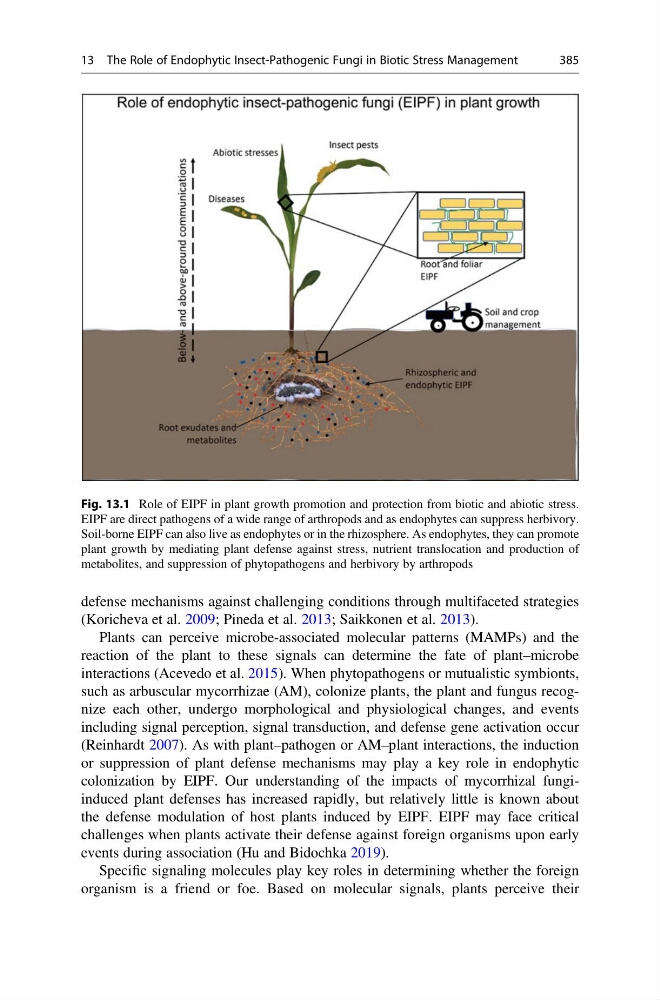
Fig. 13.1 Role of EIPF in plant growth promotion and protection from biotic and abiotic stress.
EIPF are direct pathogens of a wide range of arthropods and as endophytes can suppress herbivory.
Soil-borne EIPF can also live as endophytes or in the rhizosphere. As endophytes, they can promote
plant growth by mediating plant defense against stress, nutrient translocation and production of
metabolites, and suppression of phytopathogens and herbivory by arthropods
13 The Role of Endophytic Insect-Pathogenic Fungi in Biotic Stress Management
385
(Koricheva et al. 2009; Pineda et al. 2013; Saikkonen et al. 2013).
Plants can perceive microbe-associated molecular patterns (MAMPs) and the
reaction of the plant to these signals can determine the fate of plant–microbe
interactions (Acevedo et al. 2015). When phytopathogens or mutualistic symbionts,
such as arbuscular mycorrhizae (AM), colonize plants, the plant and fungus recognize each other, undergo morphological and physiological changes, and events
including signal perception, signal transduction, and defense gene activation occur
(Reinhardt 2007). As with plant–pathogen or AM–plant interactions, the induction
or suppression of plant defense mechanisms may play a key role in endophytic
colonization by EIPF. Our understanding of the impacts of mycorrhizal fungiinduced plant defenses has increased rapidly, but relatively little is known about
the defense modulation of host plants induced by EIPF. EIPF may face critical
challenges when plants activate their defense against foreign organisms upon early
events during association (Hu and Bidochka 2019).
Specific signaling molecules play key roles in determining whether the foreign
organism is a friend or foe. Based on molecular signals, plants perceive their
Fig. 13.1 Role of EIPF in plant growth promotion and protection from biotic and abiotic stress.
EIPF are direct pathogens of a wide range of arthropods and as endophytes can suppress herbivory.
Soil-borne EIPF can also live as endophytes or in the rhizosphere. As endophytes, they can promote
plant growth by mediating plant defense against stress, nutrient translocation and production of
metabolites, and suppression of phytopathogens and herbivory by arthropods
13 The Role of Endophytic Insect-Pathogenic Fungi in Biotic Stress Management
385