

supply of Si regulate, leaf structure, water potential, erectness, and structure of
xylem vessels (Gong et al. 2005; Hattori et al. 2005a, b).
An interesting study was carried out to comprehend the differences between
drought-tolerant and drought-sensitive tomato lines in response to exogenous application of Si. Elevation in amino acid biosynthesis is noted in drought-tolerant tomato
lines due to Si-induced increase in sulfur (S) and ammonia (NH
4+ ) levels. Whereas
in drought-sensitive tomato lines, the application of Si results in accumulation of
gamma-aminobutyric acid (GABA) proline and, which is key to the maintenance of
cellular ionic redox equilibrium (Ali et al. 2018). Brassica napus faces extreme
oxidative stress. Silicon application provides defense against antioxidant enzymes
such as glyoxalase, ascorbate-glutathione, proline, and so on (Hasanuzzamam et al.
2018).
The deposition of exogenously supplemented Si on leaf epidermis helps to
generate a higher water potential under scarce conditions (Lux et al. 2003). Similarly, suberin-containing endodermis also accumulates Si in drought-stressed cereal
cultivars. In Si-treated plants, the water uptake is higher and faster from the rhizosphere to roots (Hattori et al. 2003, 2005a, b). Si strengthens plant’s tolerance against
water stress by elevating root silicification, lignification, and suberization (Guerriero
et al. 2016). During water scarcity, Si forms a complex with hemicellulose (He et al.
2013; Ma et al. 2015). Si also enhances Casparian strip development leading to an
increase in the level of suberization in roots of rice plants (Fleck et al. 2015).
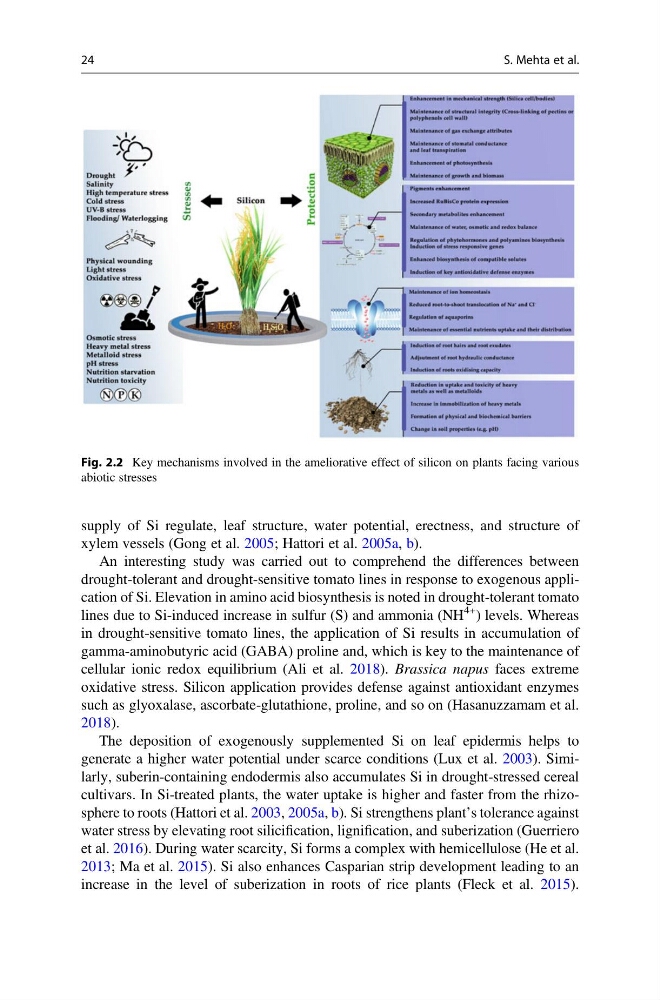
Fig. 2.2 Key mechanisms involved in the ameliorative effect of silicon on plants facing various
abiotic stresses
24
S. Mehta et al.
xylem vessels (Gong et al. 2005; Hattori et al. 2005a, b).
An interesting study was carried out to comprehend the differences between
drought-tolerant and drought-sensitive tomato lines in response to exogenous application of Si. Elevation in amino acid biosynthesis is noted in drought-tolerant tomato
lines due to Si-induced increase in sulfur (S) and ammonia (NH
4+ ) levels. Whereas
in drought-sensitive tomato lines, the application of Si results in accumulation of
gamma-aminobutyric acid (GABA) proline and, which is key to the maintenance of
cellular ionic redox equilibrium (Ali et al. 2018). Brassica napus faces extreme
oxidative stress. Silicon application provides defense against antioxidant enzymes
such as glyoxalase, ascorbate-glutathione, proline, and so on (Hasanuzzamam et al.
2018).
The deposition of exogenously supplemented Si on leaf epidermis helps to
generate a higher water potential under scarce conditions (Lux et al. 2003). Similarly, suberin-containing endodermis also accumulates Si in drought-stressed cereal
cultivars. In Si-treated plants, the water uptake is higher and faster from the rhizosphere to roots (Hattori et al. 2003, 2005a, b). Si strengthens plant’s tolerance against
water stress by elevating root silicification, lignification, and suberization (Guerriero
et al. 2016). During water scarcity, Si forms a complex with hemicellulose (He et al.
2013; Ma et al. 2015). Si also enhances Casparian strip development leading to an
increase in the level of suberization in roots of rice plants (Fleck et al. 2015).
Fig. 2.2 Key mechanisms involved in the ameliorative effect of silicon on plants facing various
abiotic stresses
24
S. Mehta et al.