

range of defense mechanisms are activated that increase tolerance against adverse
situations in order to avoid damage caused by abiotic stresses such as drought. The
first step toward stress response is stress signal recognition and subsequent molecular, biochemical, and physiological reactions activated through signal transduction
(Le et al. 2012). Earlier, strategies using expressed sequence tags (ESTs) and
techniques, i.e. suppression subtractive hybridization (SSH), have been extensively
used for transcriptome profiling of soybean under abiotic stress conditions (Clement
et al. 2008). These techniques are competent but do not give analysis of entire genes
in the soybean genome. Several high-throughput techniques have been developed
for transcriptome investigation due to the advancement in sequencing technology
and the availability of the whole soybean genome sequence (Schmutz et al. 2010;
Cheng et al. 2013). These platforms have been extensively used for transcriptome
profiling to understand drought stress tolerance mechanisms in soybean (Table 4.5).
Microarray is a high-throughput technology where thousands of probes
representing different genes are hybridized with RNA samples. The Affymetrix
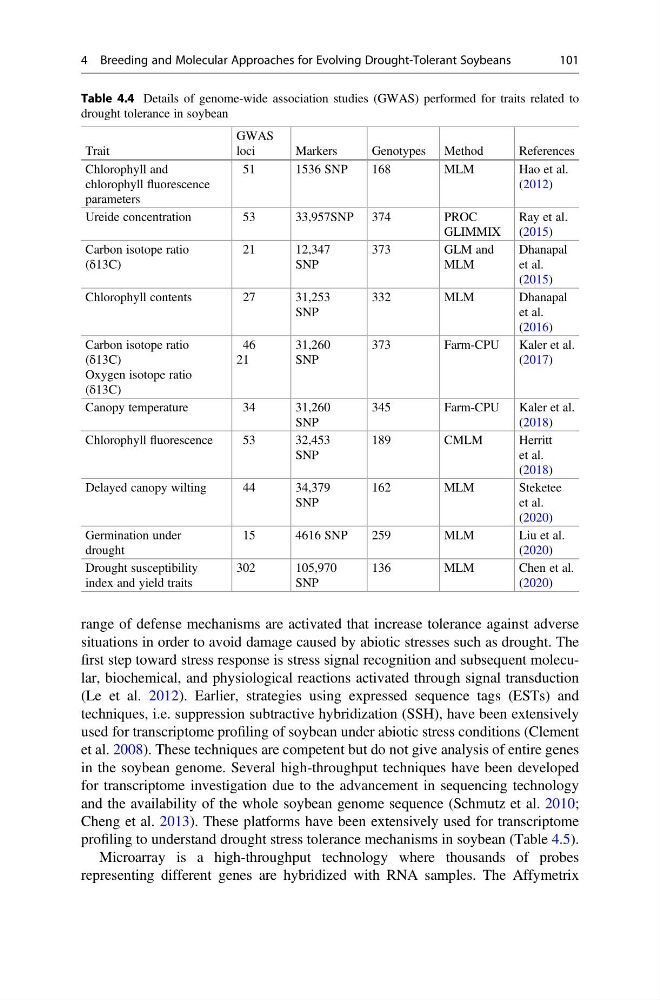
Table 4.4 Details of genome-wide association studies (GWAS) performed for traits related to
drought tolerance in soybean
Trait
GWAS
loci
Markers
Genotypes Method
References
Chlorophyll and
chlorophyll fluorescence
parameters
51
1536 SNP
168
MLM
Hao et al.
(2012)
Ureide concentration
53
33,957SNP 374
PROC
GLIMMIX
Ray et al.
(2015)
Carbon isotope ratio
(δ13C)
21
12,347
SNP
373
GLM and
MLM
Dhanapal
et al.
(2015)
Chlorophyll contents
27
31,253
SNP
332
MLM
Dhanapal
et al.
(2016)
Carbon isotope ratio
(δ13C)
Oxygen isotope ratio
(δ13C)
46
21
31,260
SNP
373
Farm-CPU
Kaler et al.
(2017)
Canopy temperature
34
31,260
SNP
345
Farm-CPU
Kaler et al.
(2018)
Chlorophyll fluorescence
53
32,453
SNP
189
CMLM
Herritt
et al.
(2018)
Delayed canopy wilting
44
34,379
SNP
162
MLM
Steketee
et al.
(2020)
Germination under
drought
15
4616 SNP
259
MLM
Liu et al.
(2020)
Drought susceptibility
index and yield traits
302
105,970
SNP
136
MLM
Chen et al.
(2020)
4 Breeding and Molecular Approaches for Evolving Drought-Tolerant Soybeans
101
situations in order to avoid damage caused by abiotic stresses such as drought. The
first step toward stress response is stress signal recognition and subsequent molecular, biochemical, and physiological reactions activated through signal transduction
(Le et al. 2012). Earlier, strategies using expressed sequence tags (ESTs) and
techniques, i.e. suppression subtractive hybridization (SSH), have been extensively
used for transcriptome profiling of soybean under abiotic stress conditions (Clement
et al. 2008). These techniques are competent but do not give analysis of entire genes
in the soybean genome. Several high-throughput techniques have been developed
for transcriptome investigation due to the advancement in sequencing technology
and the availability of the whole soybean genome sequence (Schmutz et al. 2010;
Cheng et al. 2013). These platforms have been extensively used for transcriptome
profiling to understand drought stress tolerance mechanisms in soybean (Table 4.5).
Microarray is a high-throughput technology where thousands of probes
representing different genes are hybridized with RNA samples. The Affymetrix
Table 4.4 Details of genome-wide association studies (GWAS) performed for traits related to
drought tolerance in soybean
Trait
GWAS
loci
Markers
Genotypes Method
References
Chlorophyll and
chlorophyll fluorescence
parameters
51
1536 SNP
168
MLM
Hao et al.
(2012)
Ureide concentration
53
33,957SNP 374
PROC
GLIMMIX
Ray et al.
(2015)
Carbon isotope ratio
(δ13C)
21
12,347
SNP
373
GLM and
MLM
Dhanapal
et al.
(2015)
Chlorophyll contents
27
31,253
SNP
332
MLM
Dhanapal
et al.
(2016)
Carbon isotope ratio
(δ13C)
Oxygen isotope ratio
(δ13C)
46
21
31,260
SNP
373
Farm-CPU
Kaler et al.
(2017)
Canopy temperature
34
31,260
SNP
345
Farm-CPU
Kaler et al.
(2018)
Chlorophyll fluorescence
53
32,453
SNP
189
CMLM
Herritt
et al.
(2018)
Delayed canopy wilting
44
34,379
SNP
162
MLM
Steketee
et al.
(2020)
Germination under
drought
15
4616 SNP
259
MLM
Liu et al.
(2020)
Drought susceptibility
index and yield traits
302
105,970
SNP
136
MLM
Chen et al.
(2020)
4 Breeding and Molecular Approaches for Evolving Drought-Tolerant Soybeans
101