

revolutionized soybean research in various forms of molecular tools, viz. de novo
sequencing, whole-genome resequencing (WGR), genotyping by sequencing
(GBS), and transcriptomic analysis (Liu et al. 2020b). These advances have made
a significant impact on molecular breeding strategies through marker development
such as SSRs (Hwang et al. 2009), SNPs (Kim et al. 2010; Lam et al. 2010; Chung
et al. 2014; Zhou et al. 2015a; Valliyodan et al. 2016; Ratnaparkhe et al. 2020),
insertion/deletion (INDEL) markers (Song et al. 2015), specific-locus amplified
fragment (SLAF) markers (Zhang et al. 2016). Furthermore, the technical progress
and availability of millions of SNPs have facilitated the development of high-density
array-based genotyping chips such as Illumina Infinium array (SoySNP50 K iSelect
Bead Chip) for _50,000 SNPs (Song et al. 2013), Soy SNP 6 K Infinium Bead Chip
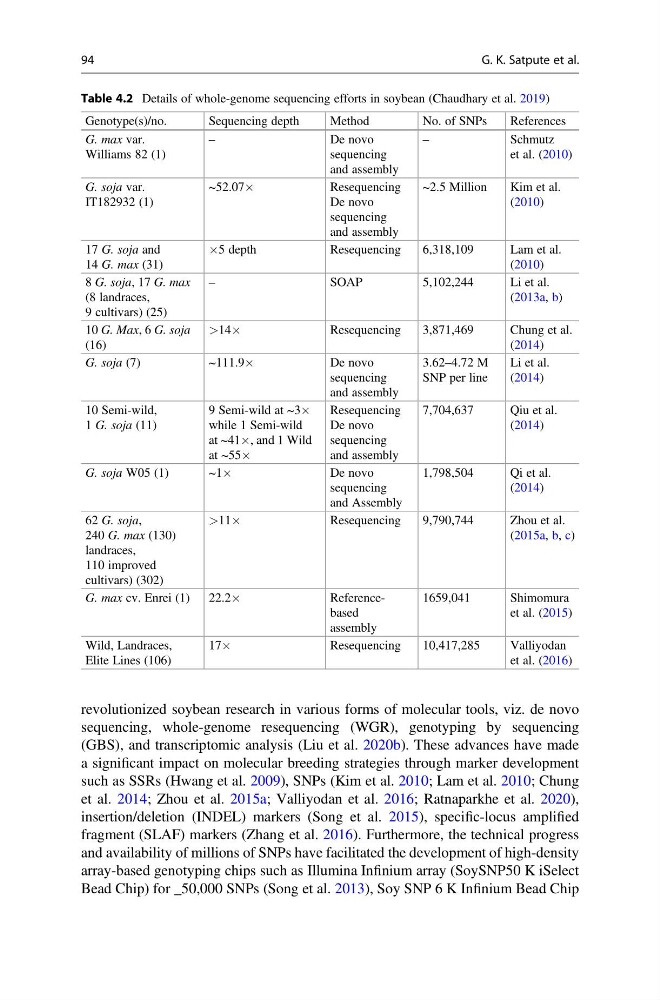
Table 4.2 Details of whole-genome sequencing efforts in soybean (Chaudhary et al. 2019)
Genotype(s)/no.
Sequencing depth
Method
No. of SNPs
References
G. max var.
Williams 82 (1)
–
De novo
sequencing
and assembly
–
Schmutz
et al. (2010)
G. soja var.
IT182932 (1)
~52.07Â
Resequencing
De novo
sequencing
and assembly
~2.5 Million
Kim et al.
(2010)
17 G. soja and
14 G. max (31)
Â5 depth
Resequencing
6,318,109
Lam et al.
(2010)
8 G. soja, 17 G. max
(8 landraces,
9 cultivars) (25)
–
SOAP
5,102,244
Li et al.
(2013a, b)
10 G. Max, 6 G. soja
(16)
>14Â
Resequencing
3,871,469
Chung et al.
(2014)
G. soja (7)
~111.9Â
De novo
sequencing
and assembly
3.62–4.72 M
SNP per line
Li et al.
(2014)
10 Semi-wild,
1 G. soja (11)
9 Semi-wild at ~3Â
while 1 Semi-wild
at ~41Â, and 1 Wild
at ~55Â
Resequencing
De novo
sequencing
and assembly
7,704,637
Qiu et al.
(2014)
G. soja W05 (1)
~1Â
De novo
sequencing
and Assembly
1,798,504
Qi et al.
(2014)
62 G. soja,
240 G. max (130)
landraces,
110 improved
cultivars) (302)
>11Â
Resequencing
9,790,744
Zhou et al.
(2015a, b, c)
G. max cv. Enrei (1) 22.2Â
Referencebased
assembly
1659,041
Shimomura
et al. (2015)
Wild, Landraces,
Elite Lines (106)
17Â
Resequencing
10,417,285
Valliyodan
et al. (2016)
94
G. K. Satpute et al.
sequencing, whole-genome resequencing (WGR), genotyping by sequencing
(GBS), and transcriptomic analysis (Liu et al. 2020b). These advances have made
a significant impact on molecular breeding strategies through marker development
such as SSRs (Hwang et al. 2009), SNPs (Kim et al. 2010; Lam et al. 2010; Chung
et al. 2014; Zhou et al. 2015a; Valliyodan et al. 2016; Ratnaparkhe et al. 2020),
insertion/deletion (INDEL) markers (Song et al. 2015), specific-locus amplified
fragment (SLAF) markers (Zhang et al. 2016). Furthermore, the technical progress
and availability of millions of SNPs have facilitated the development of high-density
array-based genotyping chips such as Illumina Infinium array (SoySNP50 K iSelect
Bead Chip) for _50,000 SNPs (Song et al. 2013), Soy SNP 6 K Infinium Bead Chip
Table 4.2 Details of whole-genome sequencing efforts in soybean (Chaudhary et al. 2019)
Genotype(s)/no.
Sequencing depth
Method
No. of SNPs
References
G. max var.
Williams 82 (1)
–
De novo
sequencing
and assembly
–
Schmutz
et al. (2010)
G. soja var.
IT182932 (1)
~52.07Â
Resequencing
De novo
sequencing
and assembly
~2.5 Million
Kim et al.
(2010)
17 G. soja and
14 G. max (31)
Â5 depth
Resequencing
6,318,109
Lam et al.
(2010)
8 G. soja, 17 G. max
(8 landraces,
9 cultivars) (25)
–
SOAP
5,102,244
Li et al.
(2013a, b)
10 G. Max, 6 G. soja
(16)
>14Â
Resequencing
3,871,469
Chung et al.
(2014)
G. soja (7)
~111.9Â
De novo
sequencing
and assembly
3.62–4.72 M
SNP per line
Li et al.
(2014)
10 Semi-wild,
1 G. soja (11)
9 Semi-wild at ~3Â
while 1 Semi-wild
at ~41Â, and 1 Wild
at ~55Â
Resequencing
De novo
sequencing
and assembly
7,704,637
Qiu et al.
(2014)
G. soja W05 (1)
~1Â
De novo
sequencing
and Assembly
1,798,504
Qi et al.
(2014)
62 G. soja,
240 G. max (130)
landraces,
110 improved
cultivars) (302)
>11Â
Resequencing
9,790,744
Zhou et al.
(2015a, b, c)
G. max cv. Enrei (1) 22.2Â
Referencebased
assembly
1659,041
Shimomura
et al. (2015)
Wild, Landraces,
Elite Lines (106)
17Â
Resequencing
10,417,285
Valliyodan
et al. (2016)
94
G. K. Satpute et al.