

stress and inducing plant level stress of relative water content (RWC) 70%
arriving at pod filling stage (R5 plus 8–10 days) (Blum 2011; Bhatia et al. 2014).
In the semi-arid tropics, setting up the managed stress environment out of the normal
season i.e. during the dry off-season is a common approach to avoid unpredictable
seasonal rainfall (Mahalakshmi and Blum 2006) with due care to all possible
off-season effects for effective drought phenotyping. When planted off-season, the
humidity, temperature and photoperiod may not allow reasonably normal crop
growth and development, crop cycle, phenology. Besides, certain diseases and
pests like YMV and white flies can be highly prevalent and birds are attracted to
grains outside its normal season which 2require protection measures. In such a case
data on plant water status and plant responses to stress like delayed leaf senescence
may be targeted while actual selection of seed is performed from the preferred lines
grown also during the normal season (Blum 2011). In the second tier, accessions
were evaluated for stem reserve mobilization trait (SRM) during rainy season in an
field test conducted in sets of: (1) sprayed chemical desiccant, potassium iodide
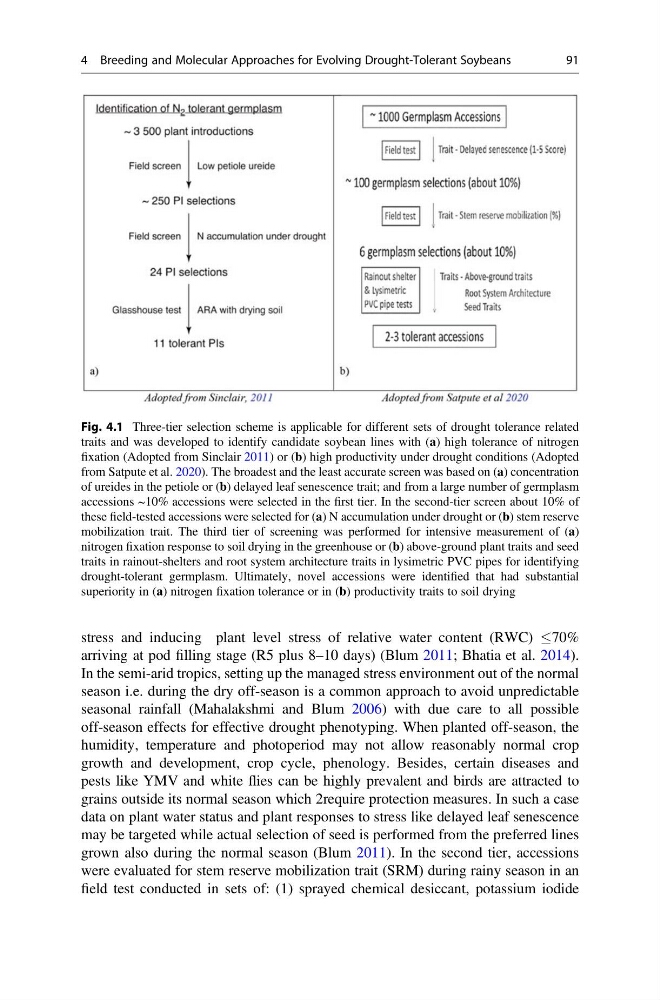
Fig. 4.1 Three-tier selection scheme is applicable for different sets of drought tolerance related
traits and was developed to identify candidate soybean lines with (a) high tolerance of nitrogen
fixation (Adopted from Sinclair 2011) or (b) high productivity under drought conditions (Adopted
from Satpute et al. 2020). The broadest and the least accurate screen was based on (a) concentration
of ureides in the petiole or (b) delayed leaf senescence trait; and from a large number of germplasm
accessions ~10% accessions were selected in the first tier. In the second-tier screen about 10% of
these field-tested accessions were selected for (a) N accumulation under drought or (b) stem reserve
mobilization trait. The third tier of screening was performed for intensive measurement of (a)
nitrogen fixation response to soil drying in the greenhouse or (b) above-ground plant traits and seed
traits in rainout-shelters and root system architecture traits in lysimetric PVC pipes for identifying
drought-tolerant germplasm. Ultimately, novel accessions were identified that had substantial
superiority in (a) nitrogen fixation tolerance or in (b) productivity traits to soil drying
4 Breeding and Molecular Approaches for Evolving Drought-Tolerant Soybeans
91
arriving at pod filling stage (R5 plus 8–10 days) (Blum 2011; Bhatia et al. 2014).
In the semi-arid tropics, setting up the managed stress environment out of the normal
season i.e. during the dry off-season is a common approach to avoid unpredictable
seasonal rainfall (Mahalakshmi and Blum 2006) with due care to all possible
off-season effects for effective drought phenotyping. When planted off-season, the
humidity, temperature and photoperiod may not allow reasonably normal crop
growth and development, crop cycle, phenology. Besides, certain diseases and
pests like YMV and white flies can be highly prevalent and birds are attracted to
grains outside its normal season which 2require protection measures. In such a case
data on plant water status and plant responses to stress like delayed leaf senescence
may be targeted while actual selection of seed is performed from the preferred lines
grown also during the normal season (Blum 2011). In the second tier, accessions
were evaluated for stem reserve mobilization trait (SRM) during rainy season in an
field test conducted in sets of: (1) sprayed chemical desiccant, potassium iodide
Fig. 4.1 Three-tier selection scheme is applicable for different sets of drought tolerance related
traits and was developed to identify candidate soybean lines with (a) high tolerance of nitrogen
fixation (Adopted from Sinclair 2011) or (b) high productivity under drought conditions (Adopted
from Satpute et al. 2020). The broadest and the least accurate screen was based on (a) concentration
of ureides in the petiole or (b) delayed leaf senescence trait; and from a large number of germplasm
accessions ~10% accessions were selected in the first tier. In the second-tier screen about 10% of
these field-tested accessions were selected for (a) N accumulation under drought or (b) stem reserve
mobilization trait. The third tier of screening was performed for intensive measurement of (a)
nitrogen fixation response to soil drying in the greenhouse or (b) above-ground plant traits and seed
traits in rainout-shelters and root system architecture traits in lysimetric PVC pipes for identifying
drought-tolerant germplasm. Ultimately, novel accessions were identified that had substantial
superiority in (a) nitrogen fixation tolerance or in (b) productivity traits to soil drying
4 Breeding and Molecular Approaches for Evolving Drought-Tolerant Soybeans
91