

61
government, private, and other sectors regarding addressing the antimicrobial
resistance issue.
This chapter aims to address the interlinking, harmony, and coherence of currently ongoing challenges on antimicrobial resistance and climate change to food
security and food safety. Starting from brief review literature about the definitions and concepts regarding antimicrobial resistance, climate change, and food
system to critique assessment of how the antimicrobial resistance and climate
change could interplay with each other and play their role in maintaining a
healthy ecosystem. Furthermore, we aim to provide policymakers a better way of
making decisions in trading animal based food products at the national and international levels, addressing the global and public concerns over food borne antimicrobial resistance. Health care workers and other professionals can also play
their role in the minimization of challenges associated with the threat to global
food security and food safety by adapting and considering the suggested
recommendations.
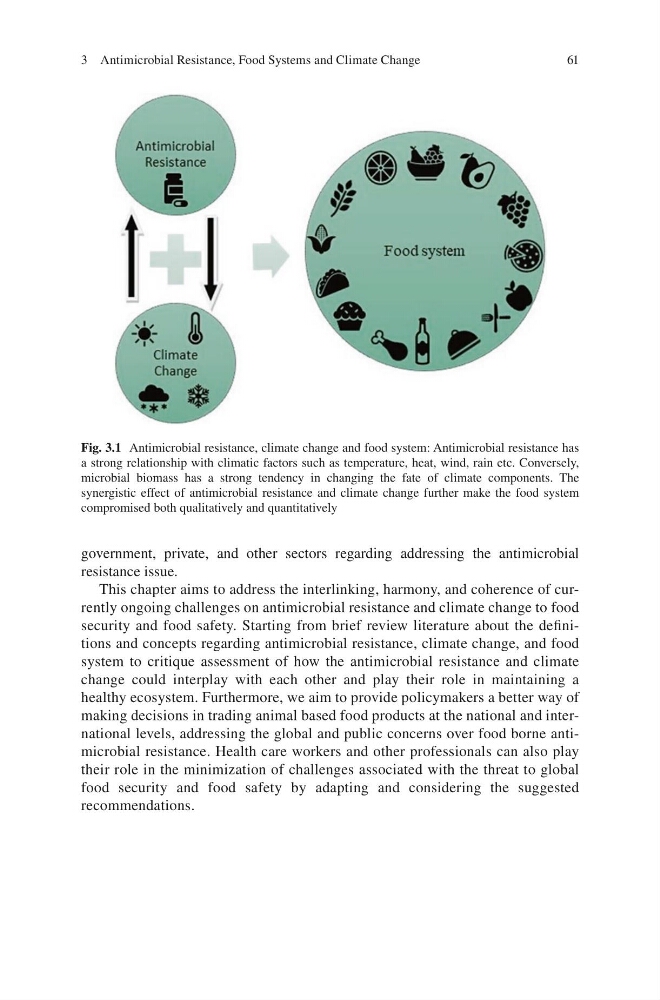
Fig. 3.1 Antimicrobial resistance, climate change and food system: Antimicrobial resistance has
a strong relationship with climatic factors such as temperature, heat, wind, rain etc. Conversely,
microbial biomass has a strong tendency in changing the fate of climate components. The
synergistic effect of antimicrobial resistance and climate change further make the food system
compromised both qualitatively and quantitatively
3 Antimicrobial Resistance, Food Systems and Climate Change
government, private, and other sectors regarding addressing the antimicrobial
resistance issue.
This chapter aims to address the interlinking, harmony, and coherence of currently ongoing challenges on antimicrobial resistance and climate change to food
security and food safety. Starting from brief review literature about the definitions and concepts regarding antimicrobial resistance, climate change, and food
system to critique assessment of how the antimicrobial resistance and climate
change could interplay with each other and play their role in maintaining a
healthy ecosystem. Furthermore, we aim to provide policymakers a better way of
making decisions in trading animal based food products at the national and international levels, addressing the global and public concerns over food borne antimicrobial resistance. Health care workers and other professionals can also play
their role in the minimization of challenges associated with the threat to global
food security and food safety by adapting and considering the suggested
recommendations.
Fig. 3.1 Antimicrobial resistance, climate change and food system: Antimicrobial resistance has
a strong relationship with climatic factors such as temperature, heat, wind, rain etc. Conversely,
microbial biomass has a strong tendency in changing the fate of climate components. The
synergistic effect of antimicrobial resistance and climate change further make the food system
compromised both qualitatively and quantitatively
3 Antimicrobial Resistance, Food Systems and Climate Change