

162
polymeric substance (EPS) or matrix surrounding the cells, it may have diverse
mode of action which are as follows: (i) direct attack against biofilm components
and degradation; (ii) induction of cellular lysis; (iii) interference with the quorum
sensing; (iv) catalysis of antimicrobial substance formation (Lequette et al. 2010;
Augustin et al. 2004; Simões et al. 2010; Thallinger et al. 2013). Physical integrity
of the bacterial biofilms can be compromised by conversion of the extracellular
polymeric substance matrix components like carbohydrates, polysaccharides, proteins (frequently exhibiting amyloid like properties), glycoproteins, lipids, phospholipids, glycolipids, and nucleic acids to their monomers which are further
metabolized (Molobela et al. 2010; Hobley et al. 2015; Johansen et al. 1997;
Thallinger et al. 2013). Mucoid and alginate producing strains of Pseudomonas
aeruginosa infection are mostly related to illness and death in cystic fibrosis (CF) of
the respiratory tract. Co-administration of alginate lyase with antibiotic like gentamicin and ceftazidime are found to be more effective biofilm disrupters. Alginate
lyase, degrades the exopolysaccharide produced by mucoid strains of P. aeruginosa,
and increase the efficacy of antibiotic in the respiratory tract infections (Alkawash
et al. 2006). Similarly, dornase alfa (Pulmozyme; Genentech) is an inhalable DNase
which can degrade extracellular DNA, and is used in cystic fibrosis (Frederiksen
et al. 2006). Biofilms disruption in E. coli, S. epidermidis and Pseudomonas fluorescens can be achieved using glycoside hydrolase dispersin B that targets specifically
extracellular polysaccharide poly-N-acetylglucosamine. Dispersin B (DspB)
degrades poly-(β-1,6)-N-acetylglucosamine (PNAG), an extracellular polysaccharide that functions as a biofilm matrix adhesin in numerous pathogens like
Staphylococcus epidermidis and S. aureus. Dispersin B can effectively detach and
disrupt the bacterial biofilms in S. epidermidis, Actinobacillus pleuropneumoniae,
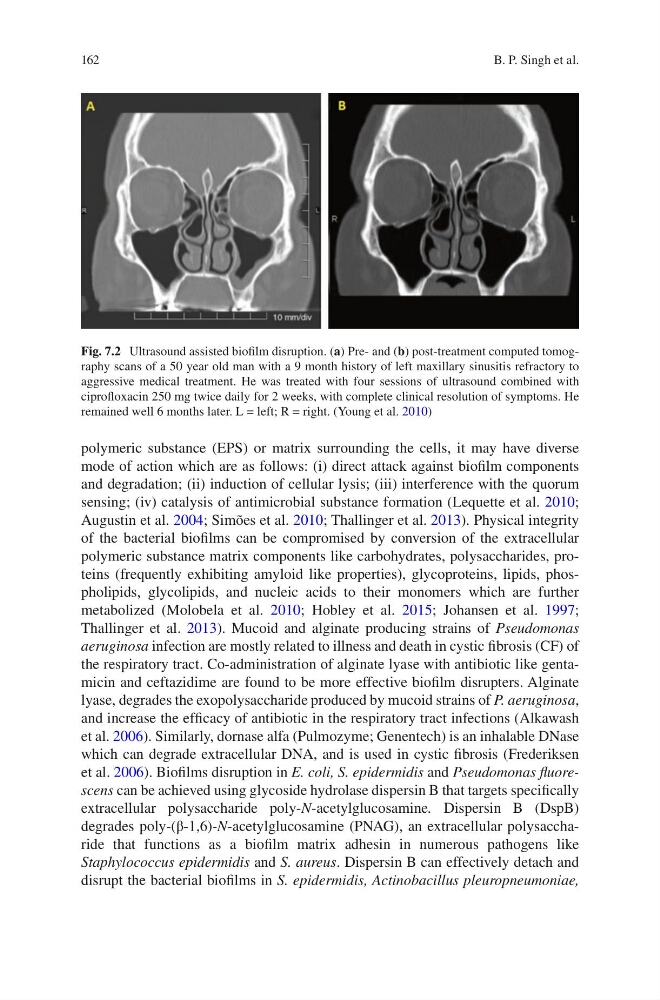
Fig. 7.2 Ultrasound assisted biofilm disruption. (a) Pre- and (b) post-treatment computed tomography scans of a 50 year old man with a 9 month history of left maxillary sinusitis refractory to
aggressive medical treatment. He was treated with four sessions of ultrasound combined with
ciprofloxacin 250 mg twice daily for 2 weeks, with complete clinical resolution of symptoms. He
remained well 6 months later. L = left; R = right. (Young et al. 2010)
B. P. Singh et al.
polymeric substance (EPS) or matrix surrounding the cells, it may have diverse
mode of action which are as follows: (i) direct attack against biofilm components
and degradation; (ii) induction of cellular lysis; (iii) interference with the quorum
sensing; (iv) catalysis of antimicrobial substance formation (Lequette et al. 2010;
Augustin et al. 2004; Simões et al. 2010; Thallinger et al. 2013). Physical integrity
of the bacterial biofilms can be compromised by conversion of the extracellular
polymeric substance matrix components like carbohydrates, polysaccharides, proteins (frequently exhibiting amyloid like properties), glycoproteins, lipids, phospholipids, glycolipids, and nucleic acids to their monomers which are further
metabolized (Molobela et al. 2010; Hobley et al. 2015; Johansen et al. 1997;
Thallinger et al. 2013). Mucoid and alginate producing strains of Pseudomonas
aeruginosa infection are mostly related to illness and death in cystic fibrosis (CF) of
the respiratory tract. Co-administration of alginate lyase with antibiotic like gentamicin and ceftazidime are found to be more effective biofilm disrupters. Alginate
lyase, degrades the exopolysaccharide produced by mucoid strains of P. aeruginosa,
and increase the efficacy of antibiotic in the respiratory tract infections (Alkawash
et al. 2006). Similarly, dornase alfa (Pulmozyme; Genentech) is an inhalable DNase
which can degrade extracellular DNA, and is used in cystic fibrosis (Frederiksen
et al. 2006). Biofilms disruption in E. coli, S. epidermidis and Pseudomonas fluorescens can be achieved using glycoside hydrolase dispersin B that targets specifically
extracellular polysaccharide poly-N-acetylglucosamine. Dispersin B (DspB)
degrades poly-(β-1,6)-N-acetylglucosamine (PNAG), an extracellular polysaccharide that functions as a biofilm matrix adhesin in numerous pathogens like
Staphylococcus epidermidis and S. aureus. Dispersin B can effectively detach and
disrupt the bacterial biofilms in S. epidermidis, Actinobacillus pleuropneumoniae,
Fig. 7.2 Ultrasound assisted biofilm disruption. (a) Pre- and (b) post-treatment computed tomography scans of a 50 year old man with a 9 month history of left maxillary sinusitis refractory to
aggressive medical treatment. He was treated with four sessions of ultrasound combined with
ciprofloxacin 250 mg twice daily for 2 weeks, with complete clinical resolution of symptoms. He
remained well 6 months later. L = left; R = right. (Young et al. 2010)
B. P. Singh et al.