

93
et al. 2017), Haemophilus ducreyi (de Sarom et al. 2018), Corynebacterium diphtheriae (Jamal et al. 2017), Corynebacterium pseudotuberculosis (Hassan et al.
2014), Salmonella enterica subsp. (Hossain et al. 2017), Brucella melitensis
(Pradeepkiran et al. 2015). Shigella flexneri (Oany et al. 2018), Streptococcus pneumonia (Wadood et al. 2018), Escherichia coli O157:H7 (Mondal et al. 2015),
Fusobacterium nucleatum (Kumar et al. 2016), Bacillus anthracis (Rahman et al.
2014), Salmonella typhi (Mukherjee et al. 2019), Mycobacterium tuberculosis
(Hosen et al. 2014; Waman et al. 2019), and many other pathogens.
Multiple rules can be applied in the scope of subtractive genomics approach.
According to the number of sequenced genomes, in silico and in vitro studies available, specific databases for each microorganism and the application order of the
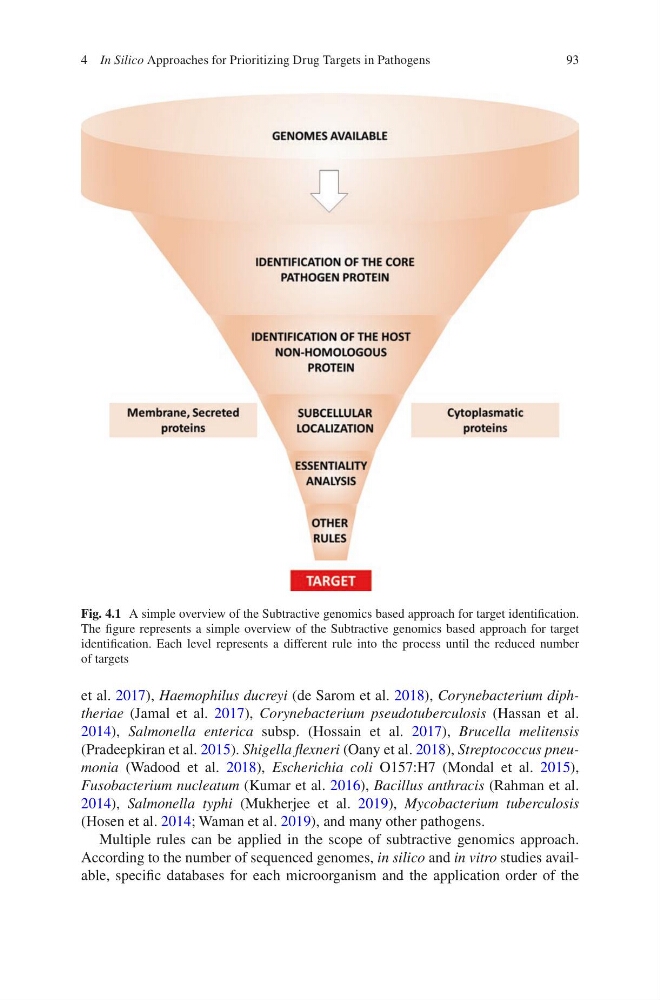
Fig. 4.1 A simple overview of the Subtractive genomics based approach for target identification.
The figure represents a simple overview of the Subtractive genomics based approach for target
identification. Each level represents a different rule into the process until the reduced number
of targets
4 In Silico Approaches for Prioritizing Drug Targets in Pathogens
et al. 2017), Haemophilus ducreyi (de Sarom et al. 2018), Corynebacterium diphtheriae (Jamal et al. 2017), Corynebacterium pseudotuberculosis (Hassan et al.
2014), Salmonella enterica subsp. (Hossain et al. 2017), Brucella melitensis
(Pradeepkiran et al. 2015). Shigella flexneri (Oany et al. 2018), Streptococcus pneumonia (Wadood et al. 2018), Escherichia coli O157:H7 (Mondal et al. 2015),
Fusobacterium nucleatum (Kumar et al. 2016), Bacillus anthracis (Rahman et al.
2014), Salmonella typhi (Mukherjee et al. 2019), Mycobacterium tuberculosis
(Hosen et al. 2014; Waman et al. 2019), and many other pathogens.
Multiple rules can be applied in the scope of subtractive genomics approach.
According to the number of sequenced genomes, in silico and in vitro studies available, specific databases for each microorganism and the application order of the
Fig. 4.1 A simple overview of the Subtractive genomics based approach for target identification.
The figure represents a simple overview of the Subtractive genomics based approach for target
identification. Each level represents a different rule into the process until the reduced number
of targets
4 In Silico Approaches for Prioritizing Drug Targets in Pathogens